The volatile nature of sci-fi is particularly evident intelevision. That’s because long-running productions frequently suffer from narrative exhaustion, leading to a noticeable decline in creative output. For instance, Battlestar Galactica established a gritty tone during its early years but ultimately delivered a divisive finale that heavily relied on spiritual abstraction, fracturing its dedicated fanbase. Similarly, The X-Files revolutionized episodic mysteries yet struggled to resolve its sprawling alien conspiracy, resulting in revival seasons that felt disconnected from the show’s foundational premise. Even contemporary hits like Altered Carbon suffered a severe drop in critical acclaim during their sophomore outings, proving that a compelling world-building debut does not guarantee long-term stability.
Videos by ComicBook.com
Maintaining a consistent standard of excellence from a pilot episode to a series finale is a monumental achievement in the television industry. It is even more unusual for a show to exhibit a steady upward trajectory, where each subsequent season surpasses the narrative ambition and emotional depth of the last. Whether beginning with an uneven first season before finding their footing or starting strong and simply accelerating into narrative perfection, these sci-fi series represent the absolute pinnacle of serialized storytelling.
5) Babylon 5

Babylon 5 revolutionized the structure of science fiction television by operating under a pre-planned, five-year narrative arc. The inaugural season of the series is notoriously uneven, hindered by early digital visual effects, theatrical dialogue, and the sudden departure of the original lead protagonist, Commander Jeffrey Sinclair (Michael O’Hare). These initial limitations forced creator J. Michael Straczynski to execute a massive pivot, introducing Captain John Sheridan (Bruce Boxleitner) to helm the eponymous space station. This transition initiated a dramatic escalation in storytelling quality.

By the second and third seasons, Babylon 5 transformed from a standard diplomatic procedural into a sprawling galactic war epic. The conflicts involving the Shadows and the Vorlons elevated the thematic stakes, tackling complex ideas about authoritarianism and historical cycles. Furthermore, the character development of alien ambassadors Londo Mollari (Peter Jurasik) and G’Kar (Andreas Katsulas) provided a Shakespearean rivalry that remains a benchmark for the genre. Finally, Babylon 5‘s commitment to a defined beginning, middle, and end allowed the production to build cumulative narrative momentum, rewarding viewers who navigated the rough early episodes with an immensely satisfying cosmic saga.
4) Fringe
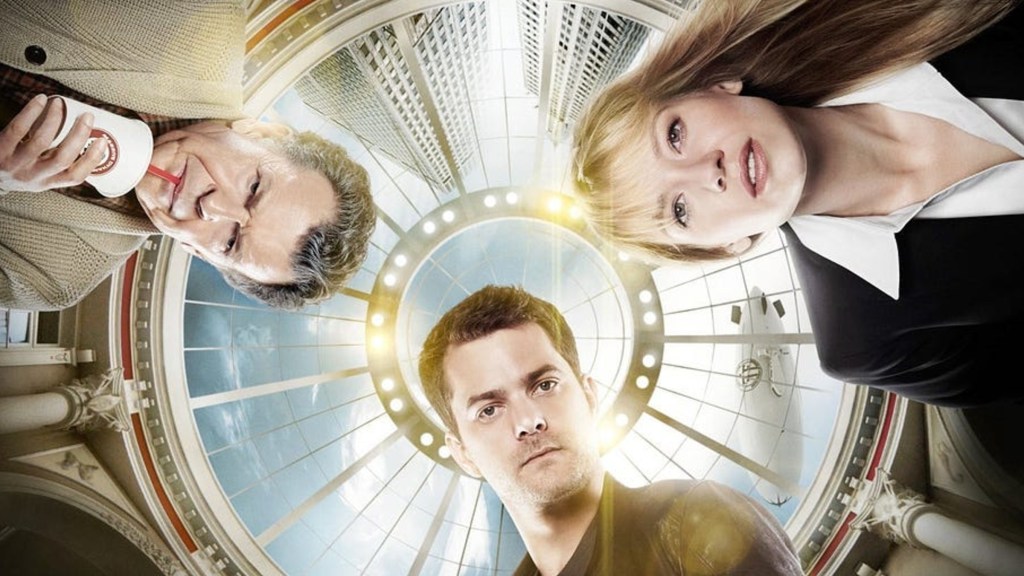
During its initial broadcast window, Fringe presented itself as a straightforward procedural designed to fill the void left by earlier paranormal investigation shows. The first season focused heavily on a monster-of-the-week format, following FBI agent Olivia Dunham (Anna Torv) as she solved bizarre scientific anomalies with the help of the brilliant but unstable scientist Walter Bishop (John Noble) and his son Peter Bishop (Joshua Jackson). The series found its true identity when the writers shifted their focus away from episodic mysteries and fully embraced a serialized narrative regarding a war between parallel universes.
Fringe‘s conceptual leap allowed the cast to portray alternate, often ruthless versions of themselves, showcasing an impressive range of acting capabilities. As the seasons progressed, the overarching mythology also grew increasingly intricate, culminating in a dystopian final season that prioritized the familial bond between the central trio over scientific spectacle. This evolution from a generic mystery box into a profound exploration of grief and love cemented the show’s enduring legacy.
3) Star Trek: The Next Generation

Star Trek: The Next Generation famously struggled to find its voice during its first two years on the air. Early episodes were plagued by recycled scripts from the original 1960s series, awkward character interactions, and a sterile atmosphere that lacked genuine dramatic tension. The turning point arrived in the third season.
The creative overhaul brought a renewed focus on complex ethical dilemmas and character-driven science fiction. First of all, Captain Jean-Luc Picard (Patrick Stewart) was allowed to evolve from a rigid authority figure into an incredibly nuanced diplomat, carrying the philosophical weight of the franchise. The writers also began experimenting with format-breaking narratives, exploring the nature of humanity through the android Data (Brent Spiner) and introducing the existential terror of the Borg. This relentless dedication to narrative refinement transformed a rocky revival attempt into a definitive iteration of the franchise, setting a structural standard for syndicated television that dominated the 1990s.
2) The Expanse

From its premiere, The Expanse established a rigorous commitment to Newtonian physics and grim geopolitical realism. The inaugural season functioned primarily as a slow-burning noir mystery on the dwarf planet Ceres, combined with the survival narrative of James Holden (Steven Strait) and his displaced ice-hauler crew. While the initial world-building was dense and occasionally alienating for casual viewers, the deliberate pacing laid an indestructible foundation for the subsequent seasons.
The Expanse eventually expanded its scope to encompass a terrifying three-way cold war between Earth, Mars, and the marginalized Belters. Then, the introduction of the alien protomolecule escalated the stakes, shifting the genre from hard political science fiction into a cosmic horror epic. Nevertheless, the political maneuvering of UN official Chrisjen Avasarala (Shohreh Aghdashloo) provided the narrative with a Machiavellian intensity that kept the sprawling solar system grounded in human ambition. On top of that, the show successfully utilized its network transition from Syfy to Amazon Prime to increase its production values, resulting in later seasons that delivered breathtaking space combat and an incredibly cohesive conclusion to the interplanetary conflict.
1) Dark

Dark debuted on Netflix as a moody thriller about a missing child in a German forest, drawing immediate comparisons to other supernatural mystery shows of the era, including Stranger Things. However, the true ambition of the series quickly materialized as the narrative fractured across multiple generations, locking Jonas Kahnwald (Louis Hofmann) in a labyrinthine time-travel conspiracy. What separates this production from every other temporal science fiction property is its flawless structural integrity. The creators established an incredibly complex family tree that spanned over a century, relying on deterministic loops where the future directly causes the past.
Instead of collapsing under the weight of its own paradoxes, Dark used its second and third seasons to introduce alternate realities without ever losing track of its internal logic. On top of that, the emotional devastation of the characters, specifically the dual performances of the ensemble cast playing older and younger versions of the same doomed individuals, provided a haunting emotional anchor. Finally, the series concluded with a perfectly calibrated finale that resolved every outstanding question, achieving an unprecedented level of narrative perfection that elevated the entire sci-fi genre.
Which sci-fi TV show do you think only got better as time went by? Leave a comment below and join the conversation now in the ComicBook Forum!
Most Viewed
-

Image Courtesy of Amazon MGM Studios -

Image courtesy of Marvel Studios -

Image courtesy of PerBlue