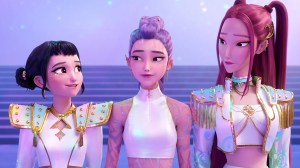
Steampunk functions as a distinct subgenre of speculative fiction that reimagines the future through the lens of 19th-century industrial technology and Victorian aesthetics. The appeal of this genre lies in its marriage of anachronistic innovation with rigid social structures, creating a world where human achievement is measured by steam-powered machinery, elaborate clockwork mechanisms, and brass-fitted gadgets. While the core elements often include dirigibles, goggles, and coal-stained urban landscapes, the true strength of steampunk is its thematic flexibility, as it provides a versatile framework for exploring the friction between the rapidly advancing machine age and the enduring complexities of the human spirit. By grounding fantastical science in the tangible textures of the Industrial Revolution, creators can address contemporary anxieties regarding surveillance, environmental decay, and social inequality within a stylized and immersive historical context.
Videos by ComicBook.com
Even when a television production avoids some traditional elements of the subgenre, like a strict Victorian setting, many successful series embrace the enticing philosophy and visual language of steampunk. This approach often manifests in a focus on “low-life, high-tech” dynamics, where disenfranchised characters utilize makeshift mechanical solutions to navigate oppressive systems. Furthermore, shows inspired by steampunk frequently prioritize tactile production designs, favoring practical effects and intricate costume work to convey a sense of weight and history that digital effects often lack.
7) The Wild Wild West

Long before steampunk became a defined literary category, The Wild Wild West pioneered the concept of integrating advanced, anachronistic technology into a historical frontier setting. Premiering in 1965, the series follows Secret Service agents James West (Robert Conrad) and Artemus Gordon (Ross Martin) as they protect President Ulysses S. Grant from a variety of eccentric technological threats. As a result, much of the show’s enduring charm comes from the inventive gadgets and elaborate secret weapons hidden within the protagonists’ private train or their own tailored attire.
By pitting traditional cowboy archetypes against mad scientists and mechanized fortresses, the production created a unique visual vocabulary that influenced decades of subsequent genre storytelling. The Wild Wild West maintains its relevance because it treats its fantastical inventions with a sense of genuine danger and curiosity, mixing the elements that would become part of the steampunk genre with the adventurous spirit of the American Western.
6) Penny Dreadful

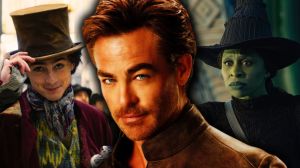
The atmospheric horror of Penny Dreadful utilizes the grit and grime of Victorian London to create a world where gothic literature and industrial progress collide with terrifying consequences. While the series focuses heavily on supernatural threats, the inclusion of Victor Frankenstein (Harry Treadaway) and his pursuit of scientific reanimation provides a strong steampunk anchor for the narrative. The show depicts Frankenstein’s laboratory as a place of mechanical coldness and anatomical precision, contrasting the visceral gore with the rigid metallic tools of the era. Meanwhile, Vanessa Ives (Eva Green) and Ethan Chandler (Josh Hartnett) navigate a city that is simultaneously at the height of its imperial power and on the verge of a spiritual collapse.
By emphasizing the industrial nature of 19th-century science, the production captures the existential dread that often accompanies rapid technological advancement. The meticulous attention to period-accurate detail, combined with a willingness to explore the darker corners of human innovation, ensures that Penny Dreadful remains a foundational example of the “gaslamp fantasy” variation of the steampunk genre.
5) Carnival Row

Amazon’s ambitious fantasy drama Carnival Row presents a somber and politically charged interpretation of steampunk that focuses on the plight of refugees in a decaying industrial metropolis. Set in the city of The Burgue, the narrative follows Rycroft Philostrate (Orlando Bloom), a weary inspector investigating a series of gruesome murders that threaten the fragile peace between humans and immigrant fae folk like Vignette Stonemoss (Cara Delevingne).
The production design of Carnival Row is characterized by a tactile aesthetic, where soot-covered streets are illuminated by flickering gaslights, and the skies are crowded with oppressive airships. This environment serves as a physical manifestation of the show’s themes of colonial exploitation and social stratification. Carnival Row uses the steampunk aesthetic to heighten the sense of systemic inequality, delivering a mature and uncompromising look at the consequences of imperialism. The commitment to world-building extends to the intricate mechanical prosthetics and military technology, ensuring that the fantasy elements are always grounded in an industrial reality.
4) The Nevers

Despite a fractured release schedule, The Nevers stands as one of the most inventive and visually distinct steampunk series of the modern era. The plot revolves around a group of Victorian Londoners, primarily women, who suddenly develop “turns”—supernatural skills that range from prophetic visions to the ability to see the underlying energy of the world. Leading the “Touched” is Amalia True (Laura Donnelly), a formidable fighter, and Penance Adair (Ann Skelly), a brilliant inventor who constructs elaborate steampunk gadgets that function far beyond the capabilities of the 1890s.
The Nevers excels at integrating high-concept science fiction elements into the Victorian social fabric, using the technological genius of its characters to challenge patriarchal constraints. On top of that, the production values of The Nevers are exceptionally high, featuring beautifully rendered clockwork vehicles and weapons that feel heavy and functional within the context of the period.
3) Avatar: The Legend of Korra

Transitioning the world of the Four Nations from the agrarian society of its predecessor into a booming industrial era, Avatar: The Legend of Korra offers a comprehensive study of how technology can disrupt established power dynamics. The primary setting of Republic City serves as a masterpiece of steampunk urban planning, featuring pro-bending arenas, coal-powered satellites, and a sprawling network of satomobiles.
As Korra (voiced by Janet Varney) struggles to find her place in a world that no longer views the Avatar as its sole protector, the series also explores the rise of non-bender equality movements facilitated by mechanized combat suits. This technological shift drives the central conflicts of the show, highlighting the tension between ancient spiritual traditions and the democratic impulses of a modern society. The animation quality of Avatar: The Legend of Korra remains a benchmark for the medium, utilizing fluid movement to depict the interplay between elemental bending and complex machinery, making the world of the United Republic feel lived-in and intellectually stimulating.
2) Fullmetal Alchemist: Brotherhood
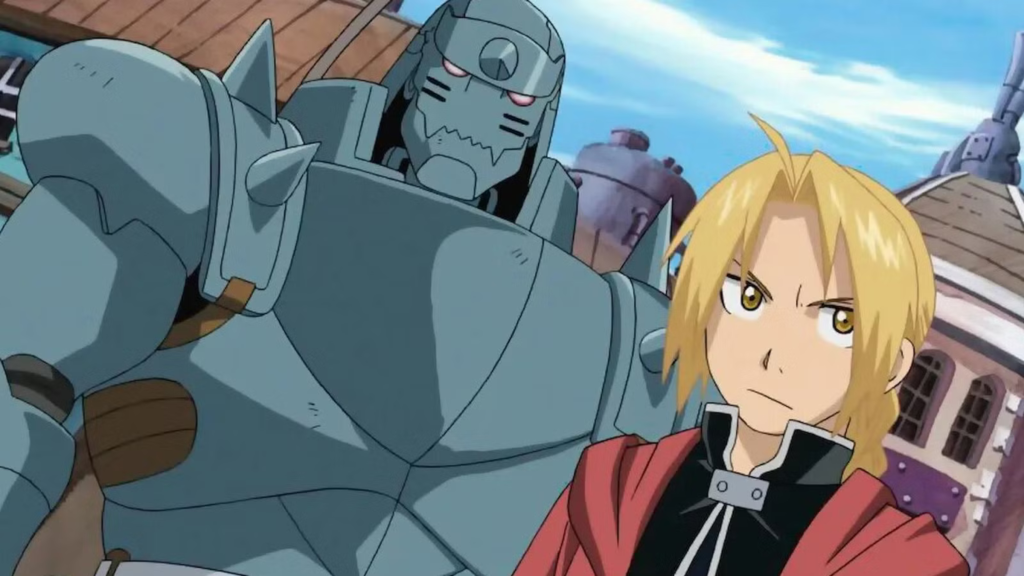
In the realm of animation, Fullmetal Alchemist: Brotherhood provides a definitive look at a world where the science of alchemy serves as the engine for a sprawling industrial society. The series follows the journey of Edward Elric (voiced by Romi Park) and Alphonse Elric (voiced by Maxey Rie Kugimiya) as they search for the Philosopher’s Stone to restore their bodies after a failed attempt at human transmutation.
A cornerstone of the show’s steampunk identity is the concept of automail—highly advanced, steam-powered mechanical limbs that require painful surgery to interface with the human nervous system. This technology is depicted with a level of realism that emphasizes the physical toll of industrialization. Furthermore, the setting of Amestris is a landscape of steam trains, military fortresses, and early 20th-century urban environments, all of which feel cohesive and deeply integrated into the alchemical laws governing the world. Finally, Fullmetal Alchemist: Brotherhood’s exploration of the ethical limits of science and the dehumanizing nature of military-industrial complexes makes it a thematic heavyweight that resonates with the best steampunk has to offer.
1) Arcane
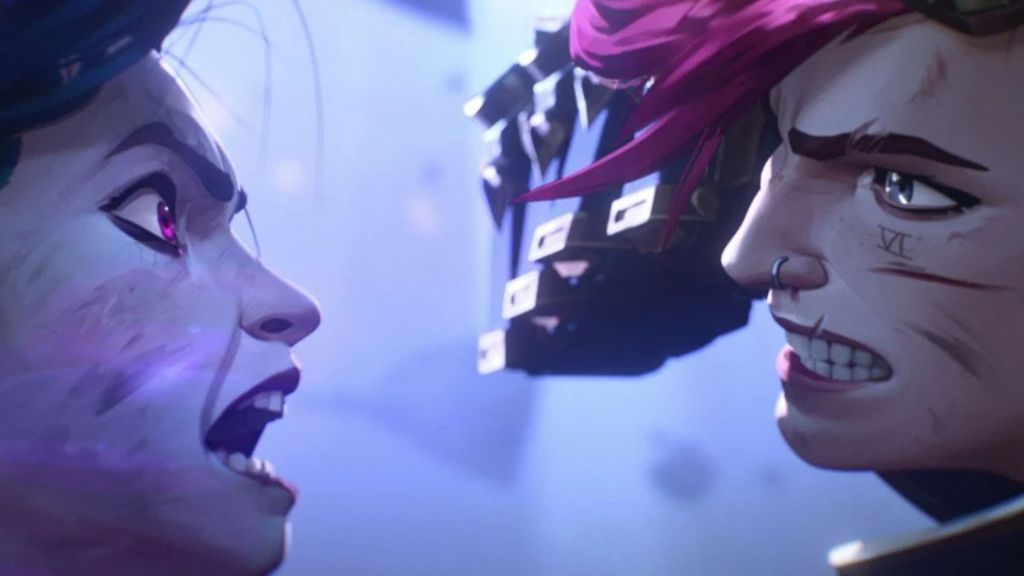
Standing at the summit of modern genre television, Arcane delivers a visually breathtaking and emotionally devastating exploration of the divide between two cities defined by their relationship to technology. The prosperous city of Piltover represents the “Hextech” ideal, where magical energy is harnessed through refined machinery to benefit the elite. In contrast, the subterranean district of Zaun utilizes “Chemtech,” a gritty, toxic, and volatile form of engineering born from desperation and industrial runoff.
The conflict between sisters Vi (voiced by Hailee Steinfeld) and Jinx (voiced by Ella Purnell) is inextricably linked to the rapid advancement of these competing technologies, which serve as metaphors for progress and destruction. By successfully grounding its high-stakes drama in the biological and mechanical realities of its world, Arcane has set a new global standard for the potential of the steampunk aesthetic in any medium. As if that wasn’t enough, the animation style by Fortiche Production is a revolutionary blend of 2D and 3D techniques that gives the world of Runeterra a painterly texture that captures the weight of every gear and the flicker of every neon light.
Which iconic steampunk series do you think best captures the balance between historical atmosphere and futuristic imagination? Leave a comment below and join the conversation now in the ComicBook Forum!
Most Viewed
-

Image courtesy of Sony -

Image courtesy of Warner Bros. Pictures