For 60 years, Star Trek‘s flagship, the Enterprise has defined sci-fi vessels. Yes, Star Wars had the Millennium Falcon, Doctor Who had the TARDIS, and Firefly had the Serenity, but the Enterprise survived multiple iterations, wildly different classes, and massively shifting design changes, which reflected not only their contemporary creative periods, but also completely different priorities in-universe. It has been a symbol, a warship, an exploration vessel, and a symbol of both hope and dominance in Gene Roddenberry’s universe, and Star Trek‘s history and future will forever be indebted to it, even long after the franchise stops telling its story.
Videos by ComicBook.com
On paper, the Enterprise is a simple setup: a saucer, a star drive, nacelles, and weapons. The specifics have changed since it debuted in 1966, but the bones always remained the same. That means ranking every iteration comes down to taste. If this were simply a competition around power, or efficiency in battle, the ships would rank in order of their launch. Plain, boring, and chronological. Because each refit and relaunch came with a linear progression, adopting new technologies and new thinking as befitting the Federation’s most important vessel. So instead, a true ranking should be done on vibes: cool factor, aesthetics, aura… Those are the real marks of taste.

13) NCC-1701-J – Star Trek: Enterprise
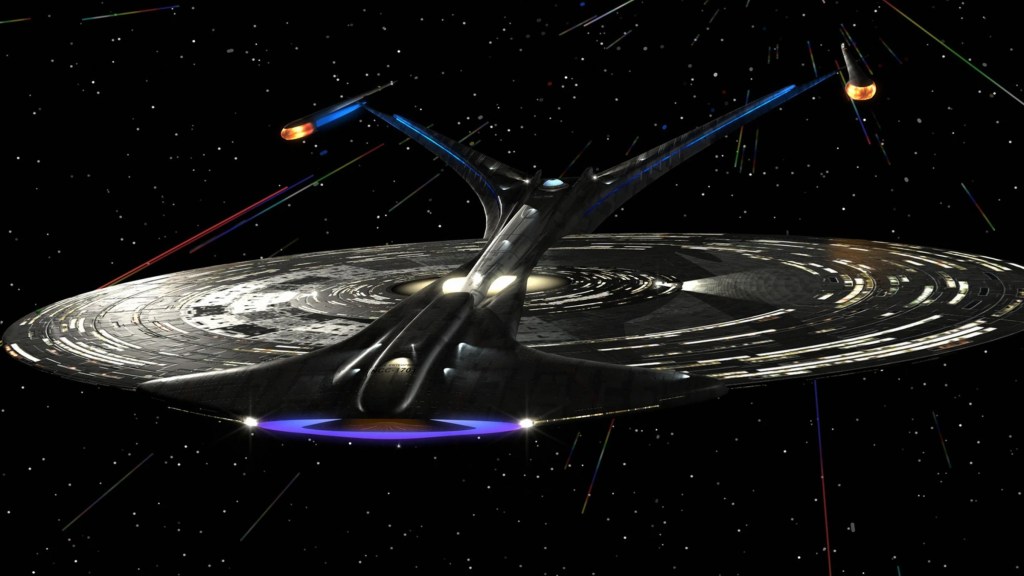
On looks alone, Enterprise‘s future Enterprise from the future-set episode “Azati Prime” is easily the lowest point for the franchise. Clearly designed to reflect its 26th-century setting, it follows the strangely specific trend of futuristic designs being overly complex. The vinyl disc-like saucer section looks impractical, and fundamentally, it has too much of an alien feel. There’s something to be said for the sheer scale of the thing, as it dwarves every other flagship by an almost comical degree, and the designers certainly tried something new, but it’s all a bit too fish-like to really work.
12) NCC-1701-B – Star Trek: Generations
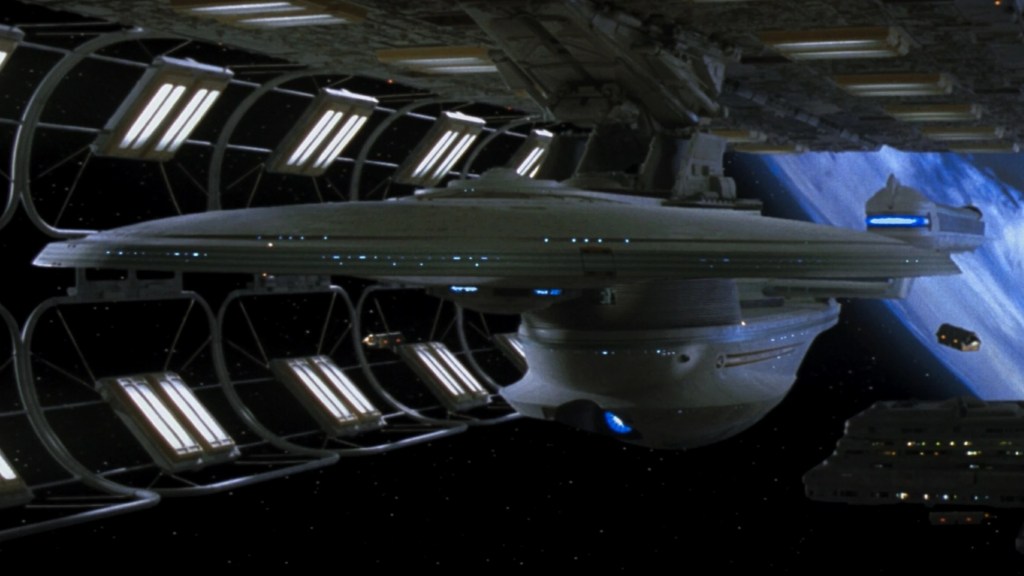
You may think the Enterprise-B is getting a bad rap here because of its association with the El-Aurian that leads to Captain Kirk’s “death” in Generations, but it’s also just not a very good-looking vessel. The wider star drive section and frisbee-shaped saucer have the unfortunate effect of making the ship look squat, despite its length. A variant of the prototype Excelsior seen in the Original Series movie sequels, the B has a curiously early ’80s aesthetic to it (partly thanks to its association with The Search For Spock, but it’s also a visual style seen in other sci-fis of the era. By the time of Generations, it looked outdated. It doesn’t help the ship’s legacy that its only on-screen mission is such an abject failure, that its captain – Harriman – is a failure, and it’s unfit for service either.
11) The NX-01 – Star Trek: Enterprise
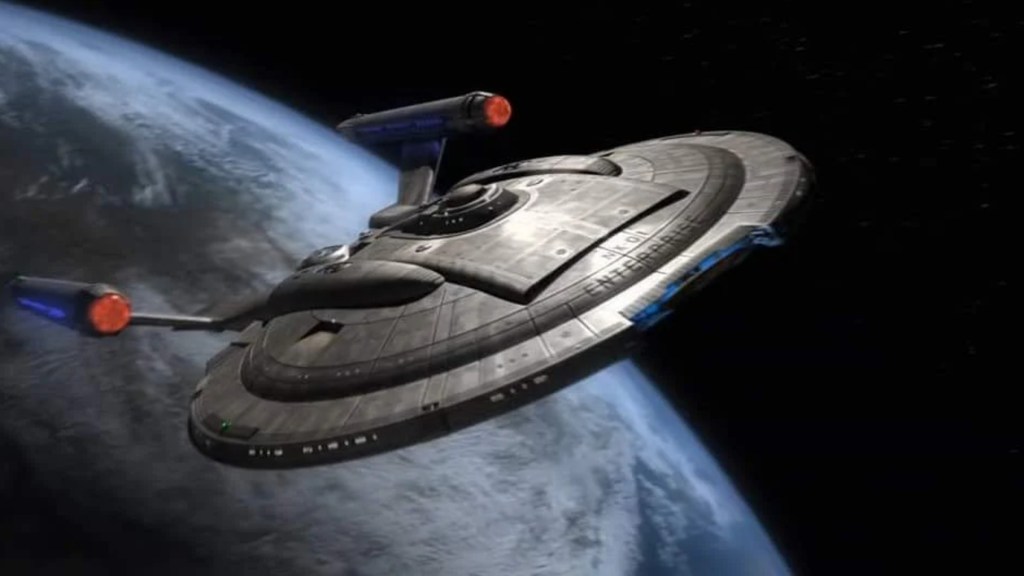
Officially, the mysterious USS Enterprise XCV 330 was the first proper space vessel, which was based on a rejected concept design for the Original Series flagship. But there’s basically nothing in lore about the vessel beyond pictures, so most people now class Enterprise‘s NX-01 as the first. This early ship was the primary vessel captained by Jonathan Archer, and was cutting edge for its time, but the Akira-class like design – with nacelles attached to the saucer section and no real stardrive makes this look decidedly less noble than the Enterprise deserves. It’s not a bad design for a ship, but it’s not a great design for Starfleet’s flagship, even if it makes sense at this point in the timeline.
10) Kelvin Timeline NCC-1701 & NCC-1701-A – Star Trek (2009) & Sequels
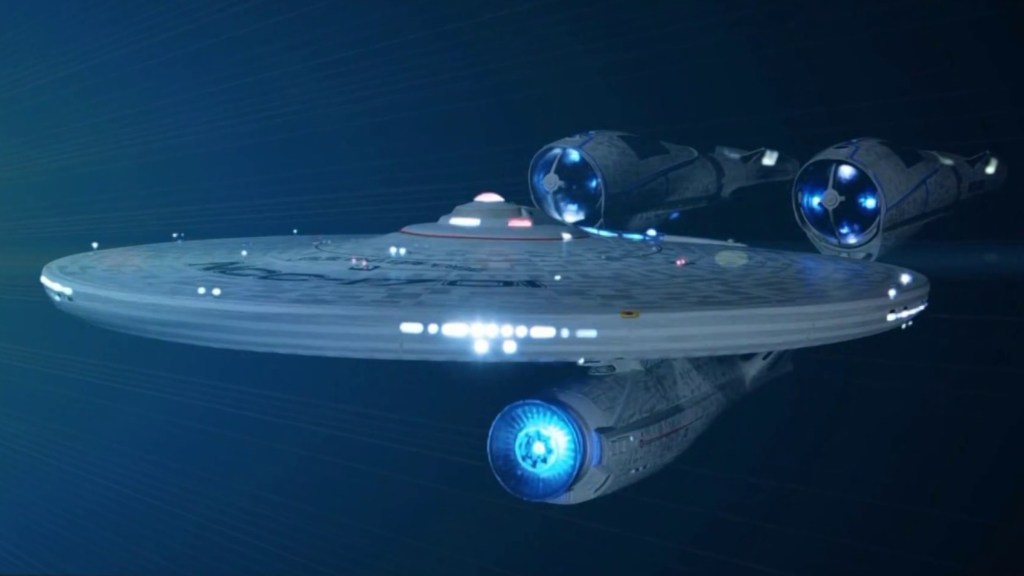
The Kelvin timeline version of the Original Series‘ Enterprise is like a slightly wrong mirror image. It gets most of the basic details right, and it has the aura just about nailed, but there’s something not quite right about it’s bulkier elements and the more rounded features. It’s a reboot model that added the kind of detail afforded by modern CG, and while JJ Abrams attempted to hide it behind lens flare, we all saw it was a slightly inferior redo. For the sequels, the ship was very slightly changed, and given the -A suffix, but there’s not much to really comment on as major differences between the two. So I’m classifying them both here as one.
9) NCC-1701-F – Star Trek: Picard
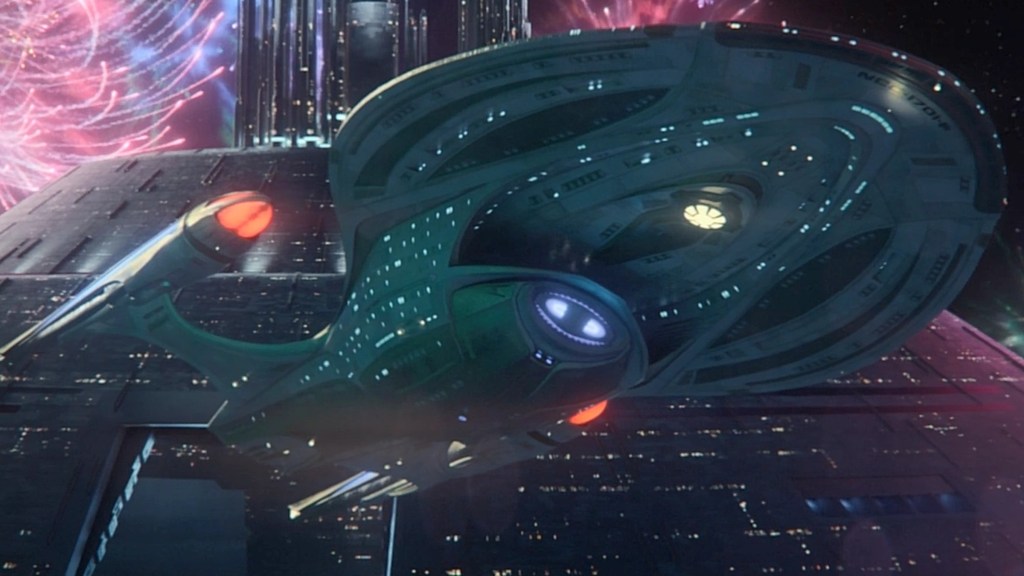
Debuting on Star Trek Online, the Odyssey-class Enterprise F was launched on 2386 and slated for decomission by the time we met it in Picard having been in service for 15 years. Under Admiral Elizabeth Shelby (Elizabeth Dennehy) – who was killed by the Borg – the ship was introduced on the back of its popularity on Star Trek Online, and there’s no denying it’s an impactful vessel. It’s more Voyager than Enterprise, though, and the design of the nacelles are an acquired taste. This is, fundamentally, another flagship that feels over-designed.
8) NCC-1701-G – Star Trek: Picard
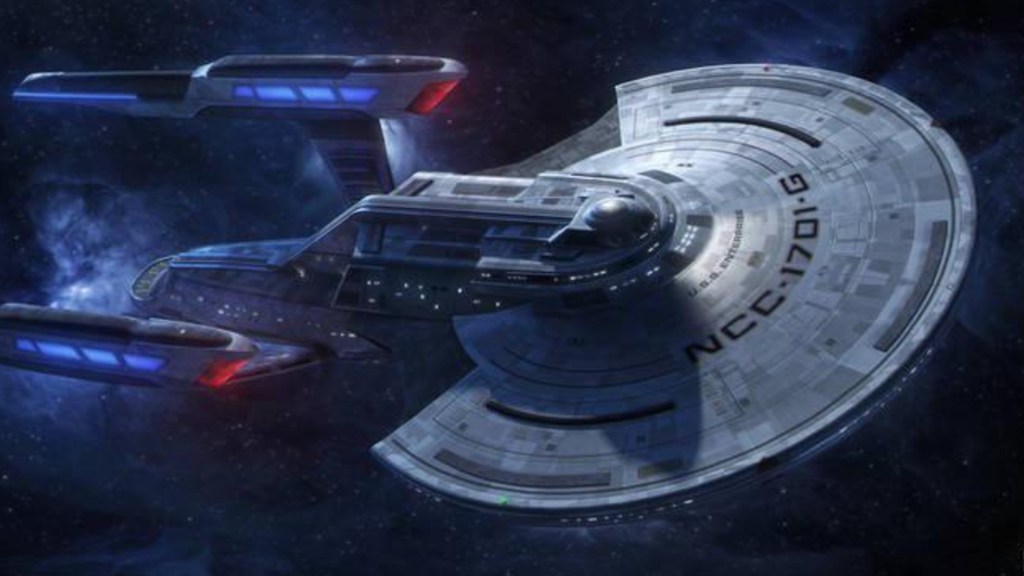
Perhaps controversially, the Enterprise G loses some points for the fact that it started out as another ship entirely in Picard: the Titan-A. The mystique around the ship is, of course, heightened by the fact that the post-Picard era, focused on Captain Seven of Nine’s tenure is now seemingly lost as a rejected pitch. Strip that away and the Enterprise G is a sleek-looking ship that loses something for the incomplete saucer section that makes it look a little over-designed. The Constitution III-class ship lacks the grander feel of some of the other models, and while popular with Picard fans isn’t quite up to the top tier.
7) “All Good Things” NCC-1701-D – Star Trek: Next Generation
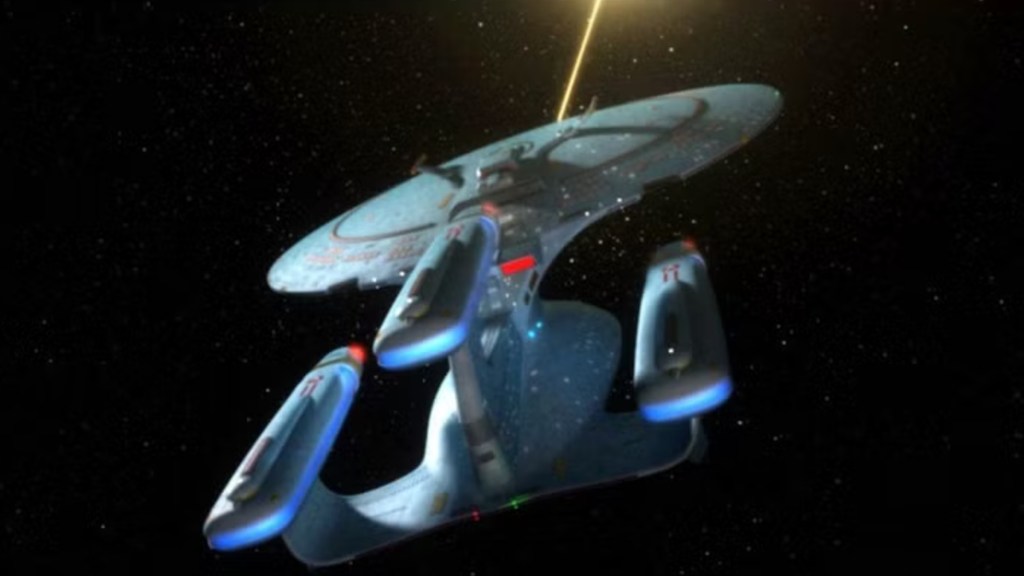
While the original Enterprise D is a thing of beauty (more of that later), the future variant seen in “All Good Things” is a bit of a case of gilding the lily. On paper, Admiral Riker’s ship should be an improvement on all fronts: it’s capable of higher maximum warp and more powerful than its sibling vessel, with a greater armory, and a very cool commanding officer. But the addition of the third nacelle and the instant-killing weaponry (and its Starfleet-defying cloaking device all feel a little like cheat codes). It’s a great collectible, but as a ship, it’s just a little too much like a gimmick.
6) NCC-1701-C – Star Trek: The Next Generation
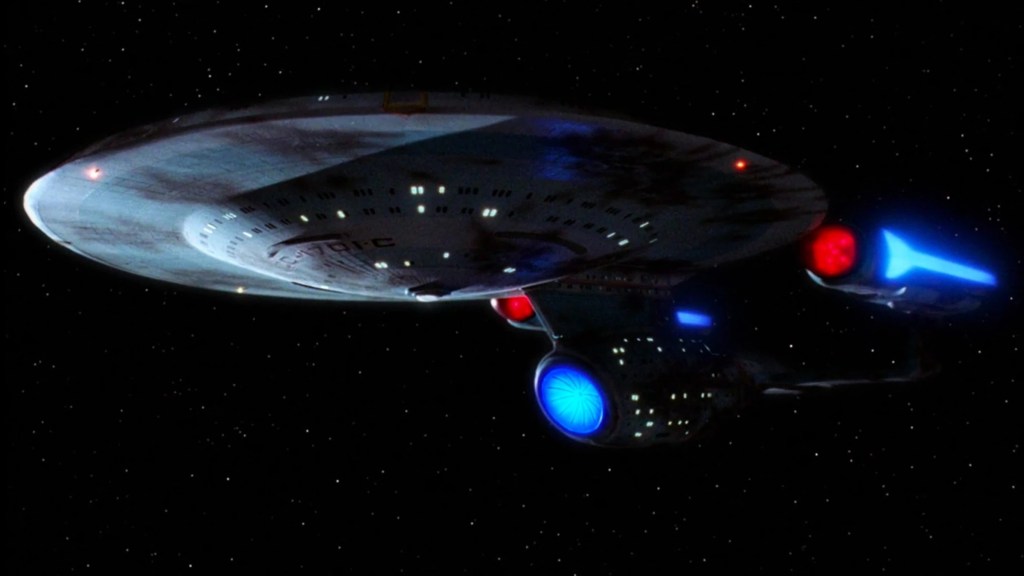
Barely on screen thanks to a single appearance in “Yesterday’s Enterprise” (Season 3, episode 15 the Enterprise C nonetheless had its own history. Commanded by Captain Rachel Garrett, it’s best considered a stepping stone vessel in design terms that fills in one of the “Evolution of Man”-style steps between Kirk and Picard’s eras. That means it looks a little like a cut-and-shut blending elements of the enterprises around it, with more angles than the iconic D, and a stardrive section more like Kirk’s ships. While it didn’t last long before its destruction by the Romulans at Narendra III while defending a Klingon outpost, it’s one of the most charming-looking Enterprises of all.
5) NCC-1701-E – Star Trek: First Contact – Nemesis

The Enterprise E is quite a dramatic change from the iconic D, with a major redesign that producers wanted to make the flagship sleeker. To be fair, that intention was achieved: the E looks like a race car next to its grander predecessor. Typically, the vessels with necks rank higher in design terms, but the E bucked that trend on cool factor. The design is the most warship like of all the Star Trek flagships, which fit the threat of the Borg and the emerging turbulence of the Dominion War (which it illogically sat out). Sadly, we never got to see how Commander Worf’s tenure as Captain of the E played out.
4) NCC-1701 – Star Trek: Discovery/Strange New Worlds
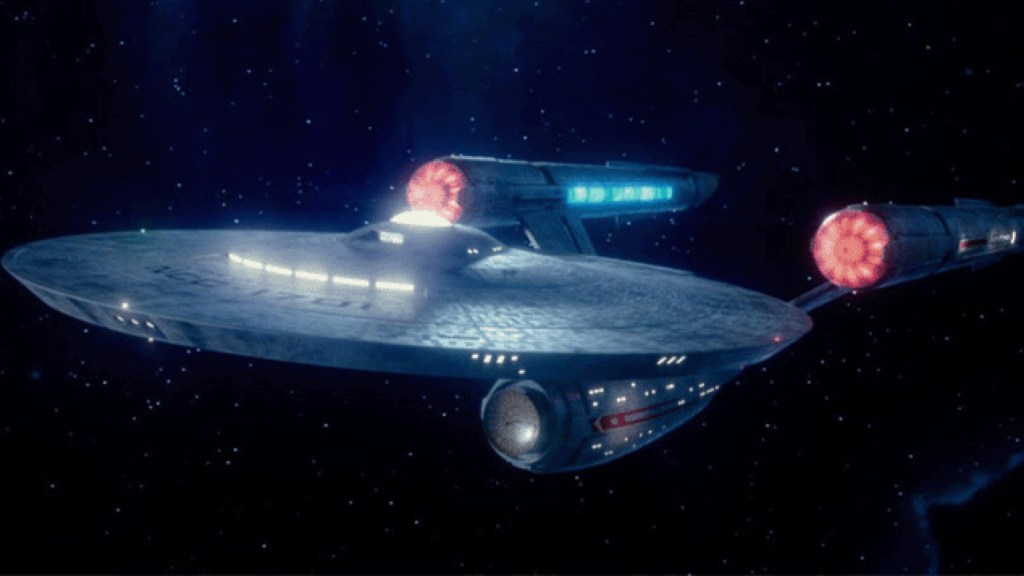
Unlike the Kelvin version of the original Enterprise, Discovery’s updated iteration didn’t take things too far. Yes, there’s a visual upgrade for modern fans, with elements of the Motion Picture refit brought in, but like Strange New Worlds as a whole, this was a great celebration of the past with just enough of a marriage of the new. The ship appears larger than The Original Series version, which causes a bit of a wrinkle in the timeline logic, but it’s forgivable because of how good it looks.
3) NCC-1701 – Star Trek: The Original Series
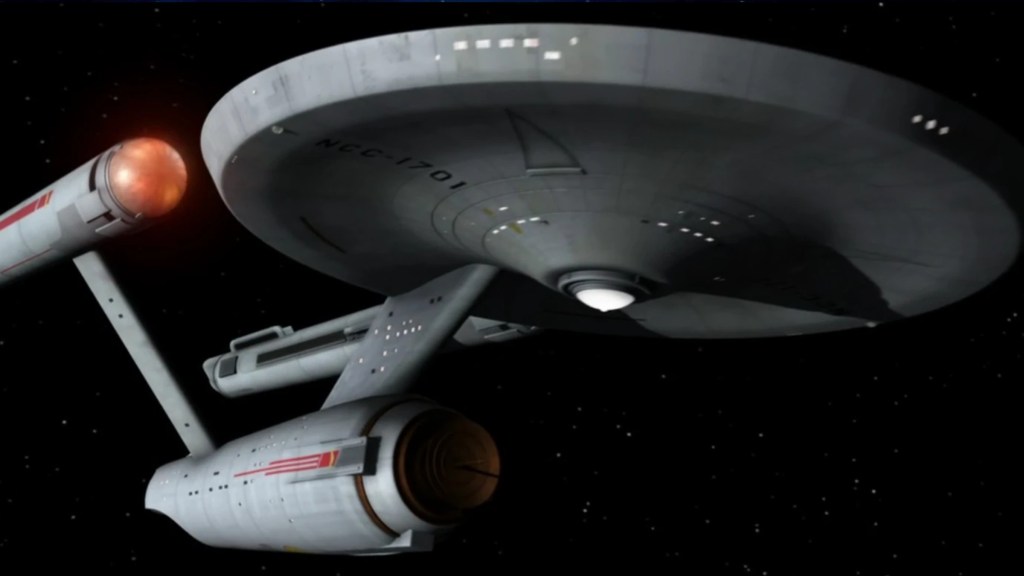
The orange domed nacelles may be one of the most recognizable design features in Star Trek history, but they’re also very tied to the 1960s sci-fi movement, which drops the deciding points to ensure the first Enterprise we ever met on screen comes third. It is a beautiful, iconic ship that exemplifies the simple is best approach that defined the best sci-fi vessels. That lack of detail wasn’t just an aesthetic choice; it was defined by budgetary limitations, but crucially for design fans, it has a glorious silhouette that is instantly recognizable.
2) NCC-1701-A – The Original Series Movies

While it’s often said that the original is always the best, the Motion Picture’s refit of the original Enterprise was an impressive upgrade that managed to shift the classic old ship out of the 1960s. The nacelles are more modern, the swept-back struts feel more pleasing, and the blue detailing in place of the orange/gold just feels cooler. That’s what happens when you call in legendary artist Ralph McQuarrie to make the upgrades. Even with the ship’s legendary teething problems, the design is enough to make it the closest contender to the winner…
1) NCC-1701-D – Star Trek: The Next Generation
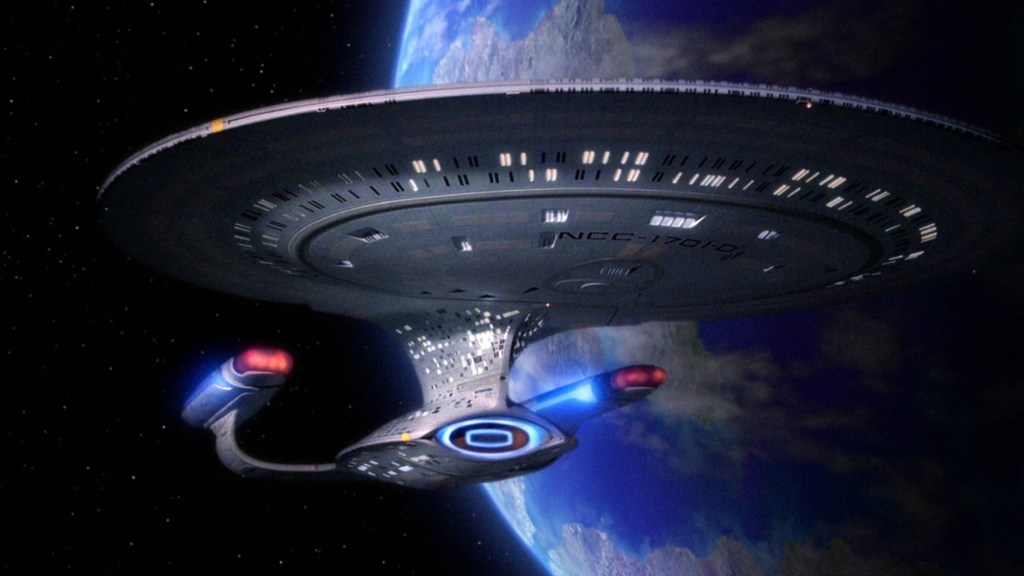
In a close run race, the Next Generation flagship wins against the Original Series models. The Galaxy class ship reinvented the famous vessel for a new generation, with a far bigger saucer section that gave it the visual effect of being rather top-heavy. The red and blue detailing on the nacelles made them the definitive design, and the Sauron-eye like deflector shield was a great upgrade. Overall, the ship felt graceful, impressive and vast (despite later ships dwarfing it). It’s the Rolls Royce of Enterprises and a credit to Starfleet. Unlike the earlier vessels, the Enterprise D has also aged incredibly well, despite the brave decision to make it more of a work of art than just a functional vessel.
What do you think? Leave a comment below and join the conversation now in the ComicBook Forum!
More TV Shows
-

Image Courtesy of ABC -

Image Courtesy of Marvel Studios -

Courtesy of Amazon MGM Studios -

IMAGE COURTESY OF NETFLIX