The Stargate franchise began with a single film in 1994, directed by Roland Emmerich and written with Dean Devlin, that grossed nearly $200 million worldwide on a $55 million budget. That commercial success established the core mythology of an ancient ring-shaped device capable of creating wormholes across the cosmos, but the movie’s ambitions outpaced the studio’s willingness to develop it further as a film property. Fortunately, MGM acquired the franchise’s rights and, in 1997, handed Stargate to television writers Brad Wright and Jonathan Glassner, who built a sequel series that would eventually surpass The X-Files as the longest-running North American science fiction show in history. What followed was nearly 15 uninterrupted years of television, spanning three live-action series, one animated spin-off, and a late-stage web series—a cumulative output of over 350 episodes that cemented Stargate as one of the defining science fiction properties of its era.
Videos by ComicBook.com
The franchise went dormant after Stargate Universe ended in 2011, but Amazon MGM Studios officially greenlit a new series in 2025, with franchise veteran Martin Gero serving as showrunner and writer. Gero is joined by original film creators Devlin and Emmerich as executive producers, alongside Stargate co-creator Brad Wright and longtime producer Joe Mallozzi as consulting producers. The writers’ room assembled in January 2026, with filming expected to begin in late 2026 in London. Before that new chapter opens, here is every Stargate television series, ranked from worst to best.
5) Stargate Infinity
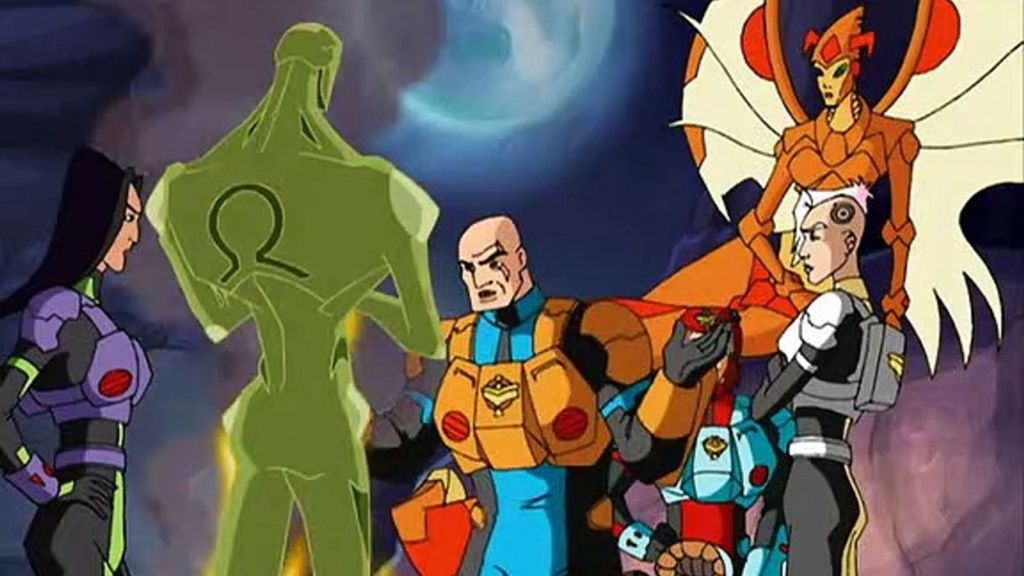
The only animated entry in the franchise, Stargate Infinity aired a single 26-episode season between 2002 and 2003 as a French-American co-production for Fox’s Saturday morning lineup. Created by Eric Lewald and Michael Maliani without any involvement from the live-action creative team, the show followed Major Gus Bonner (voiced by Dale Wilson) and a group of young recruits traveling planet-to-planet after being framed for a crime, a premise that bore little resemblance to the military science fiction of its parent series. In fact, Wright, co-creator of SG-1, publicly stated that Infinity should not be considered part of the official Stargate canon. In addition, the budget constraints of Stargate Infinity were visibly severe and widely noted by critics at the time, resulting in animation that fell well below the production standards the franchise had established in live-action.

4) Stargate Origins
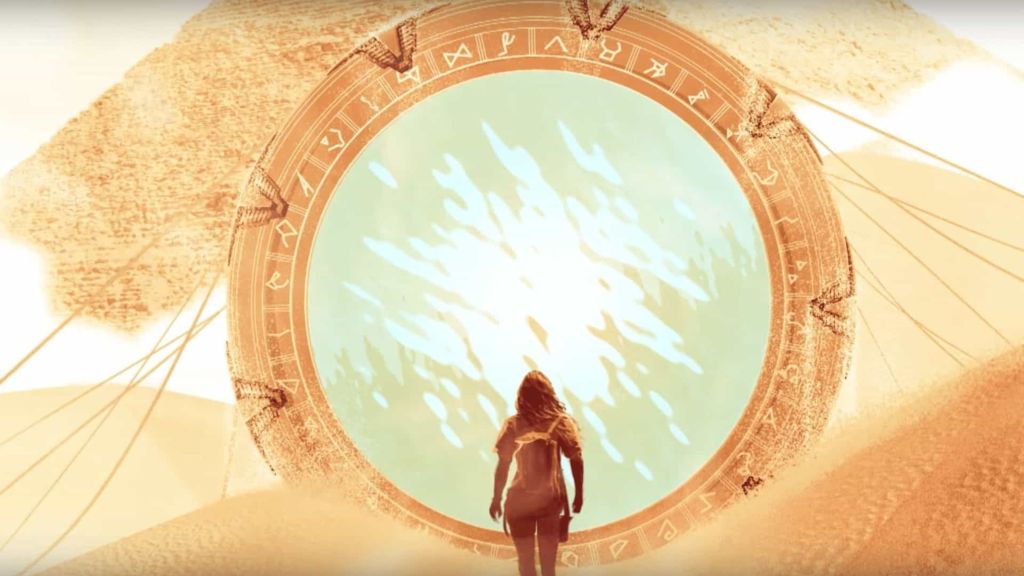
Produced in 2018 to launch MGM’s short-lived Stargate Command digital platform, Stargate Origins functions as a ten-episode prequel web series following a young Catherine Langford (Ellie Gall) as she attempts to rescue her archaeologist father from Nazi operatives seeking to weaponize the Giza Stargate in 1938. None of the writers from the three live-action series were involved in production, and the budget was limited compared to every prior entry in the franchise. Plus, while the period setting offered genuine creative potential, the compressed episode format of roughly ten minutes per installment prevented any meaningful character development or narrative depth. The original platform hosting the series shut down in 2019, making the episodes largely inaccessible until an edited feature cut, titled Stargate Origins: Catherine, became available on digital storefronts.
3) Stargate Universe
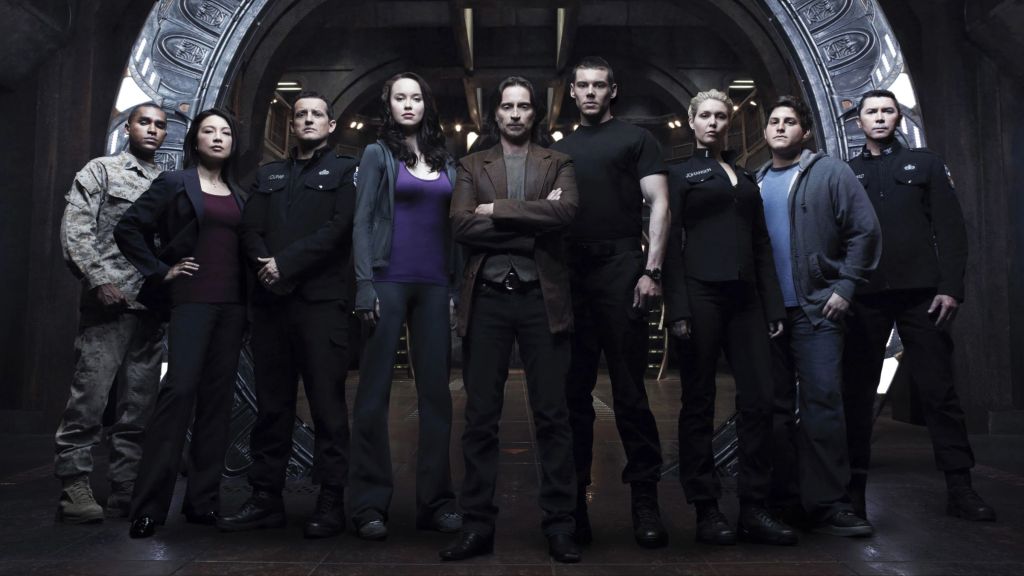
Stargate Universe represented a deliberate tonal overhaul when it premiered in 2009, abandoning the adventure-driven format of its predecessors in favor of a character-intensive drama modeled loosely on Battlestar Galactica. Created by Wright and Robert C. Cooper, the series follows a group of civilians and military personnel stranded aboard the Destiny, an Ancient ship traveling autonomously toward the far edges of the universe. The production design was significantly darker than anything the franchise had previously attempted, and the serialized structure eliminated the planet-of-the-week format that had defined SG-1 and Atlantis for over a decade. Unsurprisingly, the tonal shift divided the existing fanbase, with many longtime viewers rejecting the grim atmosphere as a departure from what made the franchise distinctive. However, the series found its footing across its two seasons, delivering several standout episodes built around genuine emotional stakes.
2) Stargate Atlantis
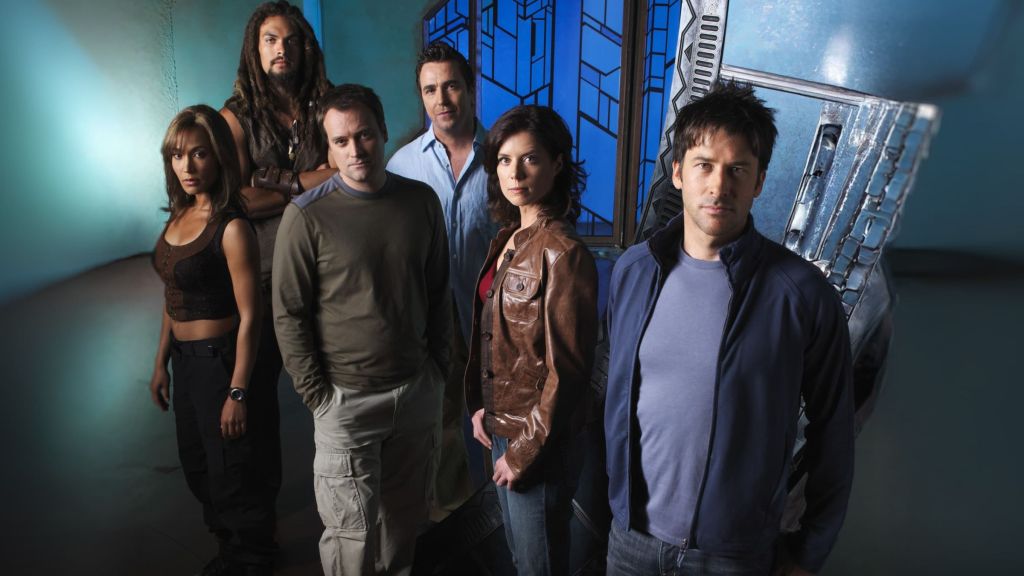
Stargate Atlantis launched in 2004 as SG-1‘s direct spin-off, built around an international expedition through the Stargate to the Pegasus galaxy, where the team discovers the sunken city of Atlantis and immediately draws the attention of the Wraith, a parasitic alien species that feeds on human life force. Created by Wright and Cooper, the series ran five seasons and introduced a new ensemble led by Joe Flanagan, David Hewlett, and Torri Higginson, among others, whose interpersonal chemistry rivaled the camaraderie that had sustained SG-1 for a decade. The show’s decision to place its characters in an entirely separate galaxy from Earth allowed it to develop its own mythology without constant reliance on its parent series, and the Wraith proved to be a genuinely distinctive threat with a visual design and cultural mechanics that separated them from any prior Stargate villain. Above all, Atlantis proved that the Stargate universe was expansive enough to sustain fully independent narratives built around an entirely new cast of characters.
1) Stargate SG-1
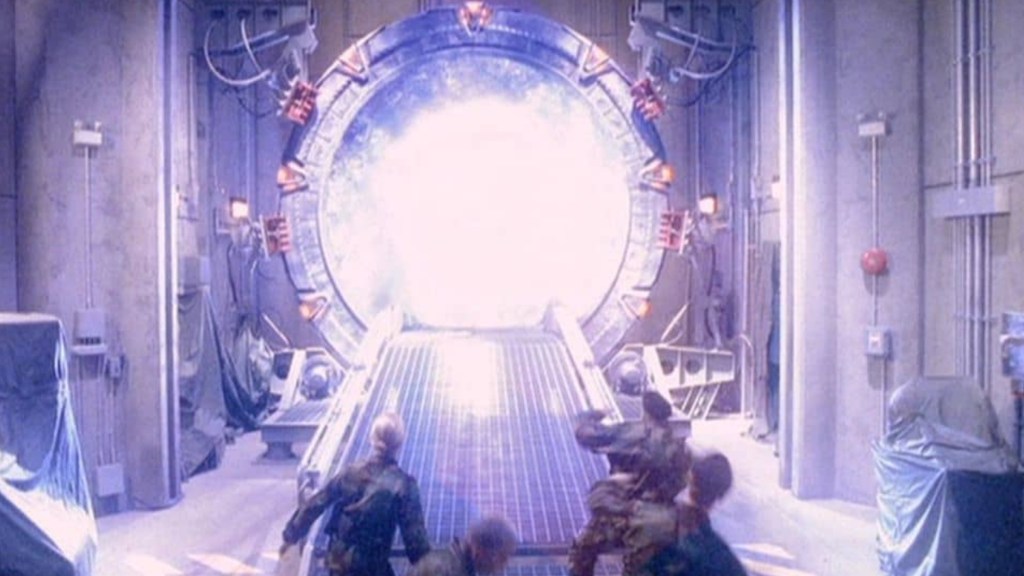
The foundational achievement of the Stargate television franchise, Stargate SG-1 ran for ten seasons between 1997 and 2007, accumulating 214 episodes across Showtime and the Sci Fi Channel. Created by Wright and Glassner as a direct sequel to the 1994 film, the show established the central team of Colonel Jack O’Neill (Richard Dean Anderson), Dr. Daniel Jackson (Michael Shanks), Captain Samantha Carter (Amanda Tapping), and the Jaffa warrior Teal’c (Christopher Judge) as one of the most durable ensemble casts in genre television history. The series constructed an increasingly elaborate mythology around the Goa’uld, the Replicators, and eventually the Ori, threading consequential antagonists across multi-season arcs while maintaining the procedural energy that made individual episodes accessible to new viewers. To make things better, the production quality scaled steadily throughout its run, and the creative team’s willingness to subvert expectations gave the show a flexibility that few science fiction series of its era could match.
Which Stargate series do you consider the most rewarding to revisit today? Leave a comment below and join the conversation now in the ComicBook Forum!
Most Viewed
-
Image Courtesy of Netflix -

Image Courtesy of Ufotable -
Image Courtesy of Netflix -

Warner Bros. Pictures -

Image courtesy of Warner Bros. Pictures