DC Comics revitalized their superhero universe in 1986 with Crisis on Infinite Earths. The multiverse was ended and power levels were lowered, with the various characters all put on one Earth after decades on numerous ones. The first major crossover of this era was Legends, a story that brought the various heroes of the DC Universe together again for the first time to battle Darkseid’s creation Brimstone. It set the stage for the rest of the decade for the publisher, laying the groundwork for the Justice League International, giving readers the first time Wonder Woman teamed with the other heroes, and introduced a character who would play a massive role in the DC Universe: Amanda Waller. She’d bring together the Suicide Squad and the rest was history.
Videos by ComicBook.com
Suicide Squad isn’t the first time a villain team had a book. It’s not even the first Suicide Squad; there was a group of military heroes that gave the team its name. However, it would go on to create a legend that has become one of the most beloved parts of DC Comics for decades. The Suicide Squad combined various villains from across the DC Universe, putting them together for missions that were basically suicide runs. The team’s first series ran til 1992, returning in various guises over the years. However, by the ’00s, it had been ages since we saw the Squad. In the build-up to Infinite Crisis, we’d get a new villain team, one that battled their fellow bad guys and brought C and D-list characters to prominence for the first time in ages: the Secret Six. It was the 21st century version of the Squad, until they returned in the ’10s, forging its own legend and becoming a better team than its predecessor.
The Secret Six Followed in the Suicide Squad’s Footsteps but Forged Their Own Path
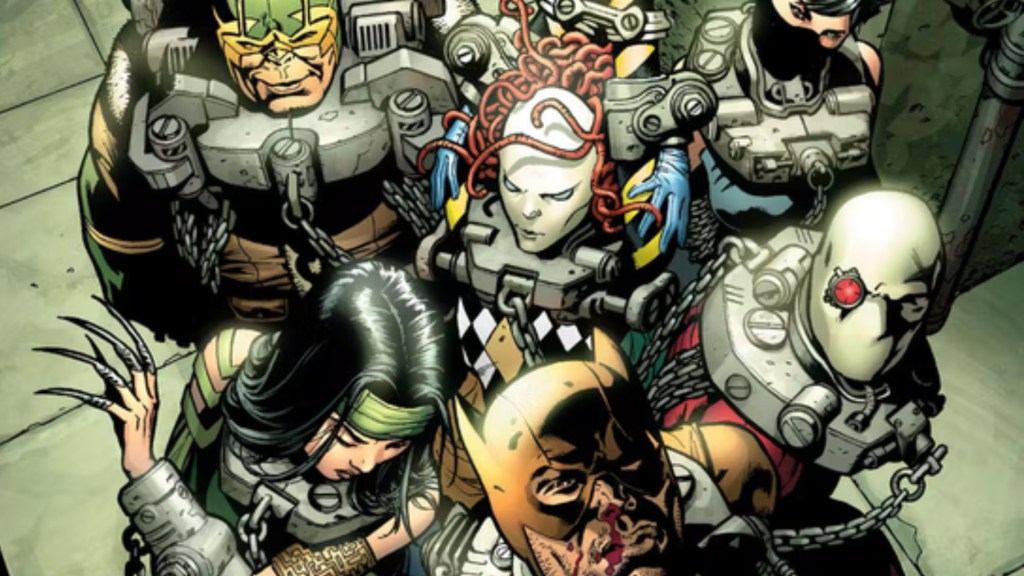
The Suicide Squad was a new version of Task Force X, which was first created after the Justice Society disbanded in the ’50s. Eventually, Waller was given control of it and she changed it into the form we have today. It had a revolving cast of villains, with mainstays like Deadshot, Captain Boomerang, Count Vertigo, Enchantress, and, in more modern days Harley Quinn along with a revolving cast or villains who all worked for Waller, who was technically a villain (but closer to an antagonist) in the way she dealt with the heroes, taking on the missions that no one else would.
The Secret Six is quite similar. The first Secret Six wasn’t a government team, but a group of adventurers brought together by the mysterious Mockingbird to do their bidding. The group would reappear in the days after Countdown to Infinite Crisis #1. The villains had formed the Society, becoming an army against the heroes under the control of Lex Luthor, Talia al Ghul, Calculator, Deathstroke, Black Adam, and Doctor Psycho. A mysterious new Mockingbird appeared, hiring Deadshot, Catman, Cheshire, Scandal Savage, Rag-Doll II, and Parademon to fight against the Society in Villains United, a six-issue miniseries from Gail Simone and Dale Eaglesham.
Simone was the key to the team’s success. She’s someone who I consider an old school comic writer, a creator who understands how to build plots that serve her characters and not the other way around. She was able to make Catman cool for the first time ever, which was no easy feat, and perfectly captured the interplay between the various villains. Villains United was an awesome series not just because its overall plot was cool, but because the characters were so great that you wanted to spend more time with them.
Secret Six first came back as a miniseries in 2007 and then an ongoing in 2008 that ended with the dawn of the New 52, before coming back under Simone for 14 issues in 2015 and getting a recent miniseries from a new team of creators. The team added members like Bane, who would have the best time of his existence as a member, and Black Alice to replace the slain Parademon and the traitor Cheshire and put them through the same kinds of adventures as the Suicide Squad, throwing them at their fellows villains in missions that were as dangerous as they come. Scandal Savage, Catman, and Rag Doll II have been back several times over the years, but none of them reached the level they did with Simone and the newest version of the team, with members Jon Kent and Dreamer, has already come and gone.
The Secret Six took the idea of a villain team and used it perfectly. While Suicide Squad (Vol. 1) is one of the best series ever, I would say that Simone was able to outdo Squad co-creator John Ostrander, which is no easy feat. Much like her stellar current Uncanny X-Men run, Simone was able to find the most interesting parts of the characters and use those as basis for her stories. The Squad often became too much about Waller or, in more recent years, Harley Quinn. The Secret Six always felt like we were following the lives of the team and it’s become a favorite part of the DC Universe.
The Secret Six Blow the Suicide Squad Out of the Water
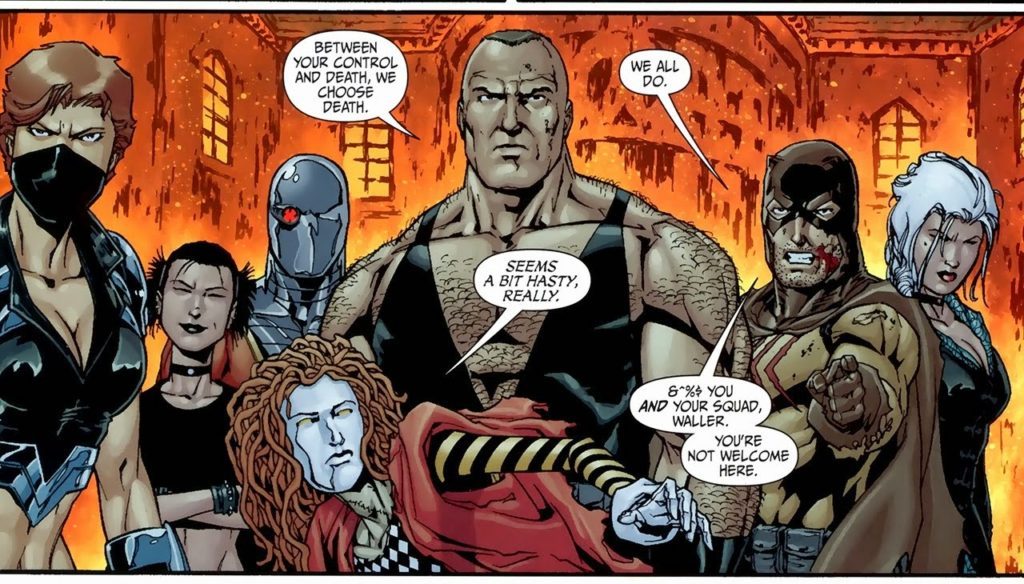
When it comes down to it, the Suicide Squad is more important in DC history – both the original and the modern version – than the Secret Six. However, the Six is way cooler. The Squad is a fun idea and it makes a lot of sense, but in the end, it’s limited by being a part of the Amanda Waller show. The Secret Six, in some ways, is more like the Thunderbolts after Zemo was defeated; a team of villains doing what heroes do, growing and changing over the years. I’ve always felt that was the most interesting part of this kind of concept and in the end, it allowed the Secret Six to become a better team than the Squad.
While the Squad made people care more about Deadshot, it didn’t really do anything important for the other characters who were a part of the team. Few of them grew as characters in any appreciable ways. However, the Secret Six took its characters and made them into something new, fleshing out their personalities, and establishing character relationships that would buoy the team for years. It somehow managed to make Catman cool, which is proves just how awesome the team is. Sure, the Squad did cool things with characters that were already cool, but any team that can made someone want to read about Catman (or Rag Doll II for that matter) is something special. The Squad never was able to do what the Six did and it’s about time they got their flowers.
More Comics
-
Image Courtesy of Marvel Comics -
Image Courtesy of Marvel Comics -
Image Courtesy of DC Comics