Thor is the Norse God of Thunder, the protector of humanity, and one of Marvel’s most famous and influential heroes. He’s one of the core members of the Avengers, having been one of its founding members and staying with the team longer than almost any other hero. Over the years, he’s continually grown and redefined what it means to be a god in Marvel, showing everyone what worthiness looks like. He’s been a driving force for good in Marvel ever since his introduction, and has brought forth the growth of numerous other heroes, from Jane Foster to Thunderstrike. However, recently, Marvel has had a major problem with Thor and the rest of the gods.
Videos by ComicBook.com
Simply put, somewhere along the way, gods stopped feeling like gods. They went from impassioned deities with an inherent nobility to even the evilest ones, to only distinguishable from the average character by their vocabulary. The gods have long since stopped being godly, but Mortal Thor is finally changing that. This series is placing the gods back into their noble, mythic landscape and making them feel like beings that people can and should worship, as opposed to inherently corrupt and incompetent.
The Problem With Marvel’s Gods
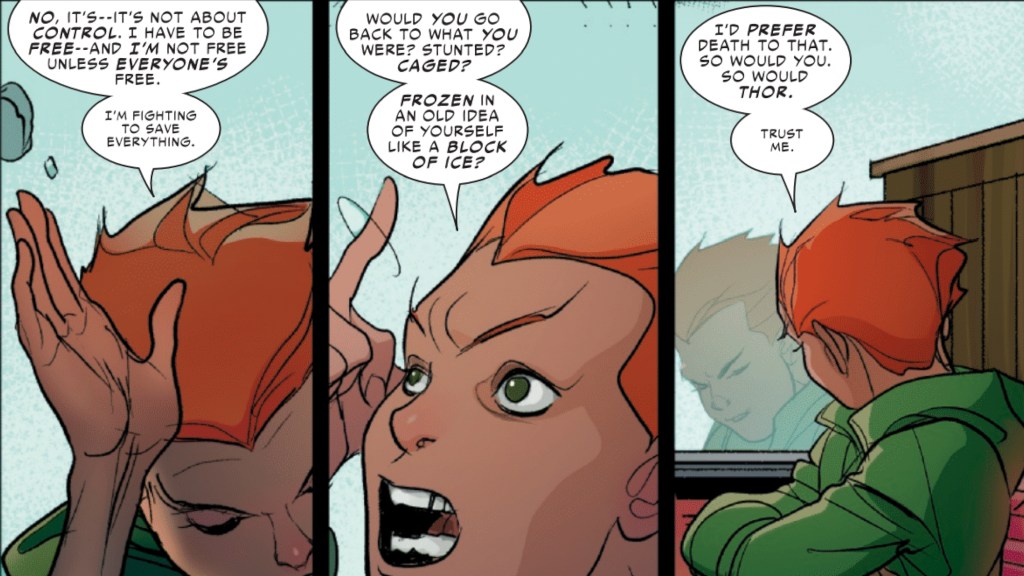
Gods, to a certain extent, have to be different from mortals. Gods are beings that live above mortals and embody some core aspect of reality. For example, Thor is not just a warrior; he is the living storm and defender of mankind, and Loki is the embodiment of stories. Marvel repeatedly impresses the fact that gods are different from humanity, which comprises about half the dialogue from gods when interacting with mortals, and yet, while they said that, it never felt true.
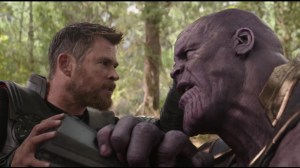
In recent years, Marvel has brought the gods down from their places on high to the ground with everyone else. The majority of Marvel’s gods went from noble, if often prideful and out-of-touch beings to petulant Karens and manchildren. Take a look at Odin’s characterization during his earliest appearances and compare that to his leading roles in the last ten years. During Jane Foster’s time as the Mighty Thor, every god, even noble heroes like Thor Odinson, where declared unworthy simply because of their nature, saying they had not earned their worship. During that era, the gods really did act like nothing more than entitled humans, and that is a problem.
While it’s not bad worldbuilding to have gods that act more like normal people or are fallible, when there is virtually no distinction at some points, and then there is a massive distinction at others, it becomes a big issue. These gods are stated to be representatives of the human condition and fundamental forces of the universe, and yet they do not act like that at all, and often are as easy to knock down as common street-level mooks. The gods didn’t act like gods at all but wanted to be treated like them, which is the worst of both worlds. That wasn’t an intentional storytelling beat, either; it was simply the result of conflicting views.
Gods Returned to Divinity and Duty
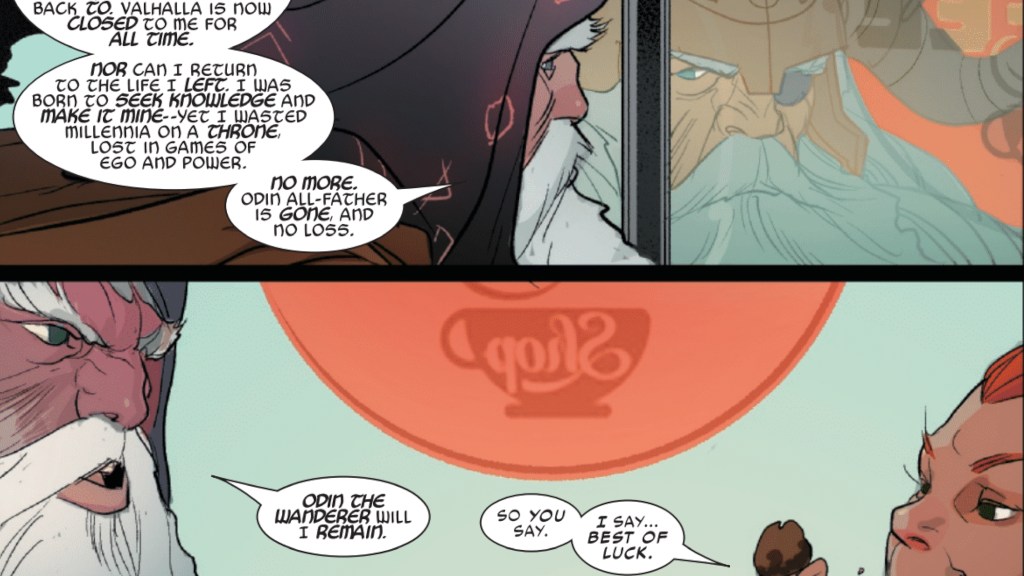
Where Marvel’s gods once languished as being as interchangeable and flippant as normal mortals, Mortal Thor returned their mysticism to them. Thor has died and been reborn as the mortal man Sigurd Jarlson. Sigurd is a truly human man, but still feels the call to be a hero wherever he can, including waging war on a biker gang that used the symbol of Thor to justify their intimidation and crime. At the same time, Loki had become the narrator of the story, subtly manipulating events like writing on the page, guiding Sigurd to live the best way for a grand story or myth, as gods acting in accordance with their story inspire greater belief and power.
The best examples of this new take on divinity, however, came with Blake and Odin. Blake had been turned into the God of Lies by Loki, who forsook the role, and he lost his soul when Thor was reborn as a human. Now, all of his actions embody his domain of lies, where he is spreading a painful and evil philosophy under the idea that only he can save people from themselves. He is lying and acting as a serpent should, which perfectly matches his narrative identity. Meanwhile, Odin has left Valhalla to help Sigurd. Instead of the petty king who took offense at everything, he was a knowledge-seeker who was wise and powerful. The narrative respected Odin, and he, in turn, acted with respect, which is infinitely more interesting than him being another evil Zeus clone.
In short, Marvel has finally made their gods begin to act in accordance with their roles and with respect, which makes them feel far more divine and worthy of worship than if they were just really strong people. Mortal Thor has completely rewritten the book on what divinity looks like in Marvel, and here’s hoping that the gods continue to be this nuanced and mythical as the story continues.
What do you think? Leave a comment in the comment section below and join the conversation on the ComicBook Forums!
Most Viewed
-
Image Courtesy of Madhouse -
Image courtesy of XLGames -

Image courtesy of The Pokemon Company -
Image courtesy of Bug Films