Mortal Kombat 1 eventually grew into a fantastic fighting game from a mechanical perspective, but it was a long and arduous journey that didn’t reverse the negative perception it had garnered. The fighting mechanics improved and allowed for more freedom, but the anemic presentation and paltry set of features carried it to its premature grave. 2XKO, Riot Games’ new fighting game stacked with League of Legends characters, has plenty of free-to-play trappings and is the studio’s first entry in the genre, yet it still manages to have a lot of the features NetherRealm Studios’ latest title never received and succeeds because of it.
Videos by ComicBook.com
Mortal Kombat 1‘s Online Options Were Always Lackluster
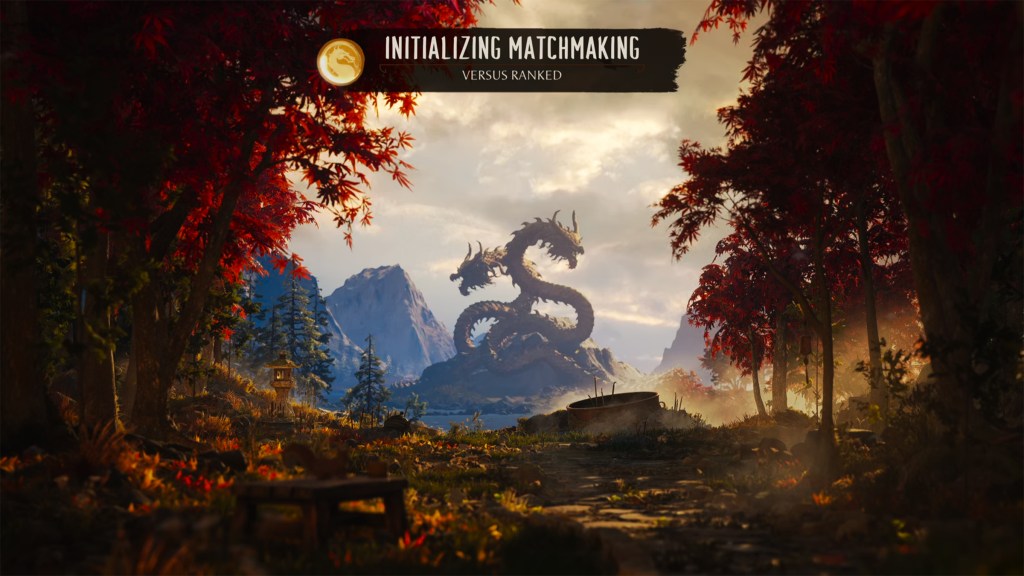
Online multiplayer is particularly important for fighting games, and this was one of Mortal Kombat 1’s greatest weaknesses. Not only did it take months to eventually get cross-platform play and online practice — industry standard features most titles launch with — it never received online lobbies. Queuing for a match was also particularly annoying because it lacked any way to practice while waiting, meaning players couldn’t stay warm between sets. Anyone who has played MK1 online has spent far too much time looking at trees and that one dragon statue when they could have been practicing combos. Being able to mute players on console and filter for connection types weren’t there at launch. And, to top it all off, the mysterious Warrior Shrine tab in the online menu that was grayed out for more than a year ended up just being a simple and underwhelming seasonal leaderboard.
The netcode is solid, but MK1’s online multiplayer was woefully lacking and took months to get to a somewhat passable (at best) state. 2XKO, on the other hand, is much more fully featured. Cross-play is seamless and supported by an avatar-led lobby system that’s meant to be a digital simulacrum of the bygone era of arcades. Street Fighter 6’s Battle Hub is a more fully featured version of the same idea, but what’s here is more than functional since it allows for quick matches while also getting at the communal aspect fighting games need to thrive.
It is annoying to have to physically run to an arcade cabinet after it finds a match — one button should teleport players to it — and it would be great if players could opt out of the lobby system altogether, so this isn’t a perfect system. It’s possible to practice while searching for matches, but it’s only enabled in ranked mode for some reason and doesn’t kick the player back to practice once the set ends. There also no online practice mode or ping filter. Despite this quibbles, the foundation is solid enough and leaves plenty of room for Riot to build on it in the future. The key here, though, is it isn’t working from the sorely incompetent levels that MK1 launched at.
2XKO‘s Training Options Are Incredibly Robust
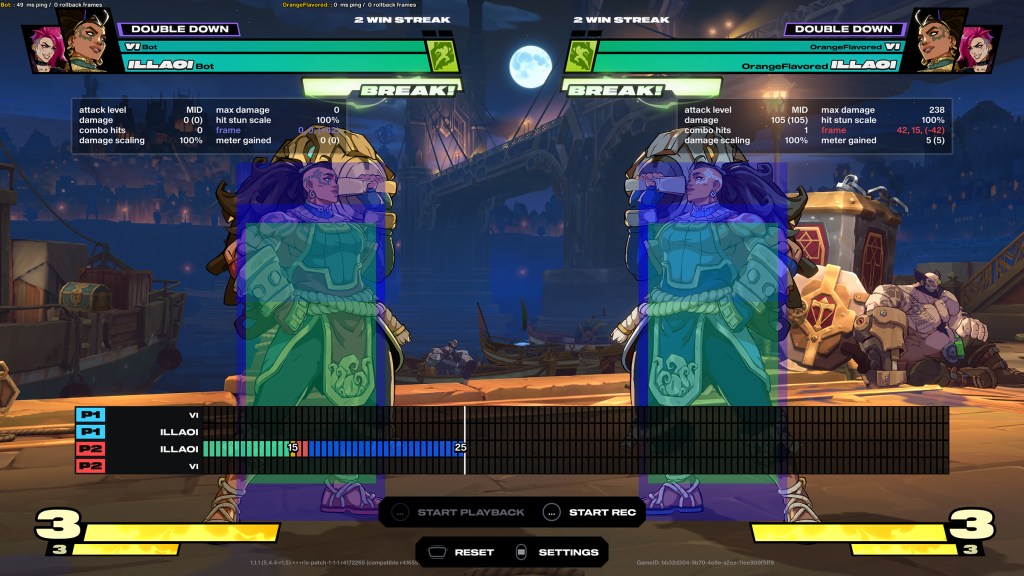
Practice mode is also incredibly robust no matter if players are jumping into it from the main menu or ranked queue. There are a dizzying amount of options here to toggle and move around, meaning those who want to dig into the nitty gritty are more than able to. This means players can slow down the game speed to better understand combo routes, turn on frame data, make the hitboxes and hurtboxes visible, and set exactly what frame the CPU guards on, to name a few.
While it lacks a replay takeover feature (although Riot is aware of the demand), it’s empowering to have such access to so many knobs and switches. MK1’s practice mode was functional for some of the basics, but was lackluster when compared to its peers and even past NetherRealm games; it wasn’t even possible to pin moves on the screen at launch. NetherRealm added character-specific options to practice mode, the ability to pin moves, and, surprisingly, a replay takeover feature, but the mode as a whole was still severely behind the times and is still one of the game’s more underwhelming aspects. NetherRealm was a big pioneer in fighting game tutorials with its character-specific trials (which aren’t even in MK1) and detailed mechanical guides, so it was a huge bummer to see the team fall short of the genre standards as well as its own. Being able to delve into the systems helps newcomers and the hardcore alike in their own different ways, meaning this pain was widespread.

It’s also possible to practice with characters players haven’t purchased. This is a player-forward step in mitigating buyer’s remorse and allowing every single player to lab against anything they might come up against. Street Fighter 6 has a similar system with its Rental Fighter tickets, too, that allows access to any fighter for one hour.
Like Tekken 8, MK1 doesn’t let players try before they buy. This means anyone who wants to even see if a character is their style or wants to learn how to defend against them has to spend $7.99. MK1 focuses on guest characters more than other franchises and reinvents itself with every entry, so players can’t even bank on past knowledge. MK1’s Ermac isn’t anything like his MKX or MK9 iterations. The Boys’ Homelander seems like he’d be an easy character to pick up and play, but, while one of the strongest combatants in the game even after many nerfs, he has an extremely strange stance-heavy style that’s likely to be off-putting to some. Being able to rent fighters is not a make-or-break feature, but it’s just another way MK1 could have led, as the franchise once did.
Riot has had plenty of time since 2XKO’s 2019 announcement to hone all these sorts of features and launch in a pretty decent shape. It’s abundantly clear Warner Bros. doesn’t give NetherRealm nearly the same amount of freedom, which explains why MK1 felt so skeletal. Regardless, 2XKO, like Tekken 8 before it, is yet another big fighting game that understands the importance certain modes have when dictating the general quality of a fighting game. 2XKO has a mechanical backbone that is accessible while also being surprisingly nuanced. But while having online lobbies and cross-platform play doesn’t magically make combat mechanics deeper or more rewarding, these kinds of options set up a remarkable foundation to build on, which Riot seems to understand quite well.
What do you think? Leave a comment below and join the conversation now in the ComicBook Forum!
Most Viewed
-

Image courtesy of Tor Books/Macmillan -

Image courtesy of Amazon MGM Studios