On December 10, 1993, a small team at id Software released a little game for MS-DOS called Doom. What followed was a series of controversies, numerous sequels, a feature film that we’re never going to mention again, and much more. Doom wasn’t the first of its kind, as numerous first-person shooters had been developed in previous years, but it definitely broke the mold, establishing itself as the game to beat at a time when small teams around the world were coding all kinds of FPS titles. Doom launched a franchise, introduced many of the genre’s norms, and has been ported to … everything.
Videos by ComicBook.com
If you played Doom when it was released in ‘93, you know how special it truly was. With its hordes of undead monsters, mutant creatures, and literal spawn of Hell, you’d never played anything like it. The game was innovative in that it used 2D images to create a proper 3D environment, making it a first step in what would later be called “2.5D graphics.” This innovation and others elevated the genre from earlier attempts, and it wasn’t id Software’s first foray. The studio had previously released Wolfenstein 3D, which was a less-controversial early FPS that broke new ground as the “grandfather of FPSs”, but Doom was so much more.
Doom Interwove Violent Imagery and Storytelling Into Art
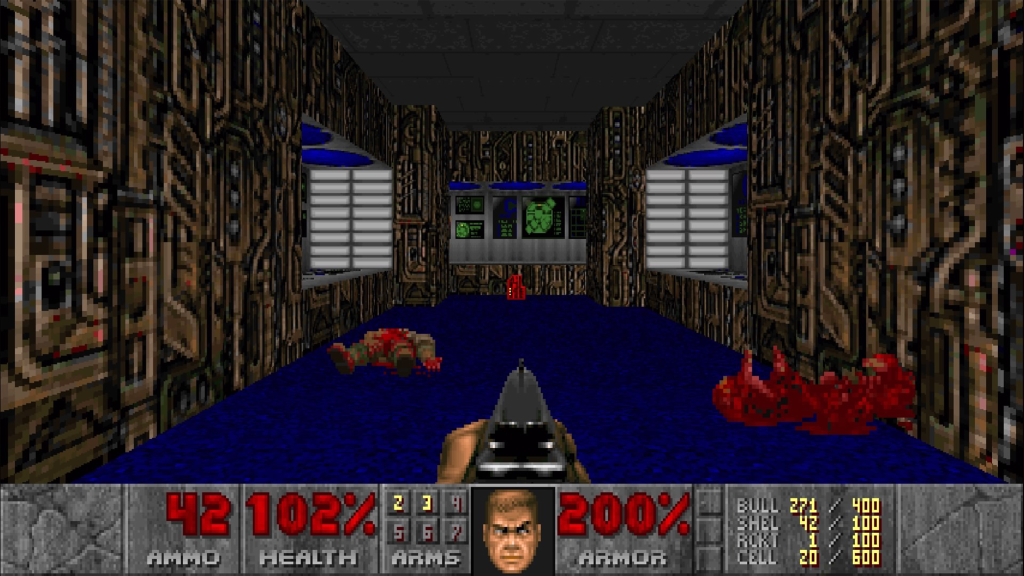
Wolfenstein 3D utilized right angles and flat surfaces, but modders managed to swap in new files, proving that it could be changed in interesting ways. Seeing this, the devs created the Doom engine, which allowed walls and floors to be at any angle and at any height, significantly expanding the functionality of level design. It also featured improvements in lighting that made far-away objects appear darker than closer ones. This was innovative at the time and offered a noticeable improvement over similar FPSs of the era — these elements combined to deliver faster gameplay, enabling more violent interactions with mobs.
The game’s violence, which is tame by today’s standards, was beloved by gamers and loathed by parents. Doom is filled with gore, blood, and guts — it depicted everything the technology allowed, and didn’t hold back in any way. This upset a ton of parents’ groups, many of which sounded the now ancient and disproven alarm of “violent video games make people violent.” When the game was ported to the Sega 32X, it became one of the first to receive a Mature 17+ rating for graphic violence, and things only got better/worse, depending on your point of view, as the franchise expanded.
Seven years after its release, authorities found that the perpetrators of the Columbine High School Massacre loved Doom, so the game was targeted once more. Putting the violent imagery aside, media coverage of Doom only made more people want to play it. That’s a common result of censorship, and it ultimately worked in Doom’s favor. People flocked to purchase their copies, while plenty more illegally copied their buddy’s games, further expanding Doom’s influence throughout popular culture. Since its initial release in 1993, Doom sold an estimated 3.5 million copies.
While Doom’s violence and gore were the main points of contention surrounding its release, it had a significant impact in another area of gaming that’s common today. Doom featured multiplayer, offering two modes over LAN or modem: cooperative and deathmatch. In fact, the word “deathmatch” was popularized in its modern, large-scale sense in video games via Doom, though it had been around for several years prior. Regardless, adding multiplayer options that let friends find and kill their buddies was innovative and incredibly influential. Imagine modern gaming without online multiplayer … it’s not a pretty picture, but it could have happened were it not for Doom.
Doom Changed Video Games for Good

Whether you love Doom, hate it, or never played it, there’s little doubt you know what it is. That’s mainly because it was one of the most influential video games ever made, and that’s certainly true of the FPS genre. Every Call of Duty game … every FPS since 1993 owes much to Doom’s success. It showed what the genre could become by including multiple weapons, hidden areas, and so much more. While dated by today’s standards, the game remains fun to play today and is a cultural milestone in the history of video games. There’s a reason people port it to everything from baby monitors to ATMs and pregnancy tests. Doom has a lasting legacy that solidifies it in the zeitgeist, placing it alongside Pong, Pac-Man, Super Mario Bros., Grand Theft Auto, Final Fantasy VII, Skyrim, and a handful of others.
Did you play the original Doom? Leave a comment below and join the conversation now in the ComicBook Forum!
Most Viewed
-

Courtesy of Sony Pictures Animation / McDonalds -

©Tsuyoshi Takaki/Shueisha, Project BLACK TORCH -

Image Courtesy of Studio Pierrot