Much has been said about Crimson Desert, both long before it was released and immediately after its turbulent launch. Some have heralded it as the next Skyrim, the single-player RPG (or non-RPG if Pearl Abyss has anything to say about it) to rule them all. Others have pointed to its rocky technical state, endless cavalcade of updates, and missing features as evidence that Pearl Abyss rushed it out of the gate too early, and we shouldn’t be praising it so relentlessly for fixing an inherently broken product. I, as a fan of the game, veer more tepidly toward the former camp, although I’m not about to outright state it is the greatest single-player game just yet. I’ll reserve that judgment for my deathbed.
Videos by ComicBook.com
However, I can understand the critiques of Crimson Desert’s patches, at least in part. They have been a pretty fundamental part of its launch history, both a reminder of the glacial pace at which the majority of developers address core issues and of the continued tradition of fixing post-launch, rather than ensuring a game is in a completed state on release day. Yet, I’m not certain Pearl Abyss is merely fixing a rushed product, as much as it may seem like it. Rather, it is doing something it should have done a long time ago, but that is not typically a stage in the conventional game development model. Crimson Desert’s huge new patches expose the clear lack of beta testing in most single-player experiences and confirm that, as we’ve known for a while now, it needs to change.
Crimson Desert’s Major Updates Prove We Need Public Beta’s For Single-Player Games
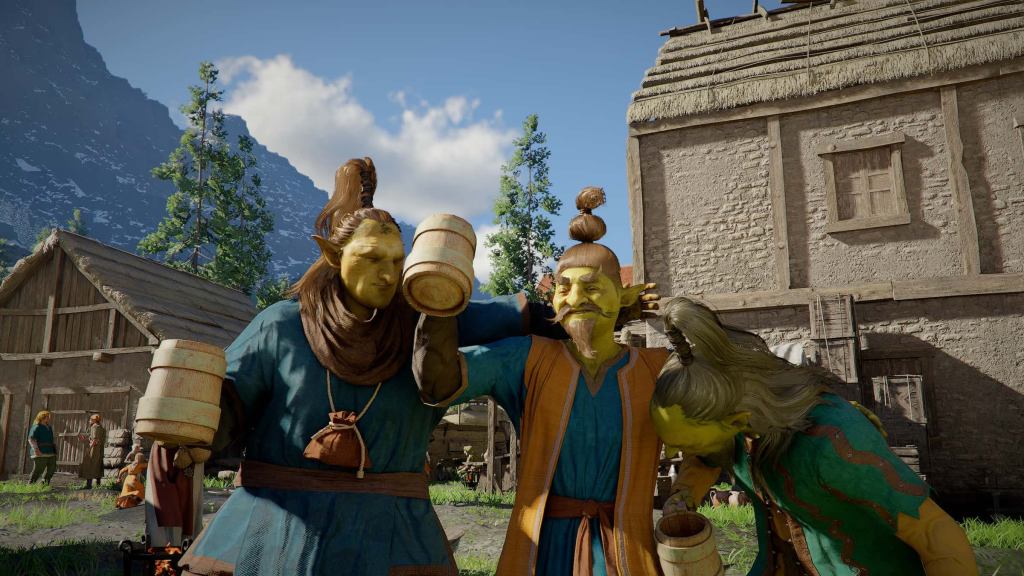
Crimson Desert’s patches undeniably deserve praise for adding highly-requested and much-needed features as well as addressing common complaints and fixing broken mechanics. The speed at which they have been released is frankly astounding, although, for reasons that will become evident, it should absolutely not become the industry standard. It has meant that, in an extraordinarily short space of time, Crimson Desert has gone from being an exceptional open-world title developed within a vacuum to a significantly improved experience built in collaboration with fans. It is, of course, this latter point that is all-important, as it is this sense of player-led co-operation that exposes the fundamentally flawed method in which developers are still making games.
It wasn’t until Crimson Desert was in the hands of players that its biggest issues were identified, and that, to me, illustrates a greater need for player input in game development. Now, to be absolutely clear, I am in no way advocating for players to dictate the direction of a video game, nor to have any level of control over even individual aspects of its design. However, there is a reason why Early Access exists and has proven to be an immensely effective tool, and that’s because a huge swathe of players are very capable of identifying glaring faults with an experience and offering constructive methods to resolve them. This format worked extremely well for Baldur’s Gate 3, a game that began life as an Early Access title, enabling Larian Studios to focus on features fans wanted to see and iron out those they felt didn’t quite work. That game went on to be Game of the Year and sell 20 million copies, at the time of writing.

Of course, games can be commercially successful even if developed within a vacuum without any input from players pre-launch. However, especially considering just how expensive video game development is getting and the ballooning budgets required to get even the most basic of single-player titles off the ground, it makes sense to ensure that a game is in a state that its core fanbase will enjoy by the time it rolls around, rather than in a terrible one that requires lots of post-launch support and the presumably significant large amount resources needed to fund those. There are single-player games that do offer a form of beta testing to gauge feedback and interest from fans, but the majority of triple-A developers do not consider this option, as it has never been a core tenet of traditional game development.
Yet, considering that most developers do not have the resources or staff capable of producing the sheer volume of patches Pearl Abyss has for Crimson Desert at the rate that it has, it feels that post-launch support is no longer a viable option to ensure the long-term sustainability of a single-player title and increase sales enough to cover the exorbitant production costs. Multiplayer games have known this for decades, which is why they frequently host betas to see player retention levels, general interest in the experience as a whole, and garner feedback on core gameplay mechanics. At the very least, in an era in which QA teams are being replaced with AI, it makes sense to outsource testing and feedback to legions of dedicated fans who, let’s be honest, would likely pay for the opportunity to experience even a slice of gameplay early.
Crimson Desert’s Patches Should Not Be The Norm
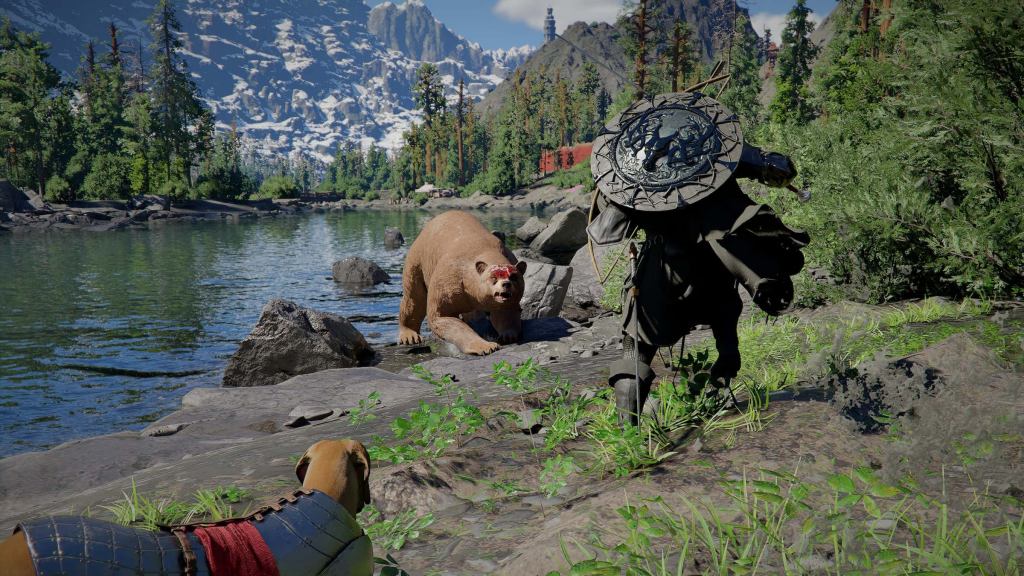
Of course, I’m not saying that there shouldn’t be room for post-launch support. Ultimately, there will always be a slew of unexpected technical issues or unexpected exploits identified by players that will pop up. It is an unavoidable element of game development, especially as games only continue to get bigger and bigger. However, I don’t want developers to look at Crimson Desert’s extraordinary delivery of game-changing patches and see that as something to aspire to, nor do I want detractors to view said transformational updates as evidence of a broken game. Neither is true. Even Bethesda, the billion-dollar company with hundreds of staff members, took weeks to deploy a patch to fix Starfield’s technical issues on PS5, and it is a game that has been out for nearly three years.
It is not realistic to see Crimson Desert’s absurd patches as the gold standard, as it requires a ridiculous number of staff working overtime on a singular project, something that most Western studios simply cannot afford. Instead, what needs to change is the game development process as a whole. The implementation of some form of Early Access needs to become the norm. Naturally, developers shouldn’t release the entire game early, but rather a vertical slice, one that encapsulates the core gameplay mechanics that are fundamental to the experience and thus need robust testing. In doing so, developers can gauge whether players even care about them and if there’s anything they overlooked regarding their implementation.

Perhaps this is a lofty expectation, especially considering how secretive and protective developers can be of AAA games in development. However, there are other benefits to it than simply garnering the unpaid work of dedicated fans, most obviously of which are the continued build-up of hype, the guaranteed pre-orders, and the ability to set expectations. Had Crimson Desert offered players a beta test that showcased much of what previewers got to see, then they’d know before launch that it wasn’t a Witcher 3-esque RPG, but rather more akin to Dragon’s Dogma. That would have established an expectation that would have likely better informed reviewers of the experience they were critiquing and allowed fans to judge it based on its actual merits, rather than those they had assumed it would have.
Ultimately, such a fundamental change in AAA development is unlikely to happen quickly, if at all. However, often, reevaluating a process and shifting it to benefit a finished product will result in a better experience and potentially more revenue. Maybe betas for AAA single-player games like Crimson Desert would result in fewer sales, as players would have gotten a taste for it early and decided they didn’t like it. Perhaps, in some cases, there isn’t enough of a finished product to show, or the process of creating a vertical slice for players to experience would require more resources than is worthwhile. However, as game development becomes more expensive and infinitely riskier, I’d argue that getting the people who determine whether or not the finished product is a success on board at an earlier stage may prove beneficial in the long run.
Do you think we need more beta tests for single-player games? Leave a comment below and join the conversation now in the ComicBook Forum!
More Gaming
-
Image Courtesy of Electronic Arts -
Image Courtesy of Electronic Arts -

Image Courtesy of IO Interactive