The Fire Emblem series has never been afraid to experiment. Across more than three decades, Nintendo’s tactical RPG franchise has introduced everything from weapon durability systems and relationship mechanics to sprawling world maps and large-scale battles. Some ideas have become fan favorites, especially the social system introduced in Fire Emblem Awakening. But for me, the most impressive evolution of the series came in Fire Emblem: Three Houses. The game wasn’t perfect, but what it did better than any game in the series was nail the characters and writing, and that is something Fire Emblem: Fortune’s Weave seems to be repeating.
Videos by ComicBook.com
I was blown away by the writing in Fire Emblem: Three Houses, particularly by the split routes and the different characters and scenarios it provided. The depth of its story had me playing multiple times just to experience each route and how it altered the history of the game. In comparison, Fire Emblem Engage was my least favorite game in the series because of how awful the characters and writing were. Even the excellent gameplay couldn’t salvage the game for me. But the upcoming Fire Emblem: Fortune’s Weave seems to be leaning more toward Three Houses by splitting the game’s narrative into four paths and four protagonists. Hopefully, this means the writing will be more on par with Three Houses and offer four distinct playthroughs.
Four Heroes Create Four Different Perspectives

The connection between Fire Emblem: Fortune’s Weave and Fire Emblem: Three Houses comes from its split character routes. While Three Houses ultimately had the player play as Byleth, the story would follow the actions of Dimitri, Edelgard, and Claude, depending on which side they went with, and their actions would alter the fate of Fodlan. Now, fans will have to choose between four new protagonists in Cai, Dietrich, Theodora, and Leda, each with their own goals and motivations as they navigate Dagsion and the Heroic Games.
Cai seeks to free his imprisoned father, Dietrich is a skilled and deadly swordsman searching for stronger opponents, Theodora is a queen with hopes to fulfill a dream long held by her homeland, and Leda is a talented musician on the path of revenge. With Fire Emblem: Fortune’s Weave bringing back multiple protagonists, players can expect four different playthroughs/routes, offering opportunities for deeper storytelling. If it plays anything like Three Houses, events and characters can change depending on the route being played.
The trailer from the latest Nintendo Direct already has me invested in the game, but it leaves me with the difficult choice of which character to play as first. Cai seems like the most likely candidate for a canon protagonist, but Leda’s story is incredibly interesting because of her musical background. I am excited to eventually play through all four routes, especially if Intelligent Systems can match the characters and storytelling in Fire Emblem: Three Houses.
Replayability Becomes a Core Feature Again
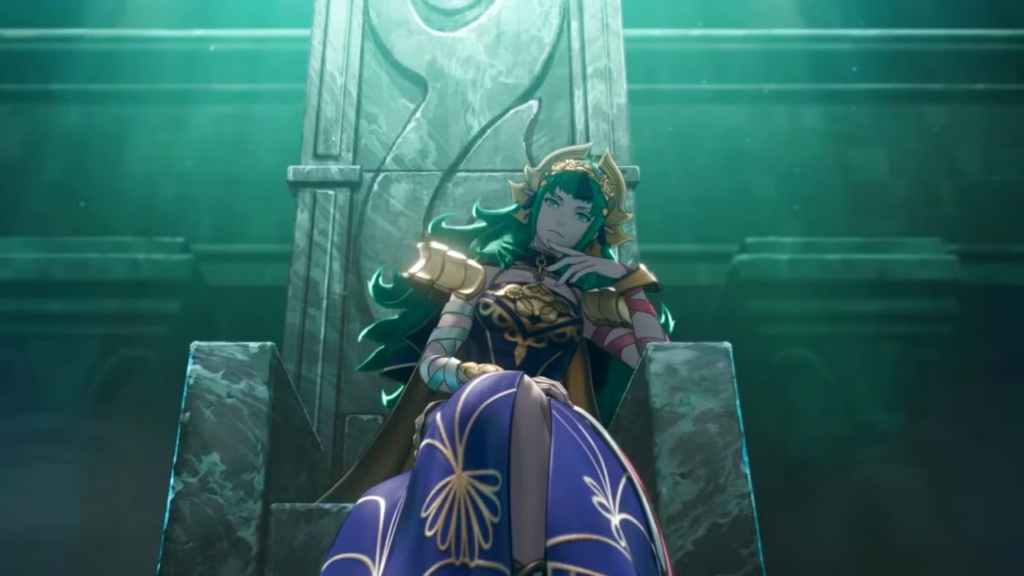
I’ve always had a challenge with replaying RPGs, especially long ones with massive worlds. But Fire Emblem: Three Houses’ narrative and characters pulled me in to the point where I completed all four major routes. It can be challenging to convince players to return after finishing a lengthy campaign, so this is definitely a challenge Fire Emblem: Fortune’s Weave will face. Its four protagonists encourage players to revisit the game to uncover new storylines, character interactions, and outcomes, and play differently.
However, four characters aren’t simply enough. There have to be meaningful reasons to return to Fortune’s Weave than just playing with a different skill and weapon. Presumably, players will meet the same characters across all four routes, but the outcome of the decisions made on each route should vary. This would encourage players to put hundreds of hours into Fortune’s Weave just as they did in Three Houses. Every completed campaign raised new questions that could only be answered by starting another route. The result was a game that remained engaging long after the first ending credits rolled.
So far, Fire Emblem: Fortune’s Weave appears designed with that same philosophy in mind. The four protagonists have dramatically different motivations, suggesting their journeys will offer unique insights into the world and its conflicts. Combined with the Heroic Games premise, players will likely encounter different allies, rivals, and story developments depending on their chosen hero. I can see the beginning of the game revolving around the games, then splitting off, similar to Three Houses’ time skip. For strategy RPG fans, that kind of replay value is often just as important as the tactical combat itself.
A Story-Heavy Direction Is Exactly What Fire Emblem Needs

Beyond replayability, the return of multiple routes allows Intelligent Systems to explore more stories and offer greater narrative depth. While Fire Emblem Engage excelled in combat design and celebrated the series’ history, the writing lacked the same political complexity and character-driven drama found in previous games, especially when compared to Fire Emblem: Three Houses and even Fire Emblem: Three Hopes. Everything revealed about Fire Emblem: Fortune’s Weave points toward a more story-focused experience.
The first and most obvious sign is the fact that four protagonists naturally require more extensive worldbuilding and character development. The competition at the center of the narrative provides a framework for conflict, while the heroes’ individual goals create opportunities for emotional stakes and the ability to meet and recruit other characters. This setup feels much closer to the narrative ambitions of Three Houses than the more straightforward structure seen in Engage and gives me hope that Fortune’s Weave will succeed in this area.
The game’s exploration systems further support that possibility. Between matches, players can strengthen their army, recruit allies, train units, and venture into the surrounding world to battle bandits, monsters, and dungeon threats. I’m hoping this is a cross between how Three Houses and Engage handled this to create a sweet spot. Regardless, I am excited to learn more about the cast of Fortune’s Weave and discover their backstories, as this was one of the most interesting parts of Three Houses. If Fire Emblem: Fortune’s Weave can successfully combine strong tactical combat with four compelling narrative routes, it may recapture the qualities that made Three Houses one of the most beloved entries in the franchise.
What are your expectations for Fire Emblem: Fortune’s Weave? Pop by the ComicBook.com forums and share your thoughts!
More Gaming
-
Image Courtesy of Lyrical Games