Marathon may not have had the flashiest of launches, even by Bungie’s standards, but it has managed to persist, either out of sheer determination from its developer or from an undisclosed number of loyal fans on console. There’s certainly merit to Marathon sticking around for the long haul, not least because Bungie has shown a propensity for improving the title and ushering it further toward reaching its potential. It has made several great decisions since launch, key among them being fairer monetization and the introduction of much-needed new maps.
Videos by ComicBook.com
However, it would appear that, at least in one regard, Marathon is failing rather spectacularly, and Bungie’s plans going forward are only going to cement this fact. The developer is poised to make an incredibly risky move with Marathon, something that, at least in my opinion, will only serve to further alienate the kind of player it needs to reach new heights and generate enough revenue to both sustain long-term growth and make back its allegedly enormous budget. This risky move is in relation to Marathon’s already somewhat controversial narrative, an element fans are in two minds about, considering Bungie’s history, the expectations of the genre, and the failings of Destiny.
Marathon’s Story Could Become Player-Led, And That’s A Problem
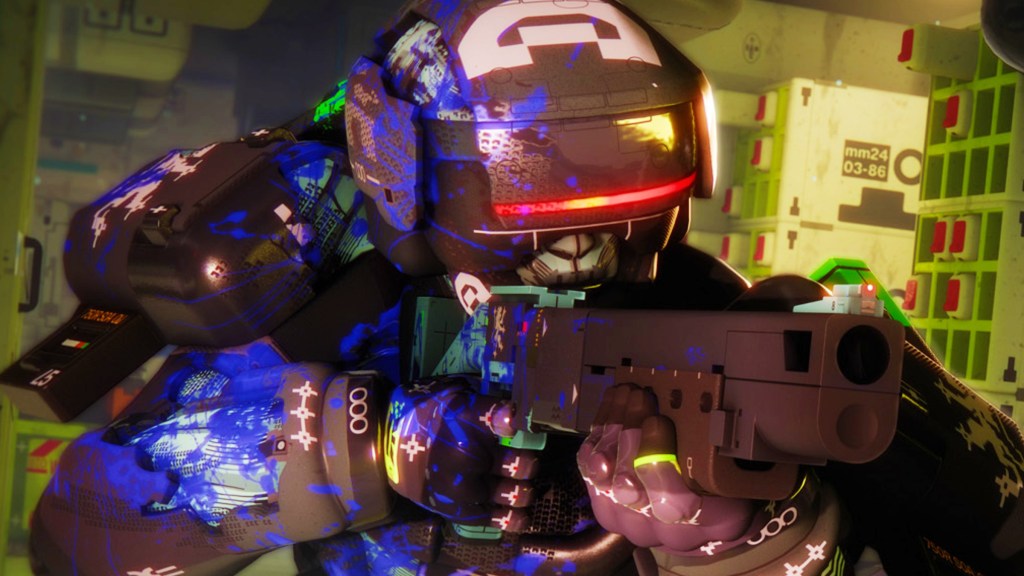
Marathon’s narrative has been a point of contention since the game was first announced as being a live-service extraction shooter. The decision to parcel out the piecemeal story inclusions through text and in-game terminals is a bizarre one, to say the least, especially considering Marathon comes from the studio best known for Halo, the game that inarguably revolutionized first-person shooters for, at least partially, putting a greater focus on narrative. I had hoped that the game would launch with some form of story mode to better ingratiate players towards its world, lore, and characters, but it never transpired, and, seemingly, never will.
Of course, this is still a live service game, and as little as Bungie seems to care about the story, it is still an element that fuels the desire to return every day and invest in this allegedly exorbitantly expensive video game. Naturally, Marathon continues to receive requested features and updates, and part of that revolves around narrative progression, something that Bungie has said will be player-led. Previously, I had merely lamented that the story would forever be restricted to a handful of text entries, and that would be its greatest sin. However, the implication that players will loosely or directly control the ebb and flow of the story and even the path it takes to its potentially fast-approaching conclusion is perhaps worse.

For context, Marathon’s creative director, Julia Nardin, told GamesRadar that she “knows where we want to take the story over the next few years” and that it isn’t “locked in because it’s important to us that our players be able to help shape it.” I don’t want to make sweeping statements about the state of narrative in live service games (although I struggle to think of one that has proved even half as compelling as a traditional single-player adventure) especially as it isn’t as if there aren’t other extraction shooters with dedicated story modes, nor that Bungie is incapable of delivering genuinely incredible sci-fi narratives.
However, I do worry that putting the onus on players to push the story forward and ultimately shape it doesn’t work when there aren’t meaningful ways to interact with it. That’s not even mentioning Marathon’s controversially low player numbers at launch and even at the time of writing. Sure, there are enough players to potentially dictate the direction of the game’s narrative, but the majority of those players will be hardcore fans with a certain viewpoint, and not necessarily representative of the wider public. By putting any level of control over a story in the hands of a minority of loyal fans, you’ll end up getting something that only really serves them, and not potential newcomers.
Player-Shaped Narratives Can Work In Live Service Games, But Not Marathon
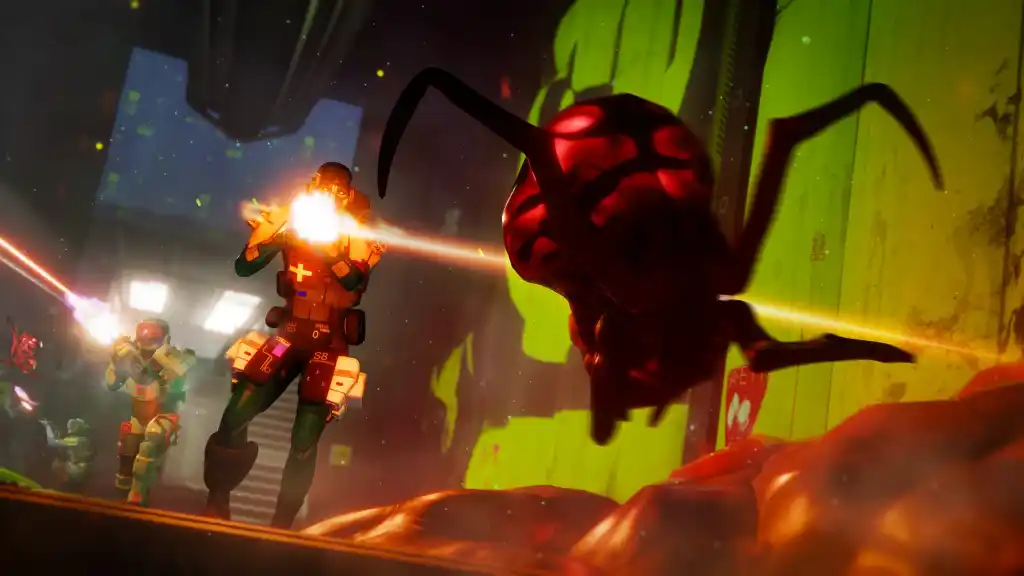
Of course, there are instances of player-shaped narratives working to great effect in a live service title. Perhaps the best example would be Helldivers 2, a game that thrives as a direct result of its dedicated community, but nevertheless welcomes newcomers into the fray. It is built around the involvement of every player, its galaxy map, and ongoing war making even small four-player engagements feel like enormous contributions to the world-ending battles occurring at all times. Succeeding or failing to defend or conquer a planet ultimately tells its own story and further fleshes out the lore, leading to some of the most iconic moments in the game’s history.
However, this is all emergent storytelling, and not direct control over a planned-out narrative featuring prominent characters. It is in stark contrast to Bungie’s own Destiny, a game that was heavily story-focused with a huge cast of characters, villains, and high-stakes. What happens in Helldivers 2 doesn’t inherently matter because the consequences are extremely low. Players will never truly lose, as the war will be perpetually waged until Arrowhead Game Studios shuts down the servers. It is merely a fun bonus that the community and developer band together to make a bigger deal out of an otherwise inconsequential loss or win.
One has to assume that Marathon, a game that, as aforementioned, puts little care into the delivery of its narrative, will opt for a similar approach to its storytelling. However, that would be a huge shame, as Marathon doesn’t really fit into the same model as Helldivers 2. The latter only works because of its ability to poke fun at itself. The game doesn’t take the potential sombreness of its events seriously, and that’s the whole point. Marathon is not the same. Marathon’s art style oozes purpose; its wider lore is contingent on players caring and being invested. It peppers history and intentionality into every little aspect to not only help it stand out visually, but further immerse players into this world that Bungie wants them to care so deeply about. It is also a reboot of a single-player, story-driven shooter. It literally couldn’t be further from Helldiver 2’s structure, and that’s entirely the point.
Marathon Should Put A Greater Emphasis On Its Narrative

Of course, I speak almost exclusively from the point of view as a Bungie fan, and not an extraction shooter or even necessarily a Marathon fan at this point. The game’s propensity for hardcore first-person shooter action makes each battle feel agonizingly sweaty and near impossible to get into without dedicating swathes of time to learning its maps, mechanics, and even team composition. This is also a setting that isn’t particularly conducive to telling a compelling narrative beyond the occasional moment of environmental storytelling that is almost certainly going to be disturbed by another player blasting your head off from afar.
Perhaps its hardcore players simply don’t care about the story in the same way that Bungie at least seemed to with the way it focused the game’s marketing. Maybe I’m alone in believing that Marathon’s fascinating worldbuilding, visual style, and the developer’s track record for weaving at least stories on an epic scale could lead to a phenomenal genre-defining narrative. I could also very much be wrong in stating that it felt like Bungie could help bring something new to the extraction shooter genre with its experience in storytelling, specifically within a live service context, rather than just creating a game that feels exactly like its peers aside from a slick coat of grungy sci-fi paint.

However, I have a feeling that not only are there others like me who wish to see Marathon tap into its narrative’s full potential, but that a greater focus on narrative is what would have led to Bungie’s latest effort becoming the live-service title PlayStation has been searching for. Even Fortnite realized that people will only continue returning when you deliver a story with stakes, memorable characters, and epic moments that are easily teased throughout a season. That game had to evolve because, like Marathon and unlike Helldivers 2, it simply wasn’t capable of emergent storytelling that can be elevated by a community’s involvement.
I’m not saying that for Marathon to survive, it has to do story the way I want it to. However, relying on a dwindling player base to shape a narrative that could be led by a studio best known for its storytelling within a first-person shooter context makes absolutely no sense to me. Live service games live or die by their player involvement and engagement, and I completely understand that. It makes sense to get the community invested, but I’d argue that a significantly more effective way of achieving that would be to deliver a story they actually care about, rather than one a handful of people feel as if they have any agency over.
Do you think Marathon’s story should be player-led? Leave a comment below and join the conversation now in the ComicBook Forum!
More Gaming
-

Courtesy of Legendary Pictures -

Courtesy of Nintendo -

Image Courtesy of Sony Interactive Entertainment