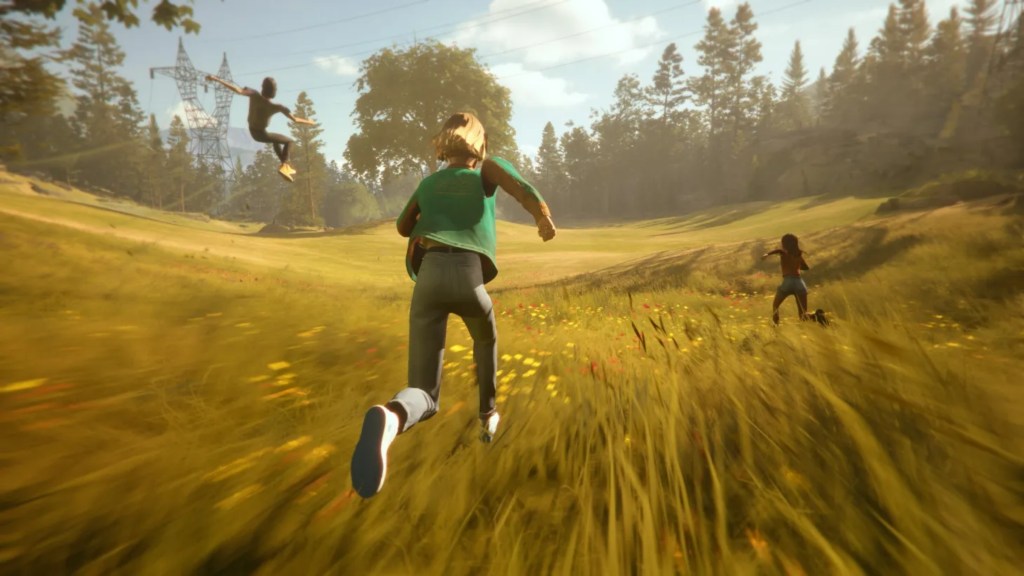
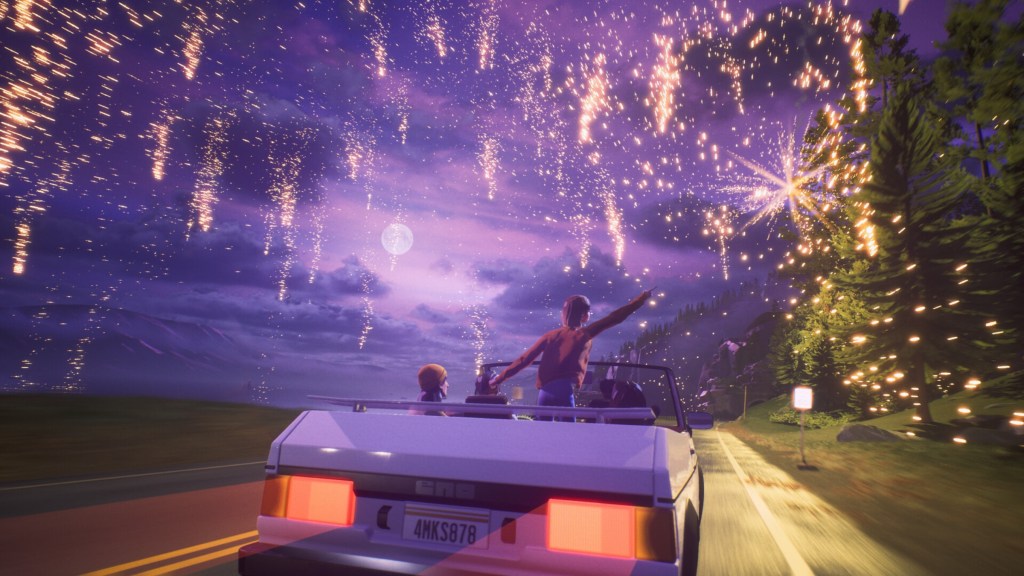
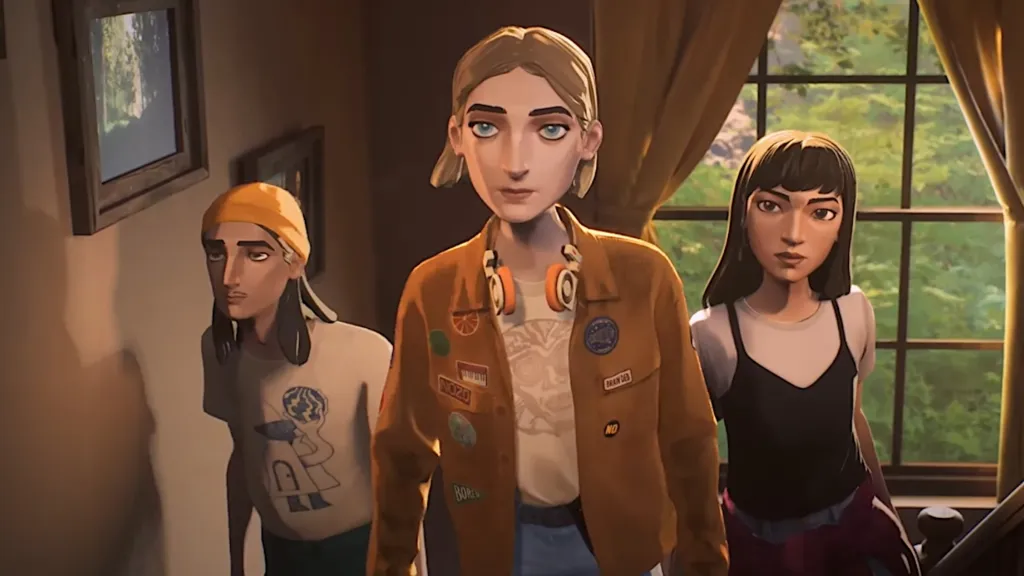
Mixtape is very much designed in the vein of John Hughes films, looking to explore nostalgia with a bittersweet touch and a rocking soundtrack. Set in the 1990s, the low-key, narrative-driven game follows three friends as they make their way to a party to celebrate the end of high school. Through mini-games and witty writing, the game pulls players directly into the emotional arc of the story. The soundtrack elevates the experience of growing up, reflecting the tropes of the genre with a colorful touch and an emotional throughline.
Videos by ComicBook.com
Now available on Xbox Series X/S, PlayStation 5, Nintendo Switch 2, and PC, Mixtape is earning strong reviews across the board — and is exactly the kind of gorgeously constructed game that perfectly sums up gaming as an art form. As a follow-up to their 2021 game The Aftful Escape, Beethoven & Dinosaur have crafted a lovely little game that feels authentic in so many clever little ways. During an interview with ComicBook, Mixtape Game Director Johnny Galvatron and Producer Woody Woodward broke down why the game was so influenced by those teen stories and why it had to be about teenagers.
CB: Mixtape is a story largely rooted in that feeling you get as high school comes to a close. What was it about the coming-of-age story that caught your attention as creatives?
Johnny Galvatron: I think it starts off with the music. It definitely started off with ” That’s Good” by Devo, which is my favorite song of all time. The game starts with Devo, and we wanted to build the game around this kind of mixtape. When is music the most important to you? When does it speak to you the most? It always seems to be around that end of high school time.
That’s when songs mean so much to you, when they can carry you and influence you in certain ways and craft you. They’re a kind of lens that you see the world through. This whole idea of when you’re that age of defining yourself by the art that you like, there’s something so sweet and pure and innocent about it. I think it started off with the soundtrack, and then, who was the soundtrack going to affect the most? Then this character, Stacey Rockford, started talking to me. She wouldn’t stop.
Woody Woodward: When you’re a, you know, a late teen or whatever, you don’t have a personality yet. You’re just an amalgamation of the things you love. Everything feels so big and so real. Every decision, every song, everything feels and means a lot because you’re not paying bills and stuff. You define people by the bands they like. Your life is the stuff you like. It’s just such a funny time to explore and remember.
The rest of our interview with Johnny Galvatron and Woody Woodward continues below, as we discussed the importance of scoring a mixtape right, how gaming compares to music as an art form, and the emotional journey plays go on in Mixtape.
Music is a collaborative art, similar in a sense to game development. Given your experience in both fields, how does working on something like MixTape compare to the work that goes into a band?
Johnny Galvatron: They have this saying from one of the conductors of the British symphony, which is about a pianist; they have to sit in a room with this great machine and every day prove that they are the master of it and not the other way around. That’s how writing music was to me, whereas video games are the complete opposite. It’s an ultimate collaboration. Especially in an indie team, everyone’s the lead of their own division, and everyone’s multi-talented.
Everyone is bringing their own ideas, and it is all extremely collaborative. I think that’s the reason that games are far more collaborative than music or film. Film often happens in the moment when you’re on set. You have a certain amount of time to film it. In video games, it’s far more iterative. You can work on a level for years, and everyone’s going to be putting something into that or changing it or coming up with ideas. When you walk through the levels, I look, and I see what Harry put there, and I know Arden made that firm. It’s often brilliant just to walk through and to see what everyone’s done.
What excites you about gaming as a storytelling medium and as a means of conveying emotion — and how did your approach impact Mixtape?
Johnny: It’s important to use the medium. We think of it as having different clubs in your bag. There’s your cinematic club, your music club. You have the mechanical club, you have the gameplay club, which is unique to your medium. There are obviously a lot of games that are brilliant, which are about overcoming obstacles and real challenges. How do you show regret in a game? How do you show betrayal in a gameplay mechanic? There’s a level where you float backwards, and it’s a simple mechanic, but it suddenly gets across to you how the character is feeling. If you can use a mechanic to inform the player of the emotional state of the protagonist, that’s what’s really interesting to us.
Woody: There’s a whole kind of broad spectrum of emotions and feelings that you can try and get out through music, mechanics, and cinematics. When you get those things to reach a crescendo, that’s what we aim for. The dynamics, the music, the visuals, the gameplay, and then even the controls and how you’re doing it physically. As Johnny said, you have to hit that crescendo point together.
How do you approach constructing a playlist for a character instead of just making one yourself?
Johnny: There wasn’t any planning. It’s more about what song spoke to me. What were the formative songs for me? Then we would play them out. I made this ultimate playlist of my all-time greatest hits of the 80s and 90s, and one song from 2013, it doesn’t matter. Instead of making a vertical slice, we made a horizontal slice of the game.
Vertical slices are very detailed, small sections. A horizontal slice is a crappy version of the entire game, where we would lay it all out end to end. There were animatics, or there would just be notes like ‘They play baseball.’ We set it up, and then we would rearrange pieces to figure out what story it tells. Where’s the pacing now? It became this process of rearranging these songs, adding some, and taking out where we needed them until we had this figured out and could build on it.
What surprised you the most about Mixtape during the course of development?
Johnny: You can come up with something, and you have the best-laid plans, and then you’ll sit down, and you’ll play it. If you have the right eye, if you have the right ear, it’ll tell you what’s wrong. So often, you start with that idea, and then the story starts informing you. The game starts by informing you of what it needs… I would say that the thing that was quite difficult, and I think that we succeeded well with, is the pacing.
Because this game jumps in and out of songs, because it’s a mixtape, because it is about arrangement. It’s taking you into different places. One of the hard things about the game was getting the flow right. Moving from hub worlds into songs, then getting back into them and making it smooth. It’s not something that we were thinking about when constructing it. It’s a medium of arrangement. It’s got to be fine-tuned to get in and out. You needed to do these very musical, very operatic transitions in and out.
Woody: I think that’s something that I’m maybe the most proud of. When we were still working with the order of the songs, what songs we were using, having a different song over a different scene, we would be like, ‘Oh, this isn’t it! What is this?’ It’s like a real mixtape. The composition changes the tone so much. Getting this song order right matters so much. When we actually got it? It was amazing.
Mixtape is now available on Xbox Series S/X, PS5, Switch 2, and PC.
More Gaming
-
Image courtesy of Nintendo -
Image courtesy of Nintendo -
Image Courtesy of Kepler Interactive/Sony Interactive Entertainment