There is a particular kind of fear that only video games from childhood can create. It is not the polished, cinematic horror of modern releases, but something rougher and more intimate. The kind that sneaks up on you when you are too young to fully understand what you are seeing, yet old enough to feel deeply unsettled by it. These moments linger because they are tied to discovery, to late nights on the living room floor, and to the creeping realization that a game you trusted has taken a dark turn.
Videos by ComicBook.com
For many Nintendo fans, that fear has a name. The Legend of Zelda: Ocarina of Time introduced an enemy that felt wildly out of place in a heroic fantasy adventure. Dead Hand was not just scary by Nintendo standards. It was disturbing on a fundamental level. Decades later, players still talk about the first time they encountered it, how it froze them in place, and why it remains one of the most unforgettable horror moments in gaming history.
Ocarina of Time’s Dead Hand Remains Nintendo’s Scariest Creation

Dead Hand appears during the Bottom of the Well and Shadow Temple sections, moments when Ocarina of Time deliberately abandons its bright adventure tone. What makes Dead Hand terrifying is not just its design, but how the game introduces it. Players drop into a confined pit where pale, disembodied hands burst from the ground, grabbing Link and pinning him in place. Escape feels frantic and desperate, not heroic. It was getting grabbed by a ReDead, but so much worse.
Then the body emerges. Dead Hand crawls out slowly covered in blood, its neck stretching unnaturally as it approaches. Its face is blank, its mouth unnervingly open, and its movements feel wrong in a way Nintendo enemies rarely do. This is not a monster you fight confidently. This is a creature you survive. Even winning doesn’t feel satisfying, because it leaves you with a sense of dread. What if this is the beginning of a dark turn for Ocarina of Time? Would the rest of the game be a horror game?
For many players, this encounter was their first experience with genuine horror in a Nintendo game. It broke an unspoken contract. Even though it had darker elements, Zelda was supposed to be adventurous and mysterious, not deeply unsettling. That betrayal is exactly why Dead Hand became a core memory. Even now, fans recall pausing the game, muting the television, or handing the controller to someone else just to get through it. I know the first time I encountered Dead Hand, it took me ages to work up the nerve to unpause the game and battle it.
The Impact of Horror on the Nintendo 64
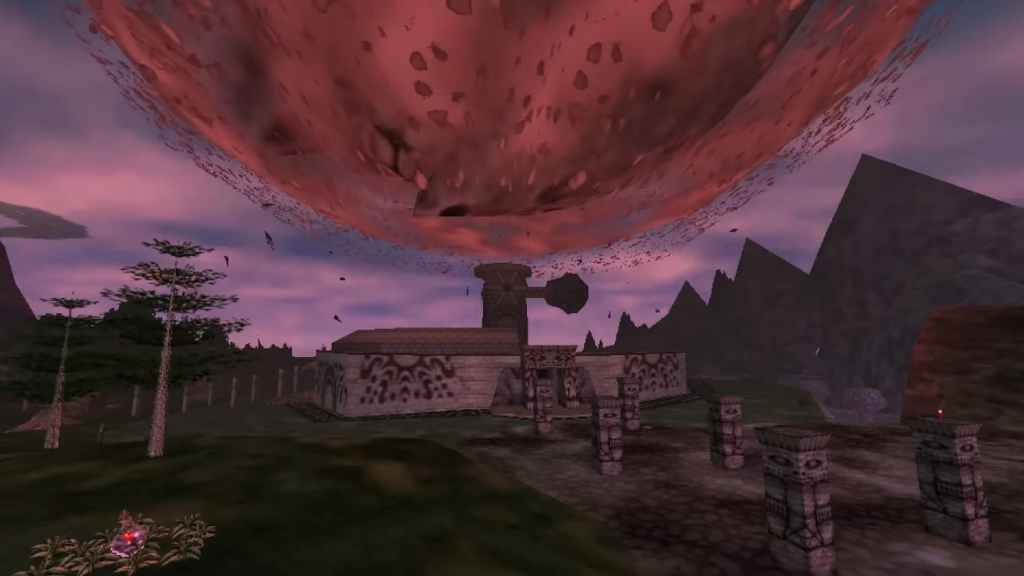
The Nintendo 64 era was uniquely suited for this kind of fear. Early 3D graphics left much to the imagination, and that worked in horror’s favor. Limited textures, low draw distances, and strange animations created an uncanny atmosphere that modern fidelity sometimes smooths away. On the N64, darkness felt oppressive, and silence felt intentional. Even now, looking back, there was something wrong about Dead Hand that still stands out today, and I don’t think modern hardware could do it justice.
Outside of visuals, Nintendo created the perfect horror atmosphere for this encounter. Ocarina of Time used sound design masterfully: the Bottom of the Well is filled with distant moans, distorted audio cues, and empty space. There is no bombastic music to reassure you. Instead, the game lets your own anticipation do the work. When Dead Hand appears, it feels like you woke up from a pleasant dream only to find yourself in a nightmare.
This was also a time when players were not guided by online walkthroughs or instant clips. Many encountered Dead Hand by accident, late at night, with no warning. That surprise amplified the fear. Nintendo rarely leaned into horror, which made these moments stand out even more. The contrast between the game’s hopeful overworld and its nightmarish underbelly made the terror hit harder. Even when the scene shifted and hinted toward a dark encounter, I had no idea what to expect. The rest of the game created a sense of safety and security; it was so jarring to encounter Dead Hand, and it stays with me today.
Dead Hand’s Influence on Gaming

Dead Hand did more than scare players. It left a lasting mark on how developers think about horror in non-horror games. Its influence can be seen in enemies that disrupt player control, invade safe spaces, and weaponize helplessness rather than raw damage. Dead Hand is frightening because it removes agency before it ever attacks. It is the idea, the anticipation of having to face it, that leaves players frightened.
Outside of video games, its impact reached tabletop storytelling. The False Hydra in Dungeons and Dragons shares striking similarities with Dead Hand. Both creatures are defined by body horror, slow reveals, and psychological dread rather than jump scares. The idea that something horrific can exist just beneath the surface, unseen until it is too late, resonates across media. The first time I encountered a False Hydra was both beautiful and terrible, because just like Dead Hand, I never saw it coming until it was too late.
For fans, Dead Hand represents proof that Nintendo understands fear, even if it rarely uses it. It shows how restraint can be more powerful than excess. One enemy, used sparingly, created an enduring legacy that countless horror games still chase. Decades later, Dead Hand remains a benchmark. It is referenced in retrospectives, shared in reaction videos, and brought up whenever discussions turn to scary Nintendo bosses. It is not nostalgia alone that keeps it alive. It is the memory of feeling small, trapped, and completely unprepared. That feeling has not faded, and for many Nintendo fans, it never will. I know it will stay with me no matter how many games I play.
What do you think? Leave a comment below and join the conversation now in the ComicBook Forum!
Most Viewed
-
Image Courtesy of Studio Pierrot -
Image Courtesy of Toei Animation -
Image Courtesy of Madhouse