Resident Evil has been rebooted, remade, and reverse engineered to fit into all sorts of different genres. Despite all the changes, one of the things many of these games have in common is their ability to provide different perspectives. Resident Evil Requiem follows this trend by letting players play as series pretty boy Leon Kennedy, as well as newcomer Grace Ashcroft. But even though Leon has starred in many of the best Resident Evil games, Requiem would have been better without him in the base campaign.
Videos by ComicBook.com
Leon makes a decent first impression with his chaotic intro that lays out some of the stakes. It’s like a spiritual follow-up to the Resident Evil 4 remake with its dynamic gunplay and flashy parries. But this zesty prologue paves the way for an uneven campaign.
Leon Deserved His Own Separate Ways-Like Campaign in Resident Evil Requiem

The perspective shifts between Grace and Leon in the opening hours at such a rapid clip, with many of the Leon sections in this chunk only taking around 10 minutes to clear. Once players get into a groove with Grace, they’re yanked out and made to play briefly through a few brief combat scenarios before being pushed back into the dark deep end with the series newcomer. This dizzying change in pace is incredibly jarring and feels like a bad director’s cut that was created in response to misguided feedback saying Grace’s sections were too slow.
These sections drag partly because of how they don’t capture a key part of the essence most Resident Evil games have: the fantastic upgrade economy. Growing stronger and being rewarded for careful resource management became such a staple of the franchise after RE4. But Leon is unable to enhance his toolkit for the first half or so of the game, which further makes his portions feel shallow. When this short and removed from the upgrade loop, these action scenes come across as disposable filler.

And by the time players get more of an extended session with Leon, his range of upgrades is so condensed and abbreviated to the point where it’s not hard to max out almost every weapon class by the start of the next chapter. It’s a horribly paced out and feels like an afterthought. There’s not even a slick-talking, bunion-covered merchant to sling these wares; instead, it’s a cold computer that yields upgrades, which is a sadly fitting metaphor for this whole system.
Leon’s limited weapon lineup also impacts how Grace functions. Even though it makes sense that her more horror-centric half wouldn’t yield as deep of an arsenal, she still feels like half of a character. Her crafting book is thin and she isn’t able to gather many actual upgrades or new weapons. A small variety of tools limits what’s possible and how engaging her sections can be, especially since they mostly just retread what past Resident Evil games have done.
Leon and Grace feel like half-baked characters, almost as if the two were somehow both DLC. Ideally, Grace would have taken center stage and been able to grow by building off what Capcom already established in Resident Evil 7: Biohazard and Resident Evil Village, and Leon would have a more coherent story with a more consistent upgrade tree. But Capcom decided to make two merely passable characters instead of one fully featured one.
Resident Evil Requiem’s Leon’s Segments Ride Too Heavily on Nostalgia
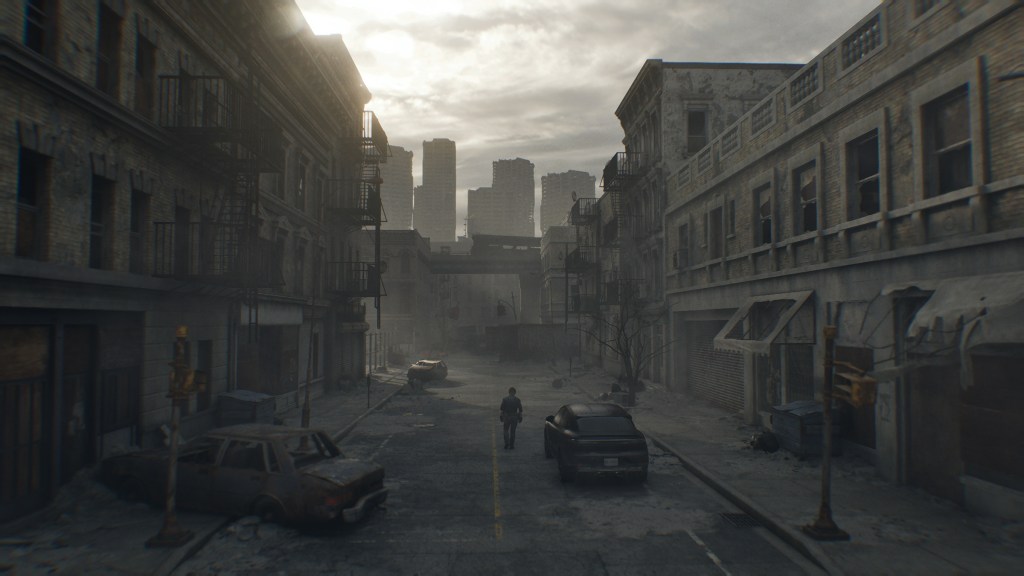
Leon’s inclusion comes off as an uncharacteristically cowardly move by Capcom made out of fear that a game starring a new character who is featured prominently in the key art wouldn’t capture players without help. And while hard to prove, Requiem leans so heavy on references and nostalgia in ways that make it difficult to ignore the more cynical conclusion regarding Leon’s role in the game.
The latter half of the experience is full of references to older installments that seemed designed to just get players to emptily point at the screen and cheer when something recognizable pops up. It’s a forced rollercoaster of nostalgia that often doesn’t try to justify itself within the game’s story. This section of the narrative is mostly cobbled together through familiar names and settings as if Capcom worked backwards from these known touchstones in order to construct Requiem’s narrative. It’s forced and gets away from the more stand-alone tales that worked so well in RE7, Village, and even RE4. Resident Evil stories are at their worst when they try to include as much old Resident Evil lore as possible, and Requiem is one of the worst offenders in recent memory.
And while the story would have needed some adjustments, Leon likely would have worked better in his own post-launch expansion. This would allow for a better focus on Grace and a potentially more engaging toolkit and story in the base campaign, all while ideally giving Leon a more cohesively paced string of upgrades and chapters that aren’t abruptly broken up. The Resident Evil 4 remake pulled this off well with its Separate Ways DLC that told a parallel story that didn’t short shrift Ada. She felt like a relatively full character with her own quirks and wasn’t a big step down from Leon.
Leon and Grace deserved a similar treatment in Requiem, one that wasn’t afforded to them because of the campaign’s lack of focus. And while Capcom doesn’t have the most stellar track record with DLC, here it could potentially help solve one of Requiem’s most glaring problems.
What do you think? Leave a comment below and join the conversation now in the ComicBook Forum!
Most Viewed
-

Sony Pictures -

Image courtesy of The Pokemon Company -

Image Courtesy of Marvel Comics -

Image Courtesy of HIDIVE -

Image Courtesy of Netflix -

Image Courtesy of Marvel Studios