Lara Croft debuted 30 years ago, taking the game industry by storm and quickly cementing herself as one of the rare female leads of a major video game franchise. In the years since, Lara has become a cross-media icon, with two feature-length films, an animated series, and an upcoming live-action TV show all cementing her as one of modern gaming’s biggest breakout characters. However, there was a time when excitement for the character was at an all-time low following a disastrous sequel.
Videos by ComicBook.com
Luckily, the character was revitalized by her first of many reboots — although the developers behind the game were more likely to refer to it as a “reimagining” of the character instead of a reboot. Debuting in North America on April 11, 2006, Tomb Raider: Legend was a vital hit that revitalized the franchise. Without it, Lara Croft might have become a relic of another time instead of reestablishing herself as one of the leading ladies of gaming.
How Lara Croft Was Rebooted The First Time

Lara Croft debuted in 1996, quickly becoming a breakout hit and establishing the character as one of gaming’s most high-profile female leads. Across the first decade of the character’s history, she appeared in six games. However, Core Design’s games increasingly failed to make an impression on players or critics. This led to Tomb Raider: The Angel of Darkness, which flopped hard enough that publisher Eidos brought in Crystal Dynamics to develop the next entry in the series. For the developer, that meant completely reinventing the character, even bringing in Lara Croft creator Toby Gard to help reimagine the character.
Production lasted two years, giving the team much more time to deliver on the project than the rushed development of The Angel of Darkness. To separate the new game from the older titles, the control scheme and action gameplay were completely overhauled. Returning to the ruins that she had been defined with, the team at Crystal Dynamics put greater emphasis on Lara’s agility and athleticism. The resulting work required the team to completely design their own physics system and rework Lara herself from the ground up, with upwards of a fifth of the game’s entire code reportedly dedicated to custom animations for the character.
The backgrounds, world-building, music, and overall art design were also improved. The game also took the opportunity to effectively reboot the character — although the developers resisted calling it a reboot, instead arguing that it was more of a reimagining that expanded on the earlier story ideas played with the established lore. Lara was given a more tragic backstory, as well as affording her a more pronounced character arc that gave her motivation for her treasure hunting and recontextualized her commitment to exploring tombs. In essence, Lara was given a healthy dose of humanity to help ground the character emotionally, giving audiences more reason to care about Lara even as the adventures returned to the supernatural archeology that had initially defined the series.
Tomb Raider: Legend Saved Lara Croft — And Set The Stage For More Reboots
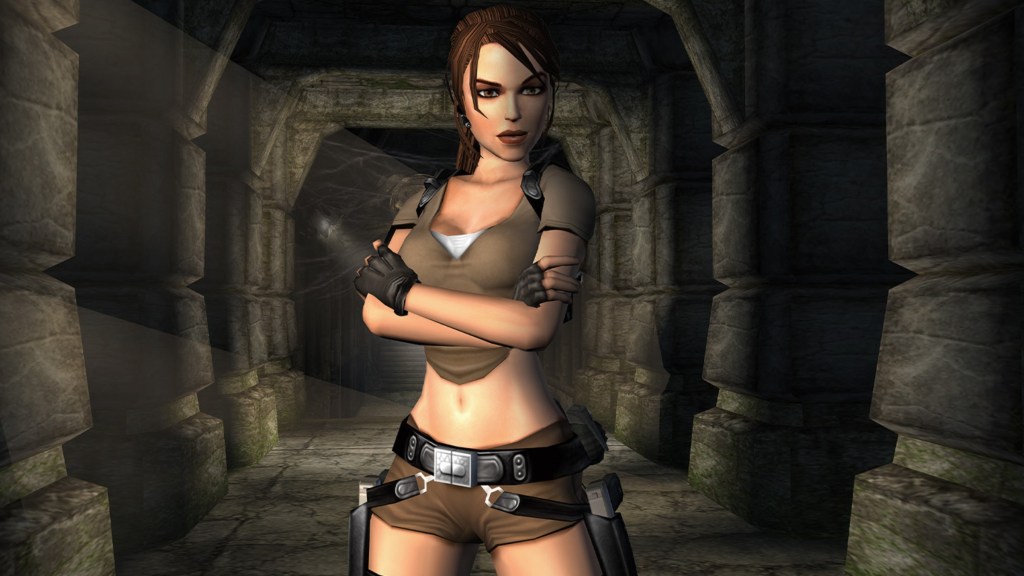
Following the disappointing reception to Tomb Raider: The Angel of Darkness, Tomb Raider: Legend was something of a make-or-break moment for the character. Luckily, Crystal Dynamics successfully revitalized the franchise. Tomb Raider: Legend benefited from the more expansive worldbuilding and tight controls. Over the next fifteen years, the game would go on to sell 6.4 million copies worldwide, proving that the broader gaming audience was still excited about the prospect of exploring tombs with Lara Croft.
This paid off well for the character in the long run, going a long way towards revitalizing Tomb Raider as a franchise. Legend got direct sequels like Tomb Raider: Underworld, as well as prompting a remake of the original game in the series. It also laid the groundwork for the idea that Tomb Raider could be rebooted and still feel consistent with the original game. This was a crucial development for the franchise, as it laid the groundwork for the 2013 reboot that completely reimagined the character, as well as the upcoming Legacy of Atlantis reboot of the first game. It helped push Lara Croft back into the spotlight when there was a chance the character could become a relic of an older era.
Tomb Raider: Legend proved that audiences still wanted Lara Croft, even if the original series had run its course. That’s what makes the game arguably one of the most important in the series, especially after the collapse of The Angel of Darkness had almost sunk the franchise. Without Tomb Raider: Legend, we likely wouldn’t get the other reboots of the character, the tie-in media from film and television building off that momentum, or the other inventive games that play with Lara Croft through different game genres. If you’re a fan of any of the modern Lara Croft material, then you owe a debt to Tomb Raider: Legend.
Most Viewed
-

Courtesy of Eight-Bit -

Courtesy of Kadokawa / Shosetsuka ni Naro -

Courtesy of Crunchyroll -

Image courtesy of 20th Century Studios -

Image Courtesy of Marvel Comics