Few board games are as well-known as Wingspan. First released in 2019, the nature-based engine-building game has spawned video game adaptations, expansions, and more. Many fans love the game’s combination of authentic nature facts and engaging mechanics, earning Wingspan plenty of awards and acclaim. And many of those same elements will return in Hargrave’s latest project, Sanibel.
Videos by ComicBook.com
Sanibel is, at its core, a game about collecting seashells. But of course, it’s more complex than that, adding in engaging mechanics that require you to think on your feet at every moment. Recently, I had the opportunity to experience Sanibel for myself and speak with Elizabeth Hargrave herself about the game. In our conversation, she shared some of the inspiration behind the game and how she managed to build a cozy board game that’s secretly pretty challenging.
Sanibel Blends Cozy Beach Vibes With Surprisingly In-Depth Collection Mechanics
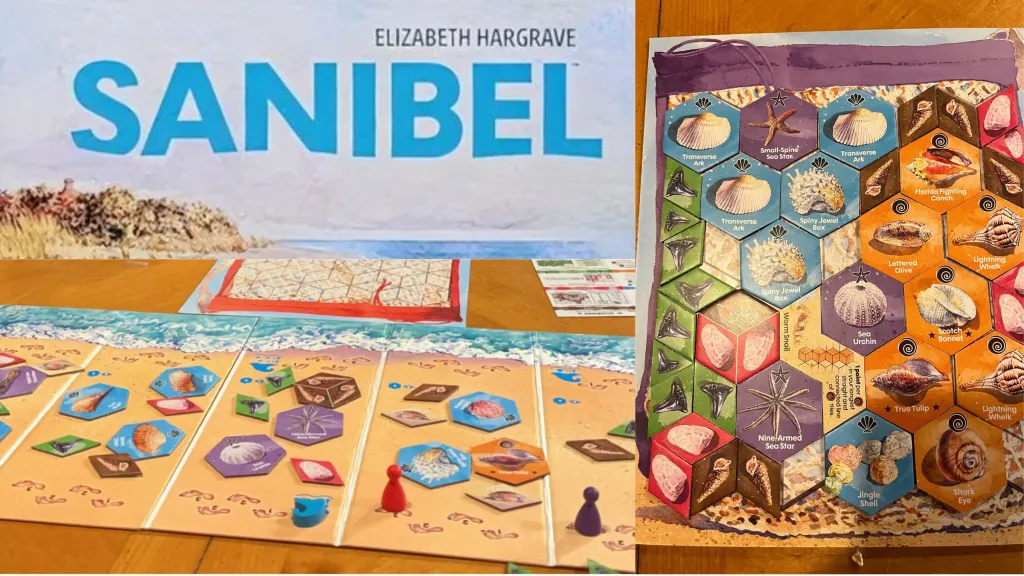
When you think about a seashell collecting game, it sounds deceptively simple. And yet, Sanibel brings those same engaging mechanics Wingspan fans love about its engine building to a new format. As she approached designing the game, Hargrave wanted to make it accessible to casual players, yet challenging enough to keep board game enthusiasts engaged.
“My goal from the start was to make something that was sort of in the difficulty range that my dad could play, and he’s not a gamer,” Hargrave said. “But to also have it have sort of some meat on the bones that gives you something to think about if you wanna work a little harder.”
To achieve this, Sanibel‘s soothing beach artwork and shell collection combine with a dynamic turn system and complex, puzzle-based scoring. Actually getting started is quite straightforward, but to win the game, you’ll need to be careful about every decision you make along the way.
As Hargrave put it, “The thing that makes games feel interesting to me often is that there’s a tough decision to make on your turn, and maybe a decision doesn’t have only one right answer.” With this in mind, she crafted Sanibel to have multiple decision points. “What makes Sanibel work… is that you’ve got two of those decisions each turn, because you’ve got the decision about which space you’re landing on and what shells you’re taking, and then you’ve got the decision about how to place them.”
This combination of choices, mixed with the cozy theme, makes Sanibel deceptively relaxing. You can enjoy it casually, or you can dive into the strategy of choosing the perfect shells and layout to maximize your points. That makes it an easy game to pull out parties, but one you’ll want to keep coming back to so you can really dig into the details.
Elizabeth Hargrave Pulled from Real Life to Build Her Latest Game, And It Shows

As we discussed the game itself, we also talked about the inspiration that went into Sanibel. Hargrave pulls from her own experience, as well as knowledge of the natural world, to build the game. This is similar to how her love of birding inspired Wingspan, but with a new subject matter.
Sanibel itself was inspired by a remark from Hargrave’s father. “My whole family just likes taking long walks and collecting shells,” she told me. “At one point, we were down there, and my dad was like, there should be a game about collecting seashells on the beach. And I said, how does that not already exist?”
From there, Hargrave took the idea and thought about how to give players “sort of a cozy feeling like a day on the beach,” along with “that feeling of discovery and collection that’s what [she enjoys] about collecting shells.” To do that, she of course had to find the right mechanics for the theme. But she also needed to pick the right shells.
The game instruction booklet for Sanibel features detailed information about each of the shells you collect while playing the game. That’s by design, as so many Wingspan fans loved learning about each bird while playing. To come up with the right list of shells and details to share about them, Hargrave consulted her own experience collecting shells at Sanibel, along with resources like iNaturalist, a community database where people report their sightings of plants and animals.
This combination helped Hargrave “ensure that [she] hit the really common [shells]” in the Sanibel region. “The transverse arc is just like 50% of the shells that are there. And then, on the other end of the spectrum, there’s a shell called the Junonia that’s like everybody’s holy grail of shelling.” Hargrave kept this rarity in mind, with some shells appearing multiple times, with others designed as, “really special ones to find,” with “only one copy of each one in the bag.”
That said, she did also get to play favorites a bit. When choosing shells, Hargrave had a few she knew had to be in the game. “My favorite shell is the Shark’s Eye, the one that’s like very round, but still a spiral little snail shell,” she said. This gives the game a personal touch while still adhering to the scientific accuracy of the region’s shells, and it’s part of what makes Hargrave’s nature-centered games so special. Playing Sanibel captures the spirit of combing the beach for shells while adding layers of complexity that make it an engaging board game.
Sanibel was designed by Elizabeth Hargrave and will be published by Avalon Hill. It comes out on January 16th, 2026.
Most Viewed
-

Image courtesy of Paramount -

TMS Entertainment -

Image Courtesy of Disney -

Image Courtesy of Lionsgate