The first Reigns game was released back in 2016, introducing players to its iconic art style and card-swiping storytelling mechanics. Since then, the team at Nerial has crafted many sequels and spin-offs. The latest installment in the Reigns series tasks players with helping Dandelion the Bard tell gripping tales of Geralt’s adventures. Reigns: The Witcher might seem simple at first glance, but it packs in a ton of strategy and tough calls that will put you to the test.
Videos by ComicBook.com
Reigns: The Witcher has the same basic mechanics as any game in the Reigns series. You are tasked with making decisions about The Witcher’s deeds, as represented by two cards. To choose, you simply swipe left or right. The challenge comes in balancing those decisions to keep Geralt alive for as long as possible, while also telling a thrilling tale that will raise Dandelion’s reputation as a bard. There’s a lot more to Reigns: The Witcher than you think, and it offers a great deal of variety despite simple gameplay. That said, I did find it could still get a little repetitive and, at times, frustratingly difficult to master.
Rating: 3.5 out of 5
| Pros | Cons |
|---|---|
| Great amount of content for the price | Basic gameplay loop can get repetitive quickly |
| Fun references to The Witcher universe, but accessible to anyone | Difficult to progress past certain puzzles |
| Complex strategy combined with simple gameplay | |
| Always something new to unlock |
Reigns: The Witcher Offers a Strategic Challenge for a Great Price
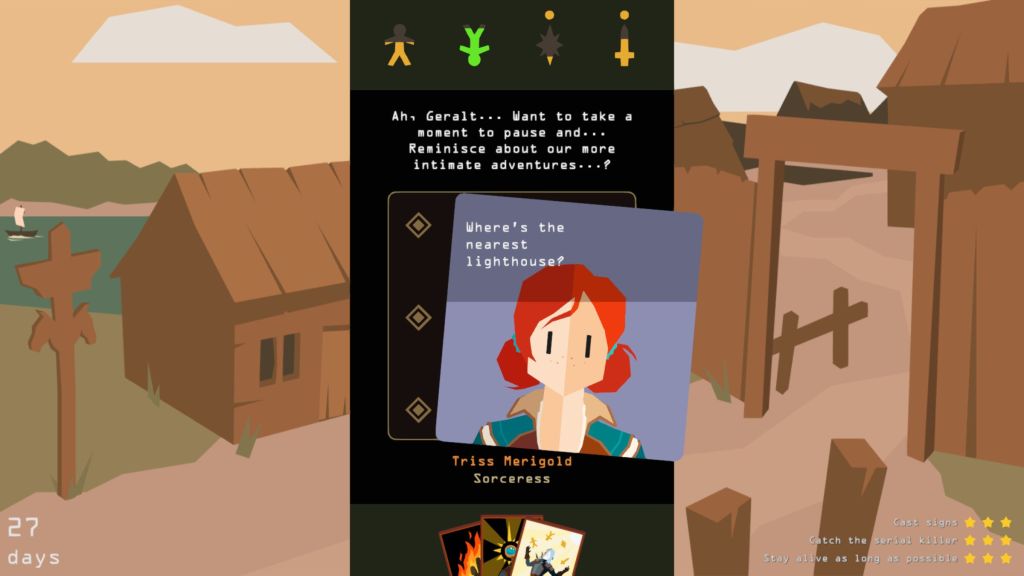
If you enjoy a game with simple mechanics that still offers a challenge, you’ll certainly find it in Reigns: The Witcher. It is quite easy to play, as you’re just swiping left or right to make decisions. But making the right choice is much harder than you think. There’s a lot to balance if you want to weave a truly spectacular tale. While narrating Geralt’s adventures, you have to balance 4 key attributes to keep him alive: his relationships with Humans, Non-Humans, and Sorcerers, plus his role as a monster-slaying Witcher. Each choice will move those relationships up or down. Fill one all the way up, or empty it completely, and the Witcher will face an untimely death (or, sometimes, retirement).
This is challenging enough, as it’s not always clear whether a choice will increase or decrease a set value. But there’s more. You also have a series of cards that dictate the type of story the crowd wants Dandelion to tell that night. So as you try to balance the different ratios at the top of the screen, you also have to make sure your choices align with the chosen story details. Sometimes, those things come into direct conflict. The “Be Nice to Children” card, Geralt the Parent, for instance, makes it very hard not to become too beloved by the humans.
As you weave each tale, you’ll unlock new cards, which present you with both new decisions and new stories. Eventually, you will also come across different jobs for Dandelion to take on. These jobs are song puzzles where you have to choose the right cards to tell the story that will keep a specific audience (or enchanted door) happy. This, along with the combat mini-game you’ll sometimes encounter at story moments, adds a bit of extra variety to the basic card-swipe gameplay. These layers make Reigns: The Witcher a great deal at its price of $5.99, particularly if you like a game that tasks you to think strategically. But some of that content takes a while to unlock, and doing so may well test your patience.
Progression Comes at the Cost of Repetition in Reigns: The Witcher
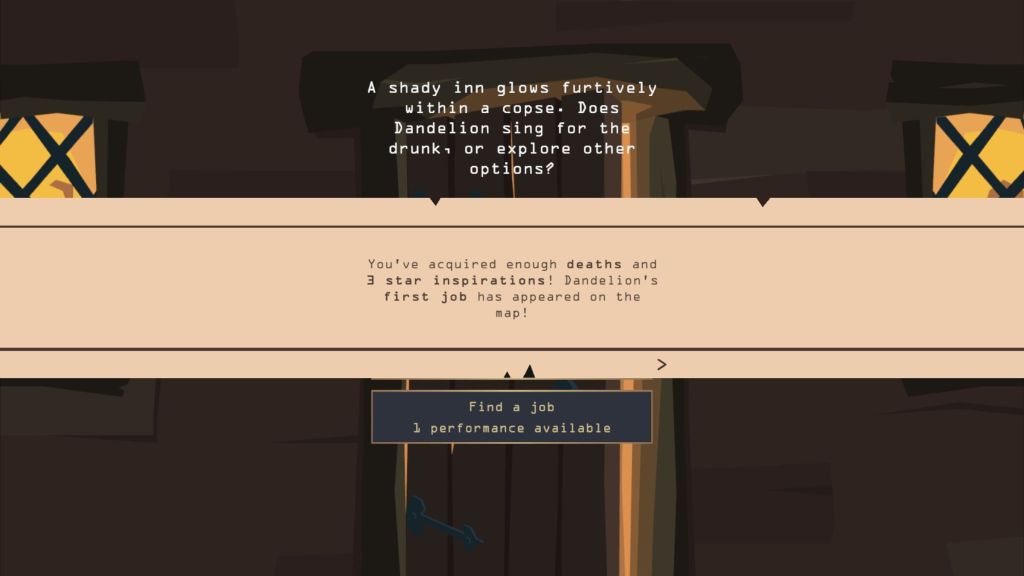
Though there is much more to Reigns: The Witcher than you might initially expect, it can be a bit tedious to unlock. Early on, when you have just a handful of story cards to guide your tale, swiping through those same stories again and again can feel a bit repetitive. This eases up as you get further in the game and have a wider variety of Inspirations to choose from. But getting there does take some time, particularly if you lead Geralt to an early death and get middling reviews from the audience as often as I did. At the end of the day, much of the game is just swiping left and right to choose between two options.
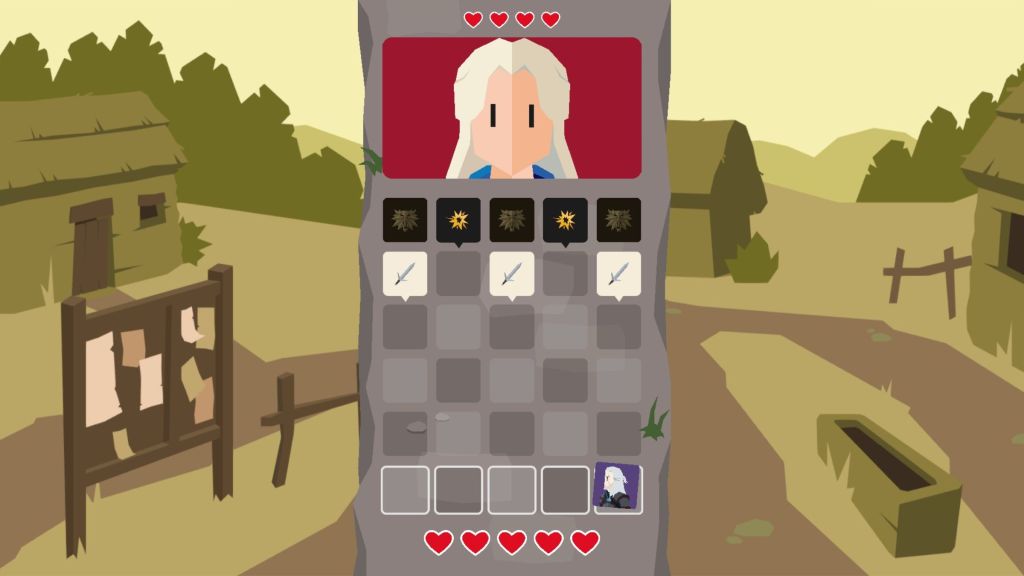
The combat mini-game is one way that Reigns: The Witcher brings in something different to mix up that basic gameplay. If your slaying monster value gets full, or if you make certain choices in the story, you’ll battle against foes. This combat screen is a grid, with Geralt moving either left or right at the bottom. Whichever falling icons he lines up with is what happens in the battle, either an attack from a foe or a successful strike from the Witcher. It’s much trickier than it looks, and if you go into the game for the simple left/right swipe, the combat mini-game can require a frustrating amount of focus to get right. Losing the combat almost always ends your tale, so it can stand in the way of achieving certain goals at times.
Similarly, the song puzzles offer a new twist on the storytelling gameplay. But it seems like some puzzles unlock before you have the right Inspirations to solve them, leading to stalled progression. This, combined with a somewhat repetitive gameplay loop, make Reigns: The Witcher feel like a strategy game for a niche audience looking for a specific kind of challenge. Those who are familiar with the Reigns series, or who are big fans of The Witcher, will no doubt enjoy the game and the wealth of different options and choices it offers. But there are some stumbling blocks here that could put more casual players off the game after a few runs gone wrong.
Reigns: The Witcher releases today, February 25th, for PC via Steam, iOS, and Android. It costs $5.99 on all platforms. ComicBook received a PC Steam code for Reigns: The Witcher for the purpose of this review.
Most Viewed
-

Image Courtesy of Ufotable -

Image Courtesy of MAPPA/Bandai Namco Pictures