Hollywood is a fundamentally anthropophagic industry, constantly consuming its own past to fuel the present. Once a movie becomes a success, you can bet the property will be revisited in some form, whether through sequels, prequels, or full-blown reboots. This trend is driven by a combination of financial security and built-in audience recognition, making familiar titles a much safer investment for major studios than untested original ideas. As a result, this cycle of rebirth has led to multiple generations experiencing new versions of classic stories, with franchises being updated to reflect contemporary tastes and take advantage of modern filmmaking technology.
Videos by ComicBook.com
Despite this relentless churn of recycled content, a surprising number of fantasy classics from the 1990s have managed to avoid the reboot treatment. While some of these films spawned sequels, often with diminishing returns, their core concepts remain ripe for a modern reinterpretation. Just to be clear, these are not always movies that need to be fixed, but rather foundational ideas so strong that they could thrive if reimagined for a new generation, offering a perfect blend of nostalgia and fresh creative potential.
7) Pleasantville

Pleasantville tells the story of two 1990s teenage siblings, David (Tobey Maguire) and Jennifer (Reese Witherspoon), who are magically transported into the black-and-white world of a 1950s sitcom. Their modern sensibilities begin to infect the town’s repressive and conforming culture, causing bursts of vibrant color to appear in the monochromatic landscape. Pleasantville was a visually groundbreaking exploration of social change, personal awakening, and the collision of innocence and experience. Its central visual metaphor, where color represents knowledge, passion, and rebellion against conformity, remains one of the most creative concepts of the decade. A reboot of Pleasantville could be powerfully relevant today, as the story of a sanitized world being disrupted by outside ideas is more resonant than ever. Modern visual effects could push the stunning color-blending visuals to new heights, while a contemporary script could explore new facets of social commentary.
6) The 13th Warrior

Based on a Michael Crichton novel, The 13th Warrior is a gritty blend of historical fiction and fantasy horror. The film follows Ahmed Ibn Fahdlan (Antonio Banderas), an Arab poet exiled from his homeland who joins a band of Vikings on a mission to defend a remote kingdom from a mysterious enemy. The movie stands out for its grounded approach, treating its seemingly supernatural threat with a sense of realism and ambiguity. The 13th Warrior was a commercial failure upon release, but has since cultivated a dedicated cult following for its unique premise and brutal action sequences. A reboot of The 13th Warrior is desperately needed, as its contained story offers a perfect template for a dark and intense fantasy film. A new adaptation could also lean more heavily into the survival-horror elements of the story, fully realizing the terror of the monstrous Wendol and exploring the rich cultural clash between the sophisticated Fahdlan and the battle-hardened Norsemen.
5) What Dreams May Come
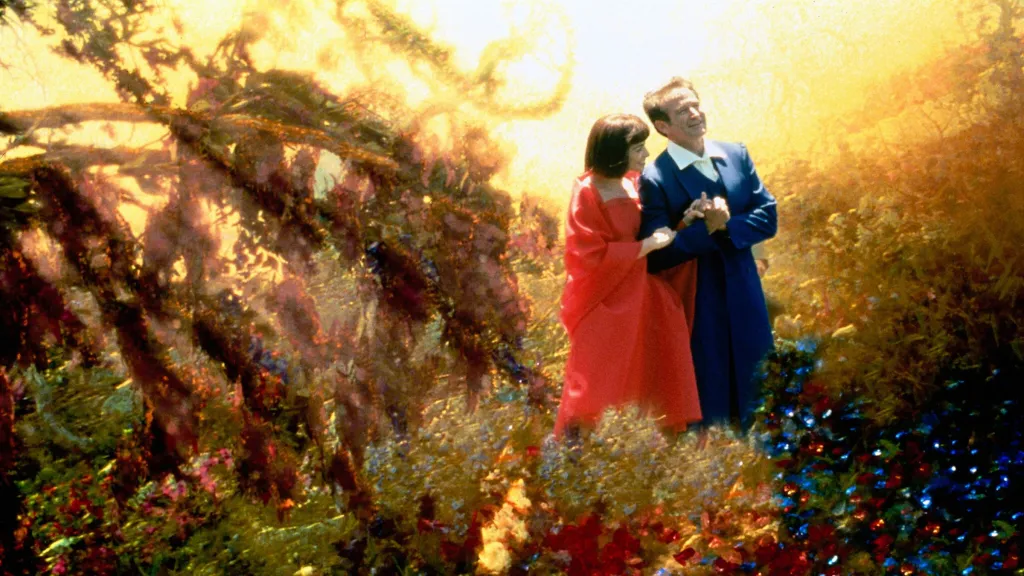
What Dreams May Come is an emotionally devastating film about the afterlife. After Dr. Chris Nielsen (Robin Williams) dies in a car crash, he awakens in a breathtakingly beautiful heaven created from his wife’s paintings. When his grief-stricken wife Annie (Annabella Sciorra) takes her own life, Chris embarks on a perilous journey through the depths of hell to rescue her soul. The film won an Academy Award for its groundbreaking visual effects, which created a painterly world that remains stunning to this day. While the original’s visual achievements are undeniable, modern filmmaking technology could expand upon its core concept in ways that were impossible in 1998. A reboot could create an even more surreal depiction of a personalized afterlife. Furthermore, a new adaptation could offer a more nuanced exploration of the film’s complex themes of love, grief, and mental health, delivering a story that is both a visual marvel and a profound emotional experience.
4) Death Becomes Her
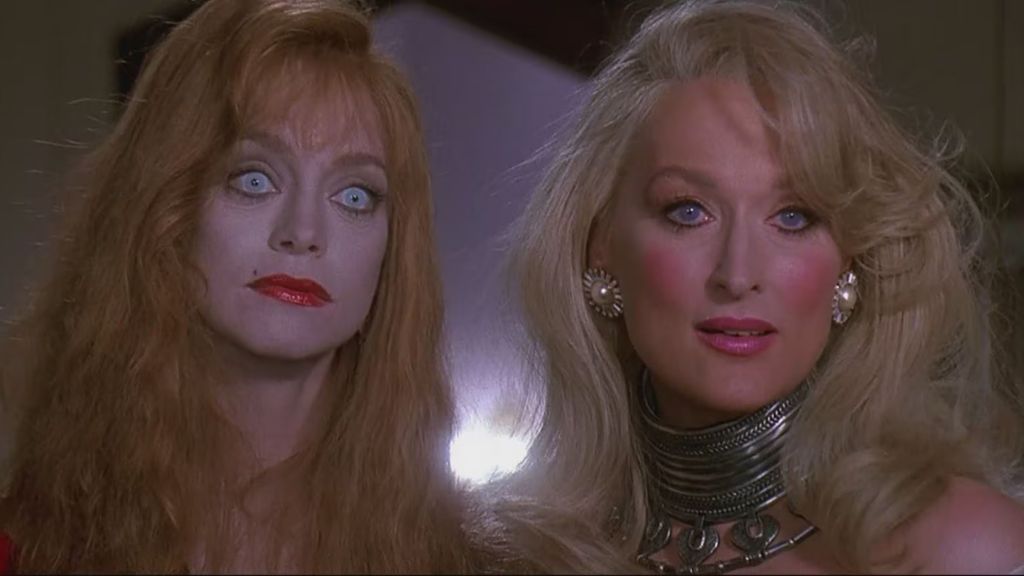
Death Becomes Her is a darkly comedic fantasy that has become a beloved cult classic, celebrated for its macabre humor and pioneering special effects. The film stars Meryl Streep and Goldie Hawn as Madeline and Helen, two lifelong rivals who drink a magical potion that grants them eternal youth. However, they soon discover that immortality comes with a gruesome catch, as their bodies can still be damaged, leading to a series of grotesque misadventures. Death Becomes Her is a sharp satire of Hollywood’s obsession with youth and beauty, a theme that has only become more relevant in the age of social media filters and endless cosmetic procedures. A reboot could sharpen this satirical edge for a modern audience, lampooning today’s vanity culture with the same gleeful cynicism that made the original so memorable.
3) Sleepy Hollow
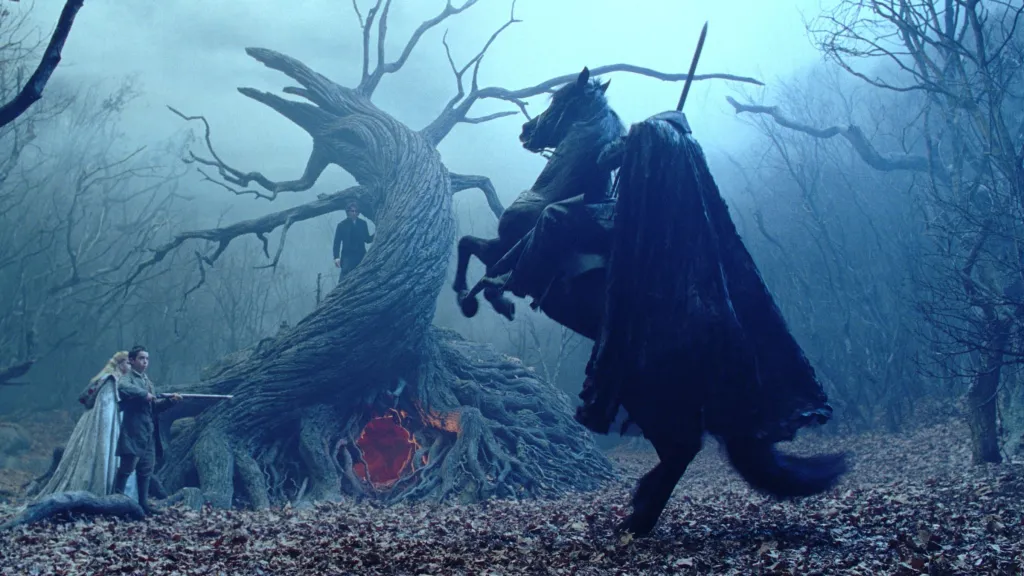
Tim Burton’s Sleepy Hollow is a gothic horror masterpiece that reimagines Washington Irving’s classic tale as a fantastical detective story. The film stars Johnny Depp as Ichabod Crane, a skeptical New York constable sent to the isolated village of Sleepy Hollow to investigate a series of decapitations attributed to the legendary Headless Horseman. Burton’s distinct visual style, filled with twisted trees, perpetual fog, and a desaturated color palette, created an unforgettable and haunting world. Unsurprisingly, then, the movie was a commercial success that perfectly blended horror, mystery, and fantasy. While the 1999 film is a classic, the core legend of the Headless Horseman is fertile ground for a new interpretation. A modern reboot could move away from the mystery-solving aspect and lean fully into folk fantasy, emphasizing the terrifying supernatural nature of the Horseman.
2) The Fisher King
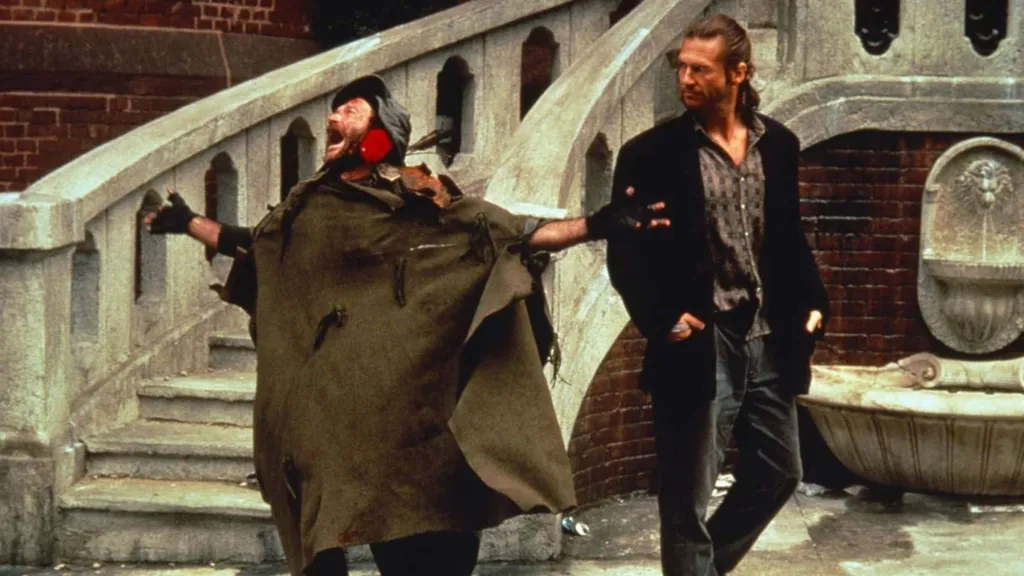
Terry Gilliam’s The Fisher King is a unique film that seamlessly blends urban drama with mythological fantasy. The story follows Jack Lucas (Jeff Bridges), a cynical shock jock whose careless on-air remarks inadvertently lead to a mass tragedy. Wracked with guilt, he encounters Parry (Robin Williams), a homeless man who has lost his mind after his wife was killed in the incident and now believes he is a knight on a quest for the Holy Grail. The film’s depiction of mental illness, visualized through Parry’s terrifying hallucinations of a demonic Red Knight, was both harrowing and deeply compassionate. A reboot could explore these themes through a contemporary lens, addressing the modern media landscape and offering a poignant examination of mental health, homelessness, and the search for human connection in an increasingly isolated world.
1) Dragonheart
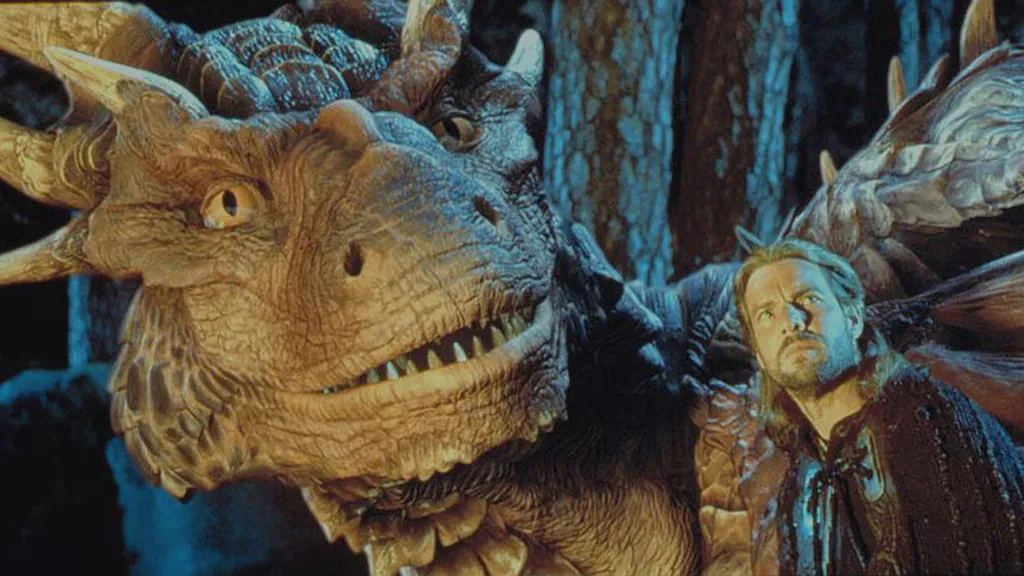
The 1996 fantasy adventure Dragonheart tells the story of Bowen (Dennis Quaid), a disillusioned knight who forms an unlikely partnership with Draco (voiced by Sean Connery), the last living dragon. The movie was a technical milestone, with Draco being one of the first fully computer-generated main characters in cinema history. While the film’s success led to a string of direct-to-video sequels and prequels, none of them ever recaptured the magic or scale of the original. Yet, the core concept of Dragonheart is more than deserving of a large-scale reboot. Modern special effects could finally do justice to the character of Draco, creating a truly photorealistic and expressive dragon that would be completely convincing. A reboot could also expand the world and its lore, building a richer and more complex fantasy setting.
Which 1990s fantasy film do you think is most deserving of a modern reboot? Leave a comment below and join the conversation now in the ComicBook Forum!
Most Viewed
-

Courtesy of Studio Trigger -

Courtesy of Kadokawa / Shosetsuka ni Naro -
Images Courtesy of Marvel Comics -
Image Courtesy of Sony Interactive Entertainment