Making movies is an art that requires time, care, and planning to work. Now imagine trying to adapt a book. In theory, it sounds simple: the idea already exists, so it should just be a matter of putting it into practice. In reality, it’s almost never that easy. Cuts are unavoidable, some characters have to go, storylines get rearranged, and more often than not, the core of the story risks getting lost along the way. There are a lot of moving parts involved. And when it goes wrong, it’s not just readers who walk away frustrated for wanting something faithful and well done — the general audience can feel that something just doesn’t work. In these cases, some adaptations had the budget, the cast, and good intentions, but completely missed what made the story compelling in the first place.
Videos by ComicBook.com
We’re talking about movies that ended up feeling confusing, generic, or stripped of their identity and earned a spot on lists of all-time adaptation failures. Which ones made the cut? Here are the 7 worst book-to-movie adaptations that disappointed pretty much everyone.
7) Dune (1984)
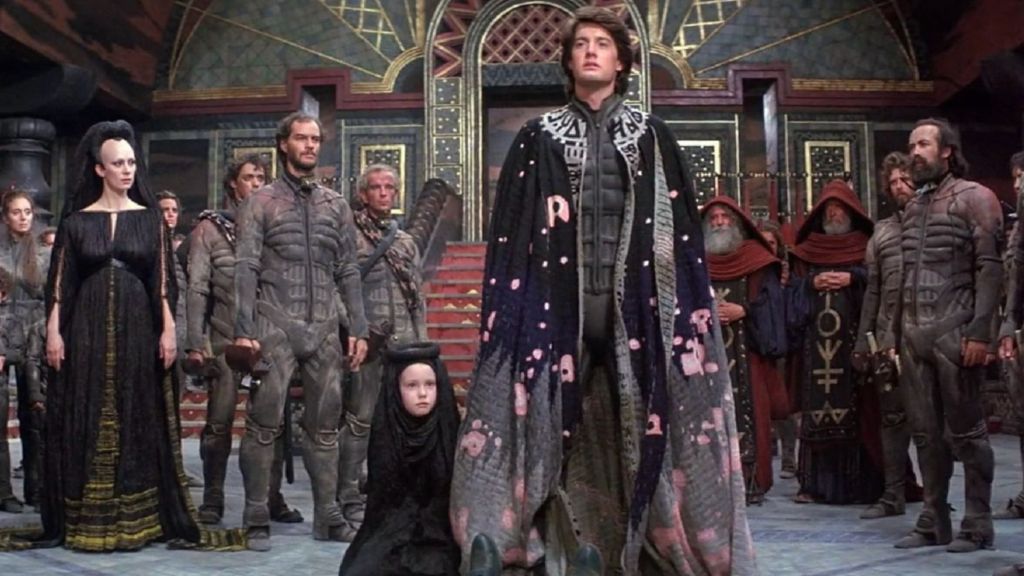
Before Denis Villeneuve’s massively successful version came along, Frank Herbert’s Dune had already been adapted for the big screen in 1984 by David Lynch. The problem is that this adaptation clearly knew it was dealing with something enormous and still decided to move forward without the planning that scale required. The story follows Paul Atreides (Kyle MacLachlan), heir to a noble family sent to the planet Arrakis, where a conspiracy places him at the center of a power struggle over the most valuable substance in the universe. The issue is that this is an extremely complex story, and the film tries to explain it all in just a handful of scenes, barely giving the audience time to get oriented (even with some help along the way).
What ends up happening is that the movie becomes too political for viewers who haven’t read the book and far too shallow for those who have. The story never carries the necessary weight on screen, key relationships are rushed, important concepts are left underdeveloped, and Paul’s character arc feels mechanical rather than earned. In short, Dune fails because it tries to translate complexity at full speed, and complexity doesn’t survive that approach. It’s no surprise that even the director himself ended up unhappy with the final result.
6) The Hobbit Trilogy
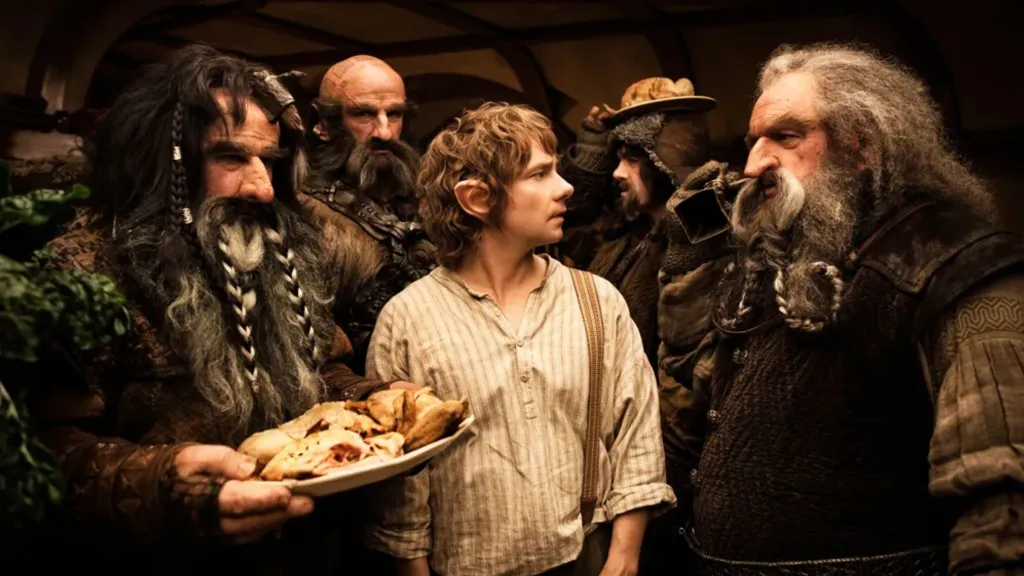
The Lord of the Rings saga is one of the most successful franchises of all time, so it was only a matter of time before the studio looked for ways to expand that universe. The book that precedes the trilogy is The Hobbit, written by J.R.R. Tolkien, and it eventually received its own adaptation. Unlike its predecessor, however, this one didn’t quite work — and the problem started with a decision that was flawed from the very beginning. The story follows Bilbo Baggins (Martin Freeman) on a journey alongside a group of dwarves to reclaim their homeland from a dragon. The book is straightforward, fast-paced, and charming because it doesn’t try to feel epic all the time. However, that approach was completely ignored in the adaptation.
The Hobbit was turned into a trilogy that constantly tries to mimic the scale of the main saga, inflating conflicts and stretching scenes far beyond what they need to be. It’s essentially a lot of padding — something fans have long argued could have easily been told in a single movie (or, at most, two). Bilbo often feels like a side character in his own story, invented subplots take over, battle sequences drag on endlessly, and the pacing becomes wildly uneven. Wanting to bring the book to the screen makes sense, but the excess is what ruined what could have been something great.
5) World War Z
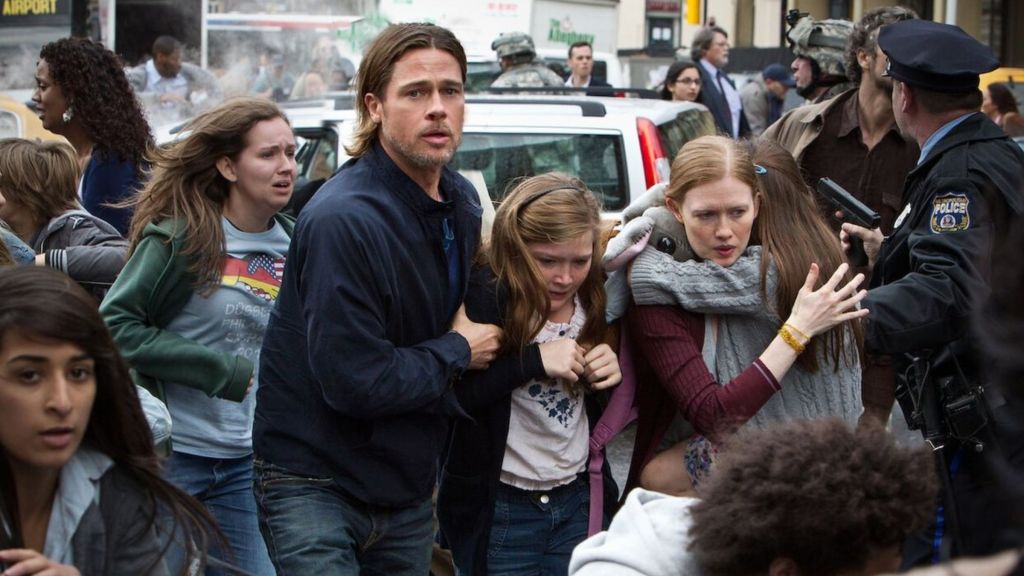
If there’s one adaptation that uses its source material as nothing more than a loose starting point, it’s World War Z. The story follows Gerry Lane (Brad Pitt), a former UN investigator traveling across the globe in search of the origin of a zombie virus pandemic and a possible cure. What many people don’t realize is that the film (often considered one of the better entries in the genre) was adapted from Max Brooks’ novel. And yes, it works well as a fast-paced action movie. The problem is that it barely resembles the original story. The book is structured as a collection of testimonies from around the world, showing how different countries responded to the zombie apocalypse. The film throws all of that out to focus on a single, savior-like protagonist — something the book very intentionally avoids.
It’s easy to understand why that choice was made, especially in the context of mainstream cinema: Hollywood wants a clear arc, a hero, a villain, a central conflict, and a resolution. But on the page, the idea is to highlight collective chaos rather than individual heroism. So when we’re talking about strong adaptations, World War Z stands out as one of the worst examples. The biggest mistake isn’t just changing the plot, but completely stripping away what made the story worth telling in the first place.
4) Divergent Series
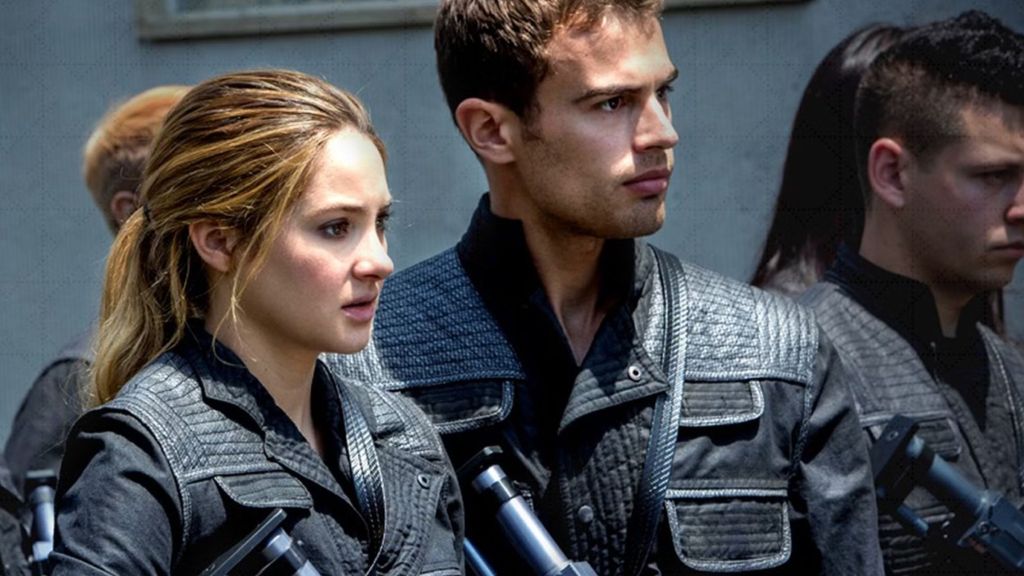
The Divergent series is a bit of a tricky case, because the first movie was genuinely solid. After that, though, the franchise seemed unsure of what it actually wanted to be. Based on Veronica Roth’s novels, the story takes place in a dystopian society divided into factions built around personality traits, where Tris (Shailene Woodley) discovers she doesn’t truly belong to any of them. Three books were adapted, but the film series stopped early due to weak performance. While the beginning follows the source material with a decent level of fidelity, later entries start making noticeable changes by simplifying the plot, rushing and rearranging major events, and significantly altering character arcs along the way.
At its core, Divergent has a strong concept, which is why it pulled audiences in so quickly. The problem is that the movies rarely dig beneath the surface of those ideas (and this was also happening at a time when dystopian fatigue was starting to set in). What ultimately derailed the franchise was a clear loss of direction. It’s frustrating because the start was really promising, but the series faltered by not trusting its own story and treating its themes as background decoration instead of the narrative engine driving everything forward.
3) Percy Jackson Series
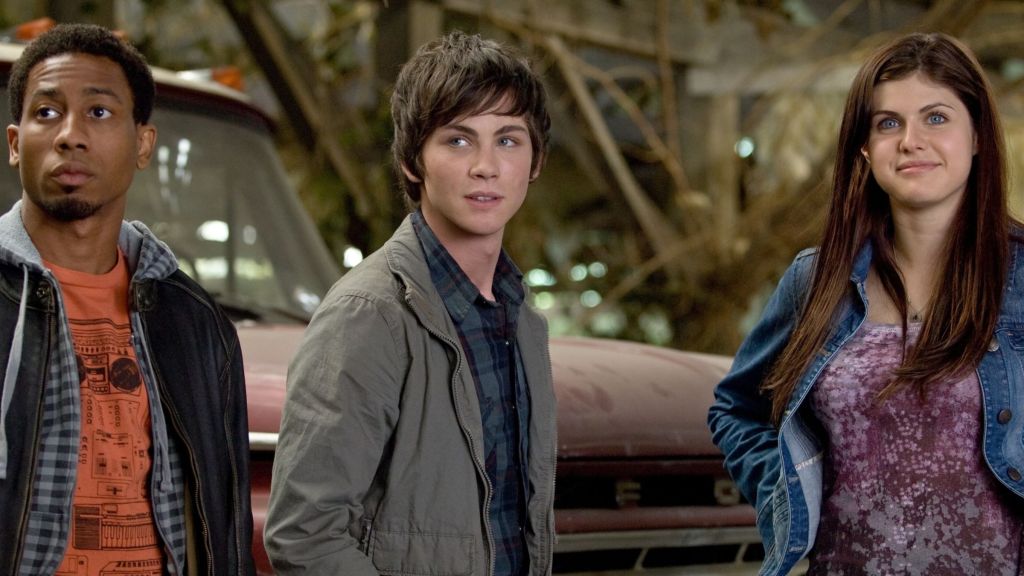
The Percy Jackson books have always been deeply loved, which explains why Rick Riordan is still expanding this universe to this day. So a film adaptation was inevitable. However, when it finally happened, it failed at the most basic level: it felt like the production didn’t actually like the story it was adapting. The plot follows Percy (Logan Lerman), a teenager who discovers he’s the son of a Greek god and gets pulled into conflicts involving Mount Olympus. In an apparent attempt to simplify things, the movies changed a lot, and in the process, stripped away the story’s core identity. Criticism ranged from aging up the characters and flattening the mythology to completely losing the humor and lightness that made the books so popular in the first place.
There were only two movies, and if you disconnect them entirely from the source material, they’re fine enough as entertainment. But as adaptations, they’re bland, overly serious, and ironically far less engaging. The journey moves too fast, important characters lose their narrative purpose, rules are rewritten with no explanation, and the tone can’t decide whether it wants to be a kids’ adventure or a straight-up action movie. Riordan was openly critical of it, and years later, the overwhelmingly positive reception to the Disney+ series (with him directly involved) only highlights how badly the first adaptation missed the mark. The wild part is that the Percy Jackson films had everything going for them and failed by trying to fix something that was never broken.
2) The Dark Tower

Stephen King is a heavyweight name, and naturally, his books tend to be massive in scope as well. His work has been adapted countless times for film, and more often than not, those adaptations are at least decent. The Dark Tower, however, was uncomfortable to watch because the production didn’t seem to understand the scale of what it was adapting. The story centers on Roland Deschain (Idris Elba), a gunslinger on a quest to reach the Dark Tower — the axis of all universes. It’s an expansive narrative filled with symbolism, recurring characters, and interconnected worlds. The film, though, tries to compress all of that into a simple good-versus-evil storyline, completely hollowing out the experience in the process.
What’s left is something rushed and painfully generic, with barely any character development and a world that never fully pulls the audience in. Adapting books is obviously difficult, since you can’t put everything on screen. But that’s exactly why it requires real understanding and confidence in the material. If the goal is to bring King’s most complex saga to the big screen, a rushed summary simply won’t cut it. It demands time and commitment. For longtime fans, the result feels disrespectful; for newcomers, it’s confusing. Thankfully, a new take on The Dark Tower is finally on the way.
1) Eragon
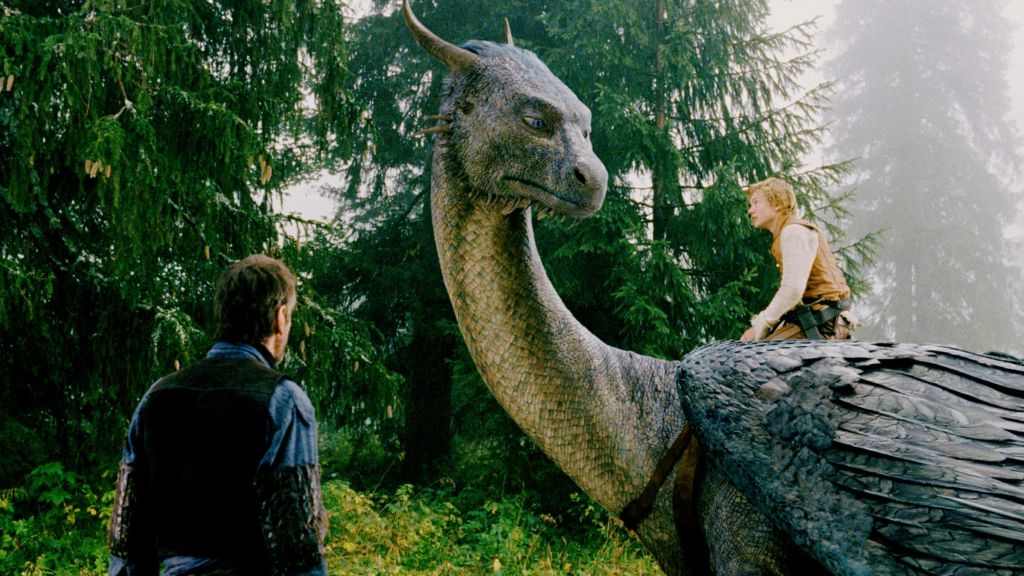
Out of all the book-to-movie adaptations out there, Eragon easily sits near the very top of the worst offenders. It’s not just a bad adaptation — it feels like it was made without any real understanding of why Christopher Paolini’s book series is so beloved. The story follows a young boy (Ed Speleers) who discovers a dragon egg and realizes he’s tied to a conflict far bigger than anything he imagined. It’s classic fantasy at its core, but the movie treats it like a quick cash grab. The plot is rushed to an extreme, key characters are cut entirely, and what should be a meaningful coming-of-age journey is reduced to a string of events with zero emotional payoff. Everything happens too fast for the audience to care or feel any of the weight the original story carries.
On the page, the story works because the book takes its time developing the world, the relationships, and Eragon’s growth. The movie does none of that (and that’s not an exaggeration). As an adaptation, Eragon is such a massive disappointment because it treats its source material as completely disposable. It’s no surprise that both fans and critics reacted negatively; the audience response was weak, and the franchise died after a single film. For viewers who never read the books, it might work as light, forgettable entertainment. But as an adaptation, it completely fails. To this day, it’s one of the most cited examples of how a potential franchise can collapse right out of the gate.
Have you seen any of these adaptations? Is there another one that should’ve made the list? Leave a comment below and join the conversation now in the ComicBook Forum!
Most Viewed
-

Courtesy of Sony Pictures Animation / McDonald's -

Image Courtesy of TMS Entertainment -

Image via Prime Video -

Courtesy of TOHO Animation -

Courtesy of Crunchyroll