In the past decade, the Star Wars franchise has maintained its cultural dominance through a strategic pivot toward high-budget television ventures. This experimental era has yielded critical successes like Andor, which introduced a grounded political thriller to the canon, and The Mandalorian, a space-western that successfully captured a global audience through its serialized adventures. These projects, alongside animated efforts like The Bad Batch and Tales of the Jedi, have effectively decentralized the narrative, ensuring that the brand remains vibrant and relevant even in the absence of a theatrical release schedule. This prolonged theatrical hiatus is finally coming to an end with a robust slate of cinematic projects designed to reclaim Star Wars‘ big-screen experience.
Videos by ComicBook.com
The return of Star Wars to theaters officially begins with the premiere of The Mandalorian & Grogu on May 22nd, a movie that will translate the streaming hit into a blockbuster event. Following closely behind is Shawn Levy’s Star Wars: Starfighter, starring Ryan Gosling, currently slated for May 28, 2027. With additional films in development, including a highly anticipated sequel featuring Rey Skywalker (Daisy Ridley), the franchise is entering a new phase of cinematic ambition under the creative oversight of the new Lucasfilm heads, Dave Filoni and Lynwen Brennan. While the future promises fresh frontiers, the enduring popularity of Star Wars is rooted in the high rewatchability of its existing library, as almost every movie is perfectly tailored for multiple viewings.
11) Star Wars: Episode IX – The Rise of Skywalker
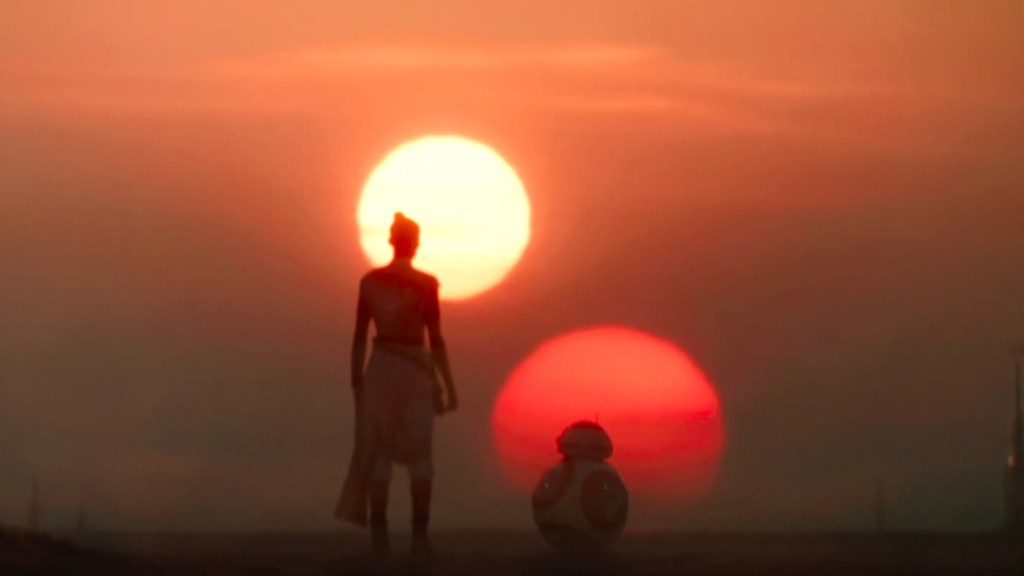
Serving as the definitive bottom of the ranking, Star Wars: Episode IX – The Rise of Skywalker is a disorganized conclusion that attempts to resolve too many narrative threads in a frantic runtime. Directed by J.J. Abrams, the film relies heavily on the sudden resurrection of Emperor Palpatine (Ian McDiarmid), a creative pivot that undermines the emotional arcs established in the previous two chapters of the sequel trilogy. On top of that, the pacing is relentlessly chaotic, moving Rey and Ben Solo (Adam Driver) through a series of MacGuffin-based scavenger hunts that leave little room for genuine character reflection. On repeat viewings, the structural cracks become even more apparent, as the convenience of the plot and the lack of thematic focus make The Rise of Skywalker an exhausting sit.

10) Star Wars: Episode I – The Phantom Menace
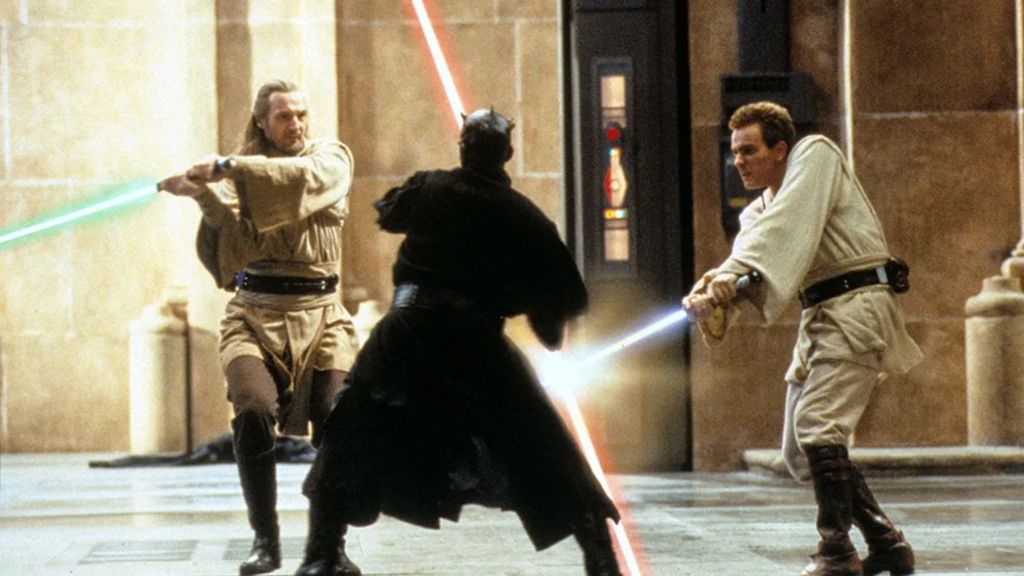
Star Wars: Episode I – The Phantom Menace is a film of extreme highs and lows that remains essential for its world-building despite its narrative flaws. Nevertheless, during subsequent viewings, the dense focus on trade disputes and senate bureaucracy can feel like a significant hurdle, as these political segments often stall the adventure’s momentum. On top of that, the presence of Jar Jar Binks (Ahmed Best) also introduces a level of slapstick comedy that remains divisive for those seeking a more mature tone. Despite these distractions, the production features some of the most visceral sequences in the franchise, specifically the podracing event on Tatooine and the three-way lightsaber duel against Darth Maul (Ray Park). Finally, the visual design of Naboo and the Gungan underwater city demonstrates a high level of creative imagination that continues to hold up.
9) Star Wars: Episode II – Attack of the Clones

The middle chapter of the prequel era, Star Wars: Episode II – Attack of the Clones, frequently struggles to balance its technical ambition with a script that feels stilted and overly formal. Much of the film’s friction stems from the romantic subplot involving Anakin Skywalker (Hayden Christensen) and Padmé Amidala (Natalie Portman), which utilizes dialogue that has become a permanent fixture of internet memes rather than a convincing portrayal of affection. Furthermore, the reliance on early-2000s digital environments also results in a visual texture that feels somewhat detached and flat compared to the tactile nature of other Star Wars productions. That said, the detective-driven B-plot following Obi-Wan Kenobi (Ewan McGregor) to the water world of Kamino remains engaging, providing a noir-inspired mystery that expands the lore of the clone army.
8) Solo: A Star Wars Story
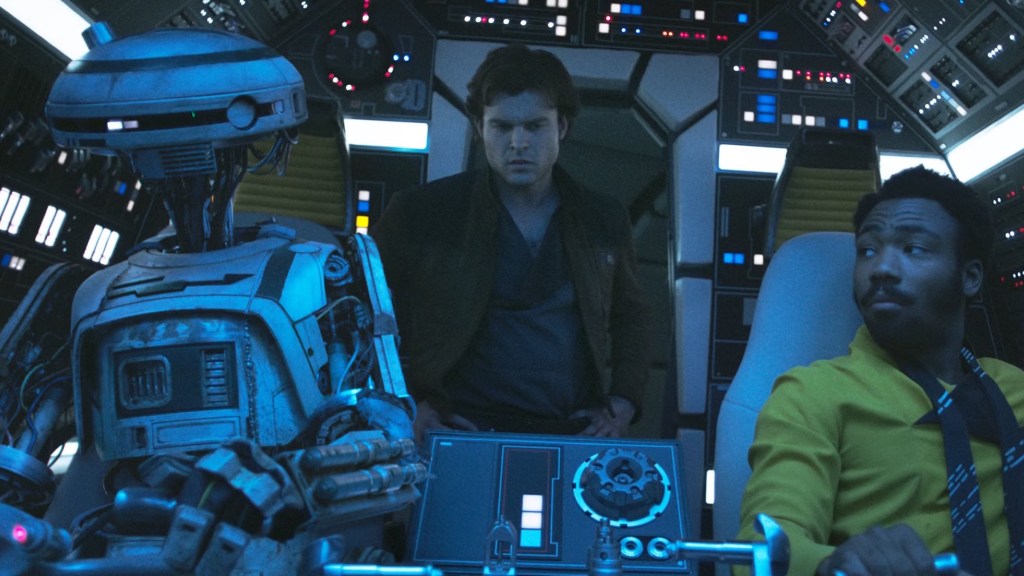
Operating as a self-contained space-western, Solo: A Star Wars Story thrives by discarding the heavy burden of galactic destiny in favor of a fast-paced heist narrative. The film benefits from a grounded perspective that explores the criminal underbelly of the universe, following a young Han Solo (Alden Ehrenreich) as he attempts to build his reputation. The chemistry between Han and Lando Calrissian (Donald Glover) provides a constant source of entertainment, while the introduction of Chewbacca (Joonas Suotamo) establishes a partnership that feels organic and earned. Because the stakes are strictly personal, the movie avoids the convoluted lore issues that often weigh down the primary installments, making it remarkably easy to rewatch. Despite its positive aspects, Solo still suffers from a disjointed script that fails to set a single tone for the adventure, and an excessive time dedicated to overexplaining canon bits that feel unimportant.
7) Star Wars: Episode VIII – The Last Jedi
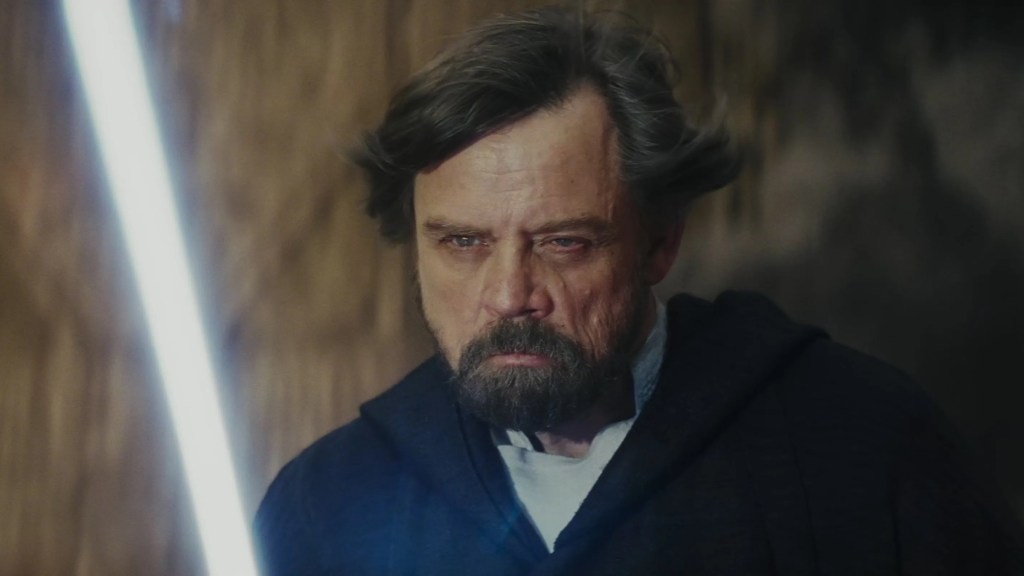
As one of the most polarizing entries in the entire filmography, Star Wars: Episode VIII – The Last Jedi intentionally upends the franchise’s foundational tropes to deliver a more challenging cinematic experience. Director Rian Johnson focuses on the deconstruction of Luke Skywalker (Mark Hamill), presenting a disillusioned mentor whose arc remains a subject of intense debate. Still, the cinematography of The Last Jedi is arguably the most striking in the series, with the crimson-streaked salt flats of Crait providing a visually stunning backdrop for the final confrontation. This entry rewards viewers who appreciate thematic complexity, as the friction between Rey and Kylo Ren offers a sophisticated look at the nature of power and failure. However, the lengthy Canto Bight sequence and the slow-speed space chase can feel somewhat tangential to the core drama, occasionally slowing down the narrative during a repeat watch.
6) Star Wars: Episode VII – The Force Awakens
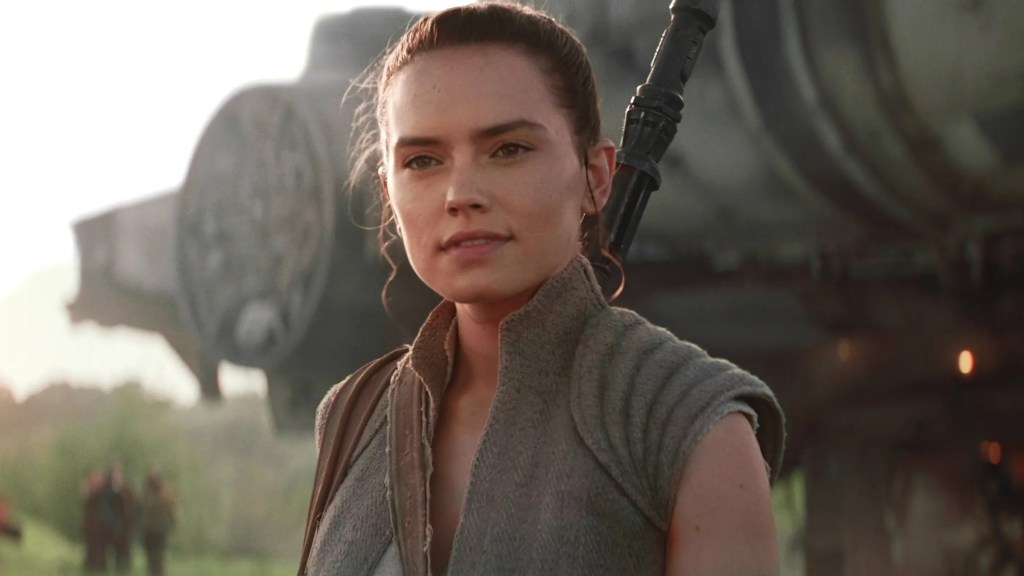
The energy of Star Wars: Episode VII – The Force Awakens is infectious, functioning as a high-speed celebratory reset for the entire property. By leaning into the narrative beats of the 1977 original, J.J. Abrams successfully recaptured the aesthetic spirit of the brand, prioritizing physical locations and practical creatures to ground the sci-fi spectacle. In addition, the immediate bond between the new trio of Finn (John Boyega), Rey, and Poe Dameron (Oscar Isaac) provides a vibrant emotional anchor that carries the audience through the relentless pacing of the plot. While The Force Awakens is often criticized for its structural similarities to the past, its ability to reintroduce the magic of the galaxy to a modern demographic makes it incredibly easy to watch multiple times.
5) Star Wars: Episode VI – Return of the Jedi
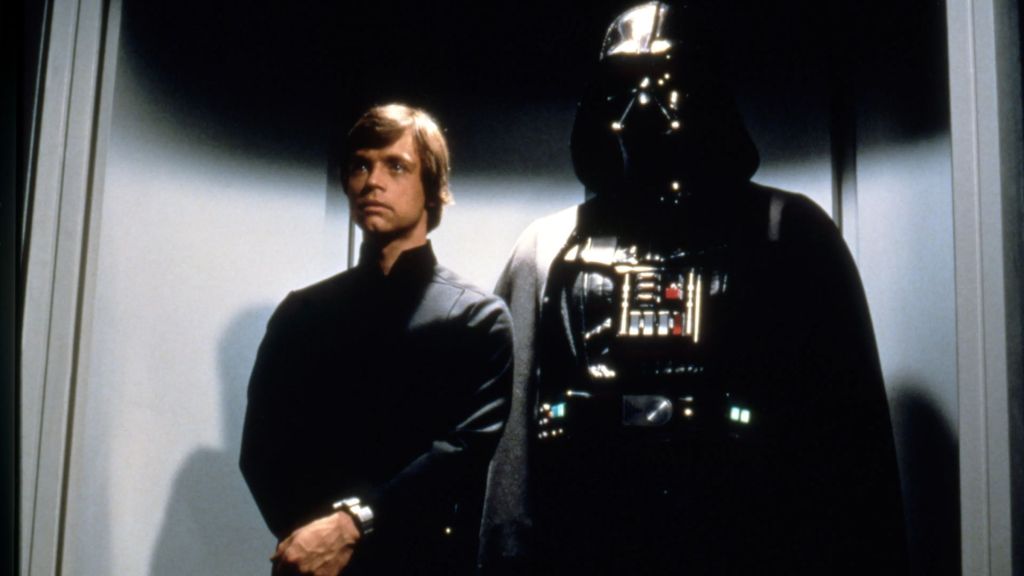
The final chapter of the original trilogy, Star Wars: Episode VI – Return of the Jedi, is a multi-layered finale that offers some of the most iconic imagery in science fantasy history. First of all, the opening act at Jabba’s Palace functions as a fantastic standalone rescue mission, featuring a diverse array of alien designs and high-stakes tension. Then, while the introduction of the Ewoks on Endor remains a lighter element that appeals primarily to younger viewers, the film finds emotional gravity in the dual conflict occurring aboard the second Death Star. The internal struggle of Luke Skywalker as he faces the Emperor and a conflicted Darth Vader (voiced by James Earl Jones) provides a poignant and mature resolution to the family drama, rewarding fans with a sense of closure that is both triumphant and heartbreaking.
4) Star Wars: Episode III – Revenge of the Sith

Representing the high-water mark of the prequel cycle, Star Wars: Episode III – Revenge of the Sith is a fast-paced tragedy that chronicles the absolute collapse of the Jedi Order. The narrative moves with a sense of urgent inevitability, starting with a massive space battle above Coruscant that immediately sets a high technical standard. The central drama of Revenge of the Sith involves the manipulation of Anakin Skywalker by Palpatine, a dark trajectory that culminates in the visceral duel on the volcanic planet of Mustafar and transforms the Jedi Master into the vicious Darth Vader. The tragic tone and the intensity of the choreography make Revenge of the Sith one of the most engaging entries in the entire saga, offering a viewing experience that significantly strengthens the connective tissue between the trilogies.
3) Star Wars: Episode IV – A New Hope

The 1977 original, later renamed Star Wars: Episode IV – A New Hope, is a masterpiece of economic storytelling that remains as effective today as it was nearly fifty years ago. By utilizing the classic hero’s journey framework, George Lucas created a focused adventure that introduces an entire galaxy with remarkable clarity. The pacing is also almost perfect, moving from the desolate wastes of Tatooine to the industrial coldness of the Death Star without ever losing sight of the core protagonists. That happens because the chemistry between Han, Leia (Carrie Fisher), and Luke remains the gold standard for ensemble dynamics, providing a source of humor and heart that grounds the fantastical stakes. A New Hope is a foundational piece of cinema that offers a comforting and thrilling experience regardless of how many times it has been seen.
2) Star Wars: Episode V – The Empire Strikes Back
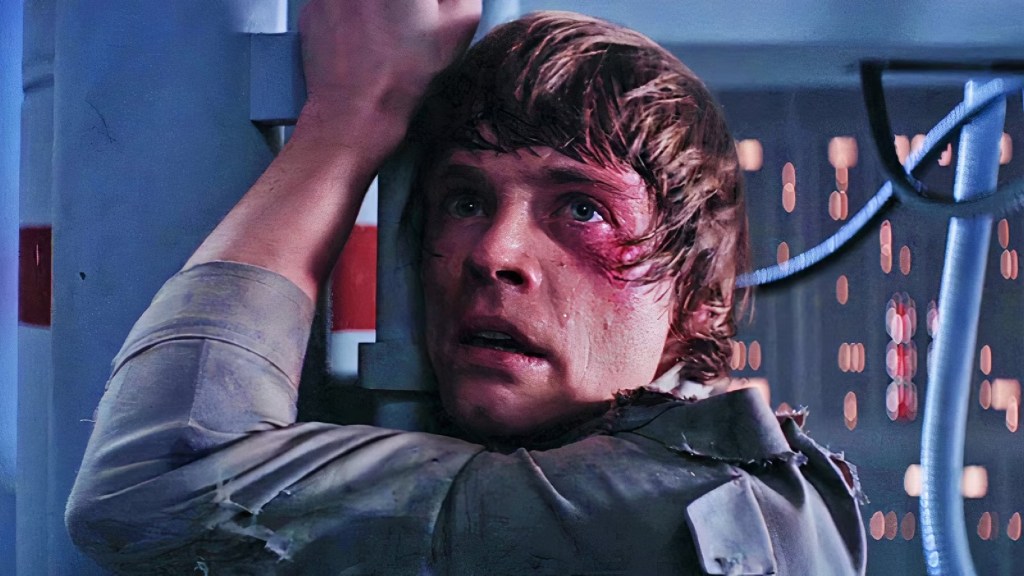
Commonly regarded as the definitive entry in the franchise, Star Wars: Episode V – The Empire Strikes Back succeeds by taking significant narrative risks and deepening the internal lives of its heroes. The decision to split the group across different worlds allows for a more focused exploration of Luke’s Jedi training under Yoda (Frank Oz) and the blossoming romantic friction between Han and Leia. In addition, every location, from the frozen plains of Hoth to the atmospheric beauty of Cloud City, is rendered with a level of detail that makes the galaxy feel tangible and lived-in. The climactic duel between Luke and Vader is a masterstroke of psychological storytelling, culminating in a reveal that fundamentally altered the course of pop culture. All of that ensures The Empire Strikes Back‘s status as a mandatory revisit for any student of the medium.
1) Rogue One: A Star Wars Story

The top spot for rewatchability belongs to Rogue One: A Star Wars Story, a gritty and visceral war epic that successfully prioritizes the sacrifices of the common soldier over the destiny of the Jedi. By focusing on a diverse team of outcasts led by Jyn Erso (Felicity Jones) and Cassian Andor (Diego Luna), the film offers a grounded perspective on the rebellion that is entirely unique within the cinematic library. The final act on the tropical beaches of Scarif is the most impressive action sequence in Star Wars, utilizing a multi-front assault that maintains constant narrative tension. This sequence leads directly into the legendary hallway appearance of Darth Vader, a moment of pure cinematic terror that serves as the ultimate connective bridge to the original trilogy. Because the film is a self-contained story with high emotional stakes and a definitive conclusion, Rogue One rewards multiple viewings through its technical precision, atmospheric grit, and thematic integrity.
Which Star Wars do you like to rewatch the most? Leave a comment below and join the conversation now in the ComicBook Forum!
More Movies
-

Courtesy of Warner Bros. Pictures