Science fiction is one of the most effective tools for analyzing the complexities of the modern world. By focusing on the intersection of science and technology, the genre provides a unique framework to understand current societal issues through the extrapolation of existing tendencies. Whether it is examining the ethical boundaries of biological engineering or the social consequences of total digital surveillance, sci-fi allows audiences to visualize the long-term impact of human progress. This analytical approach makes science fiction far more than mere escapism, as it offers a predictive mirror that reflects our anxieties back to us in the form of speculative futures.
Videos by ComicBook.com
However, the inherent density of science fiction often presents a significant challenge for those who are just beginning to explore it. Many of the most celebrated works in the genre utilize abstract concepts such as non-linear time travel, alternate dimensions, and the metaphysical implications of artificial intelligence to push the limits of human understanding. In addition, sci-fi movies frequently abandon the comforting tropes of standard cinema, opting instead for psychological erosion and existential ambiguity that can be difficult to navigate without prior experience. This list highlights several essential sci-fi movies that are mandatory viewing for fans but should perhaps be avoided by beginners until they are more comfortable with the genre’s challenging demands.
7) Under the Skin

Directed by Jonathan Glazer, Under the Skin‘s minimalistic approach to sci-fi turns into a sensory-heavy experience instead of a straightforward story. The narrative follows an extraterrestrial entity known as The Female (Scarlett Johansson) as she drives a van through the streets of Scotland, luring men into a void-like trap to harvest them for unknown reasons. The film is a masterpiece of atmospheric dread, utilizing hidden cameras and non-professional actors to create a documentary-like quality that emphasizes the alien’s detached perspective.
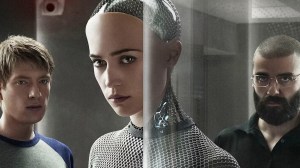
Under the Skin‘s lack of expository dialogue and the focus on visual metaphors make this an incredibly difficult watch for those expecting a traditional narrative structure. The movie prioritizes mood and texture over plot, leaving the viewer to piece together the alien’s developing empathy and eventual vulnerability without any explicit guidance. For a newcomer to the genre, this lack of clarity can be frustrating, as the film refuses to explain its central mystery or provide any comfort. While Under the Skin is a profound meditation on the human condition from an outsider’s view, its glacial pacing and surreal imagery are best saved for a more seasoned sci-fi audience.
6) A Scanner Darkly

Richard Linklater utilized a unique “interpolated rotoscoping” technique to bring Philip K. Dick’s A Scanner Darkly to life, creating a visual style that perfectly captures the paranoia of the source material. The story is set in a near-future America lost to a drug epidemic, following an undercover police officer named Bob Arctor (Keanu Reeves) who begins to lose his sense of identity as he investigates his own circle of friends. The film is essential science fiction for its exploration of state surveillance and the chemical erosion of the soul, featuring strong supporting performances from Robert Downey Jr. and Woody Harrelson. Nevertheless, the drug-induced dialogue and the shifting, dreamlike animation can be overwhelming for viewers not accustomed to sci-fi’s more psychedelic tendencies.
The narrative of A Scanner Darkly is also intentionally disorienting, mirroring the fragmented mental state of its protagonists, which can make the actual plot hard to follow. While the film is a brilliant adaptation of one of the most influential voices in sci-fi history, the constant visual flux and the heavy emphasis on conspiracy theories may alienate those looking for a more grounded introduction to the genre.
5) Annihilation
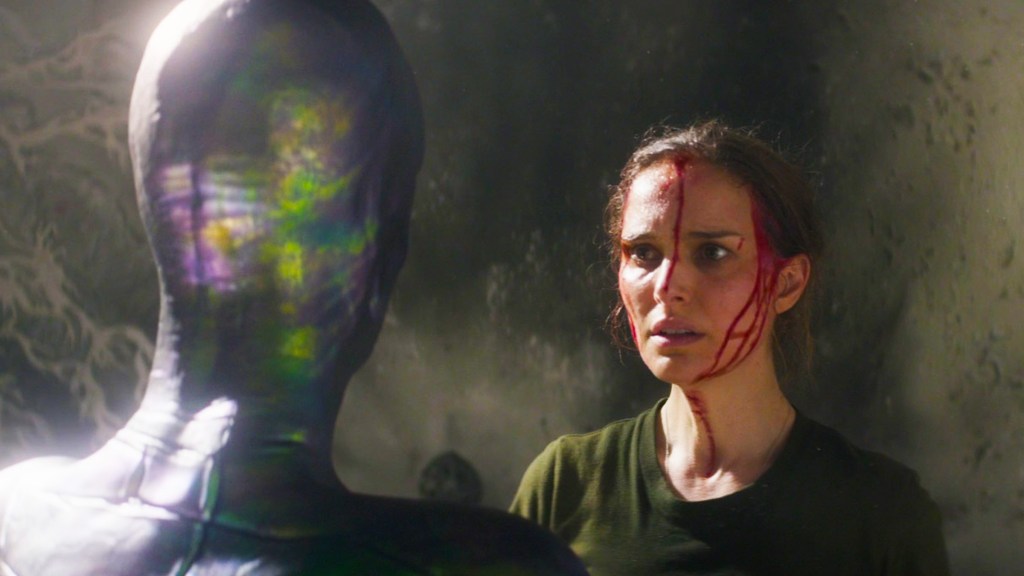
Alex Garland followed up his successful directorial debut, Ex-Machina, with Annihilation, a film that delves into the terrifying concept of biological self-destruction. The story centers on a biologist named Lena (Natalie Portman) as she leads an all-female team of scientists into “The Shimmer,” a quarantined zone where an extraterrestrial presence is actively rewriting the DNA of every living organism.
Annihilation remains a high-water mark for sci-fi horror, praised for its stunning visual effects and its refusal to anthropomorphize its antagonist. Instead of a standard invading force, the presence is depicted as a biological prism that refracts life into horrifying new forms, a concept that culminates in a surreal final act. This ending often proves divisive for casual audiences because it abandons traditional plot for a metaphysical dance that defies easy explanation. Newcomers might find the film’s nihilistic tone and its opaque metaphors regarding trauma and cellular decay to be a depressing or confusing entry point. Even if Annihilation is an essential work of modern science fiction, it requires a level of abstract engagement that is quite demanding.
4) Blade Runner

While the franchise is expanding in 2026 with the release of the Blade Runner 2099 series on Prime Video, the original Blade Runner remains the most significant version of Ridley Scott’s neo-noir world. The original movie follows Rick Deckard (Harrison Ford), a specialized law enforcement officer tasked with “retiring” a group of escaped bio-engineered androids known as Replicants. However, Blade Runner’s deliberate, slow-burning pace and its reliance on atmosphere over action can be a shock to those used to high-octane space operas.
The narrative of Blade Runner is more of a detective story wrapped in existential dread than a typical adventure, focusing on the psychological toll of Deckard’s mission and the tragic desperation of Roy Batty (Rutger Hauer), the leader of the Replicants. The ambiguity regarding Deckard’s own nature and the film’s lack of traditional heroism make it a dense, contemplative experience. For a beginner, the subtle world-building and the heavy thematic weight might feel sluggish compared to more modern, fast-paced entries in the genre.
3) Metropolis

Fritz Lang’s Metropolis is the foundational sci-fi epic that established the visual and thematic language for nearly a century of cinema. Set in a futuristic city divided by extreme class inequality, the narrative follows the son of the city’s mastermind (Gustav Fröhlich) as he falls for a working-class prophet named Maria (Brigitte Helm) and witnesses the creation of a malevolent robot double. Despite the 2023 cancellation of a high-profile television remake, the 1927 Metropolis remains a technical marvel that utilized groundbreaking practical effects and massive sets to portray industrial exploitation.
The constraints of silent film conventions and the operatic performances of the early 20th century can be a significant barrier for modern audiences to appreciate Metropolis. On top of that, the film’s runtime and its reliance on visual symbolism to convey complex political ideas require a level of patience that many new fans might not yet possess. While every sci-fi enthusiast eventually needs to see the origin of the “Machine-Person,” the historical distance and the melodramatic tone of Metropolis make it a challenging starting point.
2) Primer
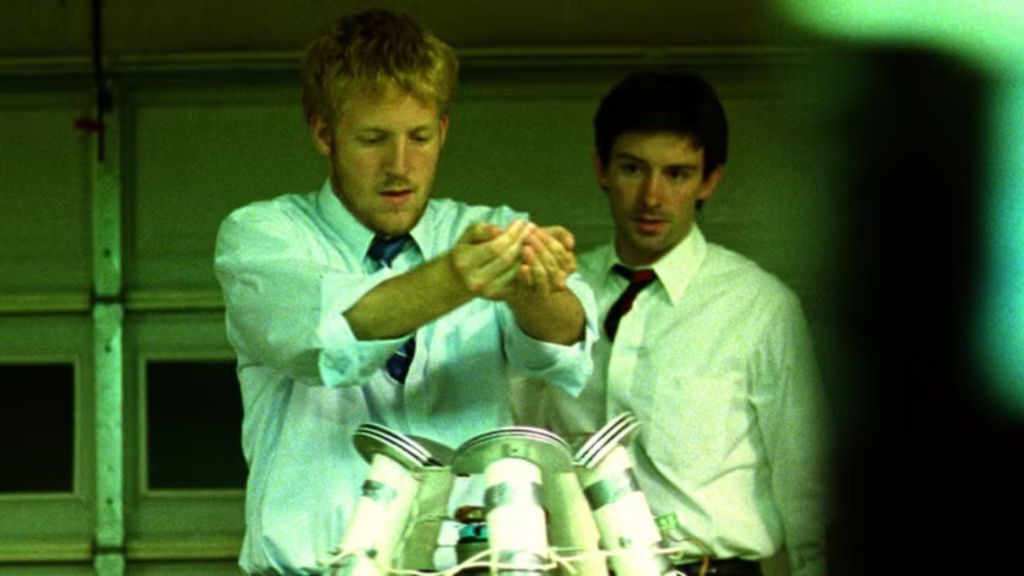
Made on an impossibly small budget of $7,000, Shane Carruth’s Primer is often cited as the most scientifically rigorous and complex time travel movie ever produced. The story follows two engineers, Aaron (Shane Carruth) and Abe (David Sullivan), who accidentally discover a method of time manipulation while working on a tech project in a garage. Unlike other films that simplify the mechanics of the “grandfather paradox,” Primer utilizes dense, technical jargon and a non-linear structure that tracks multiple overlapping timelines without any hand-holding for the audience.
Primer is essential because it treats the time-travel discovery as a grimy, bureaucratic nightmare rather than a grand adventure, focusing on the inevitable erosion of trust between the two partners. Still, the narrative is so convoluted that it frequently requires multiple viewings and external diagrams to fully comprehend the sequence of events. For a newcomer, this level of intellectual demand can be exhausting and might discourage further exploration of the genre. Primer is a brilliant example of what low-budget sci-fi can achieve, but its “hard” science approach makes it the ultimate gatekeeper for the uninitiated.
1) 2001: A Space Odyssey
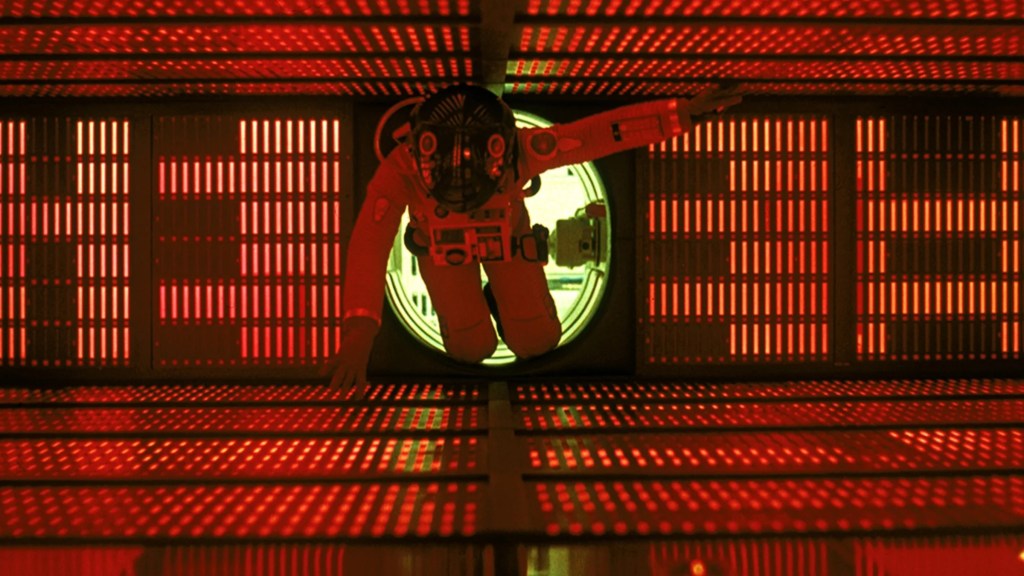
Stanley Kubrick’s 2001: A Space Odyssey is a film that every science fiction fan eventually watches. The narrative spans the history of human intelligence, moving from the discovery of tools in the prehistoric past to a deep-space mission to Jupiter overseen by the sentient computer HAL 9000 (voiced by Douglas Rain). The film is a visual and auditory triumph, using classical music and silent sequences to capture the terrifying beauty of the void. However, the total absence of dialogue for large portions of the film and its refusal to provide a clear explanation for its cosmic ending make it notoriously difficult for general audiences.
The final journey of David Bowman (Keir Dullea) into the “Star Gate” is a psychedelic experience that remains open to endless interpretation, bypassing traditional logic in favor of a transcendent mythic voyage. While the movie remains a celebrated entry in sci-fi canon, its glacial pacing and abstract storytelling are far removed from the conventions of modern entertainment. 2001: A Space Odyssey is for many the greatest sci-fi film ever made, but it is also the most challenging, making it a destination rather than a starting point.
Which challenging science fiction masterpieces would you recommend newcomers to the genre avoid? Leave a comment below and join the conversation now in the ComicBook Forum!
Most Viewed
-

Image courtesy of Sony -

Image Courtesy of A-1 Pictures -

Image Courtesy of Crunchyroll