The unprecedented success of the original Star Wars trilogy created a commercial vacuum that was rapidly filled by a sprawling network of tie-in media. Throughout the 1990s, the franchise expanded through the “Expanded Universe,” a collection of novels and comic books that fans treated as gospel. This process of world-building intensified significantly following the release of Star Wars: Episode I – The Phantom Menace, as George Lucas began to fill the massive narrative gaps in his chronology while simultaneously greenlighting ambitious spinoffs. This era of experimentation reached its boiling point with the development of Star Wars: The Clone Wars, an animated venture that saw Lucas taking a much more hands-on approach to the lore. However, Lucas’ creative involvement came at a cost to the existing continuity, as the series broke Star Wars canon during its second season.
Videos by ComicBook.com
The shift in canon came on “The Mandalore Plot,” the twelfth episode of the second season of Star Wars: The Clone Wars, first released on January 29, 2010. The episode follows Obi-Wan Kenobi (voiced by James Arnold Taylor) as he travels to the planet Mandalore to investigate rumors of a conspiracy involving the Separatist Alliance. Upon his arrival, the Jedi discovers that the once-famed warrior culture has been replaced by a pacifist government led by Duchess Satine Kryze (voiced by Anna Graves). Instead of the armor-clad mercenaries featured in previous stories, these “New Mandalorians” lived in sterile cities and had entirely renounced their violent heritage. The episode also introduced a fundamental schism between the peaceful ruling class and the terrorist splinter group known as Death Watch, led by Pre Vizsla (voiced by Jon Favreau). However, by presenting Mandalore as a pacifist society, The Clone Wars contradicted established Mandalorian canon and rendered years of literature effectively obsolete.
How Star Wars: The Clone Wars Retconned Mandalorian Canon?

The discrepancy between the Mandalorians of the Expanded Universe and those presented in Star Wars: The Clone Wars was one of the most significant continuity clashes in the franchise’s history. As early as the 1980 novelization of The Empire Strikes Back by Donald F. Glut, the Mandalorians were described as “a group of evil warriors defeated by the Jedi Knights during the Clone Wars.” This established them as a formidable military force capable of threatening the Jedi Order. Later creators like Tom Veitch and Kevin J. Anderson expanded on this in the Tales of the Jedi comics, portraying Mandaloreians as crusaders, while author Karen Traviss eventually formalized their culture with the Mando’a language and a code of honor that prioritized family and martial prowess above all else.
The introduction of the New Mandalorians in The Clone Wars implied that the warrior culture was an ancient relic that had been suppressed by centuries of pacifist reform, a concept that fundamentally clashed with books set only years prior that showed a thriving, armor-clad society. For fans who had spent years following the “Way of the Warrior” in books like Republic Commando, this was not a simple evolution but a total erasure of the complex tribal society they had supported. The move also sent a clear message that the Expanded Universe was secondary.
The real-world consequences of this retcon were severe for the publishing arm of Star Wars. Traviss officially pulled out of Star Wars in late 2009, citing the inability to write logical stories within the new framework. She explained that the pacifist mandate rendered her Republic Commando and Imperial Commando series non-functional, as the core identity of her protagonists was tied to a culture that Lucas had effectively deleted from the timeline. This exit left major plot threads dangling and forced Lucasfilm to abandon highly anticipated projects like Imperial Commando 2 and an untitled Boba Fett novel. The instability also damaged the trust between the studio and its contributors, making a total reboot of the timeline almost inevitable as the discrepancies in canon became too large to manage.
Disney Embraced Mandalorian Mythology
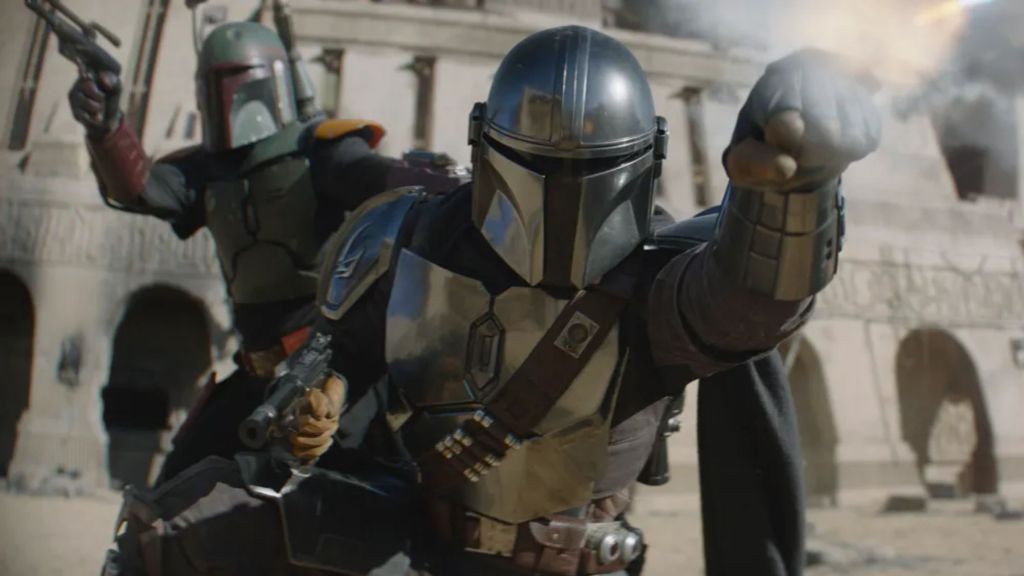
Following the acquisition of Lucasfilm by Disney, the studio opted to wipe the slate clean by rebranding the Expanded Universe as “Legends” and putting it outside official canon. While this move was controversial, it allowed the creators to lean heavily into the new Mandalorian mythology established by George Lucas and Dave Filoni. The most significant canon expansion of this modern era arrived with the live-action series The Mandalorian, starring Pedro Pascal. Instead of choosing between the pacifism of the animated series or the hyper-violence of the novels, the show found a way to bridge the gap. By focusing on Din Djarin (Pedro Pascal) and his adherence to a fringe sect known as the Children of the Watch, the production reintroduced the religious reverence for armor and combat while keeping the political history of the New Mandalorians intact. This approach proved to be a massive success, leading to several spinoffs that further integrated the animated and live-action universes.
The inclusion of characters like Bo-Katan Kryze (Katee Sackhoff) served as a direct tether to the civil wars seen in Star Wars: The Clone Wars and Star Wars Rebels. Through these interconnected projects, the Disney era has managed to turn the once-broken canon into a unified narrative about a fractured people trying to reclaim their identity. As a result, by embracing the tension between the “Old Ways” and the “New Mandalore,” the franchise has created its most compelling modern character arc. This synergy has allowed the studio to move past the initial continuity errors of the early 2010s, creating a world where the armored bounty hunters and the pacifist politicians both play essential roles in the ongoing history of the galaxy.
The entire Star Wars saga is currently available to stream on Disney+.
Do you think George Lucas was right to ignore the books and comics when he introduced the New Mandalorians? Leave a comment below and join the conversation now in the ComicBook Forum!
Most Viewed
-

Official art by Bastien Lecouffe-Deharme -
Image courtesy of Tor Books/Macmillan -
A photo of the Retrovolt Arcade taken in 2017, showing several classic arcade cabinets and stools. -

Courtesy of Saber Interactive -

Courtesy of TOHO Animation