Lanterns has become the hit TV show of the fall season, which is something few could’ve predicted. Series creators Damon Lindelof (Lost, Watchmen), Chris Mundy (Ozark), and comic book writer Tom King (Batman, Wonder Woman, Supergirl: Woman of Tomorrow) have successfully grounded the fantastical sci-fi comic lore of Green Lantern in a True Detective-style investigative mystery, set in rural America. That said, the show has been peppering in increasingly spicy bits of Green Lantern lore with every new episode, while also bending that lore in surprising new ways.
Videos by ComicBook.com
Lanterns also hasn’t been afraid to challenge some of the core elements of the Green Lantern’s lore. In its own clever way, Lanterns has made one of its best running jokes (and greatest themes) all about what a Green Lantern truly should be, and even diehard fans haven’t seemed to catch it (yet).
Lanterns Is Laughing At the Idea of “Fearlessness”
One of the core elements of Green Lantern’s powers is that his emerald Power Ring is the conduit for a Lantern’s willpower, which is how they are able to create their constructs. In the comics, this power requires the user to “be without fear,” a concept that has resulted in some epic moments for Hal Jordan, John Stewart, and the other human Lanterns we’ve met over the years. But like so many things that happen in comics, the concept doesn’t necessarily play as well when adapted for the screen.
Lanterns made it clear by Episode 3 that it does not buy into the concept of “fearlessness” as defined by the comic book source material, and has been having a lot of laughs at decades of that comic book lore. One of the best running gags in the show is when any of the three Earthling Green Lanterns, Hal, John, and Guy Gardner (Nathan Fillion) get gut-checked about their fear. It’s not spoken about in some noble reverent way: it’s the most juvenile kind of exchange, akin to schoolyard dares (“You’re scared!” “No I’m not!”).
All three Lanterns have acted out with false machismo or bravado whenever challenged about fear, looking every bit like teenage boys, rather than grown men wielding an all-powerful weapon that’s powered by emotional maturity. But to its credit, Lanterns isn’t reveling in the joke too much: the show also has a serious point to make about fear, and the concept of conquering it.
Lanterns Wants to Build Serious Lore Around The Power

John Stewart’s origin story began by refuting the idea that an Earthling (like John Sr.) can be “fearless.” Episode 3 became a masterclass of dramatic irony: the audience is horrified by the parental actions of Bernadette Stewart (Jasmine Cephas Jones) and John Sr. (J. Alphonse Nicholson), but the characters truly believe in the “noble” act of conditioning their son against fear to make him the ultimate Green Lantern.
However, as the series goes on, it’s clearer and clearer that John’s parents conditioned against feeling more so than fear, and all that repressed emotion has not made him his best self: in the fight for Rushville, or even a decade later, when he returns.

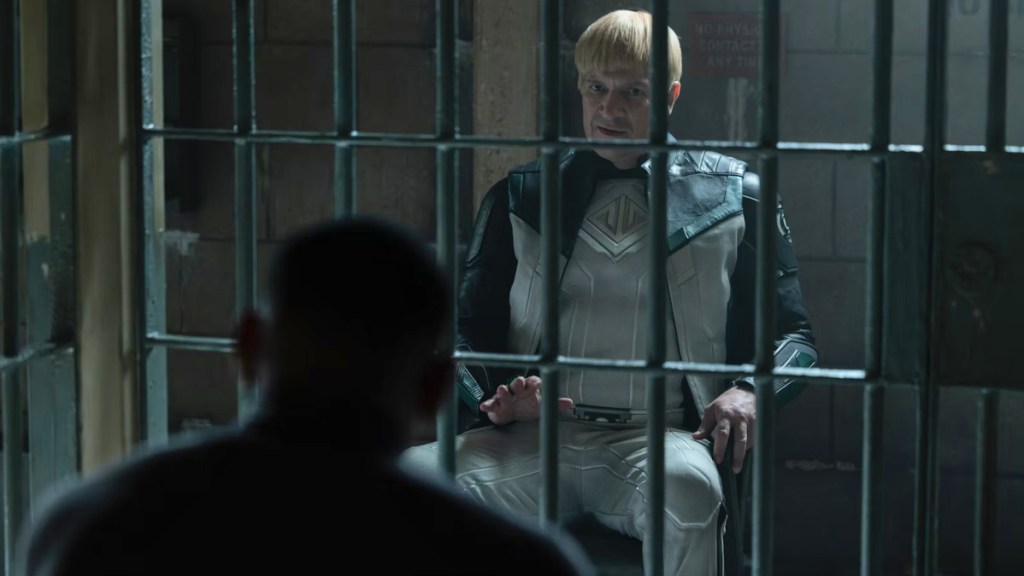
By contrast, Hal Jordan’s “fearless” bravado got called out in Episode 1 as a mask for deep loneliness, and one talk with Sinestro is all it took for Hal’s deep-seeded fears and insecurities to take over, arguably instigating the mass destruction in Rushville, and his final falling out with John. Guy is so nervous about his worthiness and the validity of his position as Green Lantern that it took John just one guilt trip conversation to manipulate him into retrieving Hal’s ring and uniform.
Even Sinestro confesses to Hal that his skill as a Lantern wasn’t based on fearlessness but ambition. Lanterns doesn’t seem to buy into the idea of “fearless” as a realistic concept, and is challenging its central characters to prove a version of “power” and “heroism” that is actually relatable to real-world people. Space rings and “willpower” just won’t cut it.
Lanterns airs on HBO and streams on HBO Max.Are you liking the DCU version of Green Lantern? Let us know when the comments!
More TV Shows
-

Image Courtesy of Skydance