A little over a year on, Star Trek just proved they can’t get past the darkest day in modern franchise history. Despite the promise and the talent attached, the latest Trek movie – Section 31 – scored a paltry 23% with critics and faired even worse with the audience (15%), and in the process opened an old wound that Star Trek fans had wrestled with since the Deep Space Nine era. It was a question as simple as it was provocative: what if the Federation was actually a little… evil?
Videos by ComicBook.com
Deep Space Nine introduced Section 31 to explore the darker side of Star Trek‘s utopia, revealing a grubby, hidden underbelly inspired by a single line by Commander Sisko – “It’s easy to be a saint in paradise.” It was the brain child of Executive Producer Ira Steven Behr, who was fascinated by the idea of an unseen black ops organisation who ensured that paradise remained possible, in the process kicking off decades of fan debate about whether Section 31 was a violation of Gene Roddenberry’s utopian dream. The movie’s culmination of the Section 31 story – as the clandestine group grew gradually less so over the years – should have been the end of it. But now, Star Trek‘s newest show has just repeated exactly what made Section 31 fail. WARNING: This article contains SPOILERS for Starfleet Academy episode 9.
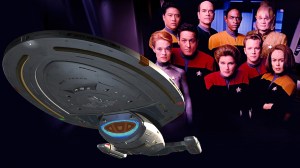
Starfleet Academy Just Introduced Section 31’s Replacement

In the newest episode of Starfleet Academy, we learn more about the dark secrets of the space station (Starbase J19-Alpha) Nus Braka attacked during the doomed Miyazaki mission. Paul Giamatti’s villain attacked the station to retrieve unknown weapons Starfleet were developing, which have now been revealed as Omega molecules – or specifically a synthetic variant called Omega 47 – as well as containment technology that would allow it to be weaponized. In other words, whatever clandestine part of Starfleet was operating on that space station was basically developing a Doomsday device. Not exactly the kind of thing you’d expect from Roddenberry’s Star Trek.
In other words, Starfleet Academy has basically replaced Section 31 with a near-identical secret part of Starfleet on the space station. Interestingly, at no point does anyone mention Section 31, suggesting it no longer exists in this part of the timeline, which is perhaps a good move after the movie tanked so badly, but for all intents and purposes, we’re back in the same narrative territory. Omega molecules were outlawed after a catastrophe in the Lantaru sector, with Starfleet banning research and the destruction of any that were detected, even if it was necessary to violate the Prime Directive.
So, not only is Starfleet breaking its own laws in Starfleet Academy, but it also does so without the same sort of secretive considerations as Section 31 would usually have operated with. For the most part, Section 31’s removal from the Federation was always underlined: they operated on the edge of Federation space, and when initially introduced it was claimed there was no direct affiliation between the two entities. But as we saw in the run up to the attack on Starbase J19-Alpha, Starfleet had a vessel stationed there, and this was absolutely a Federation space station. No secret hidden operation, an illegal weaponization of the galaxy’s most dangerous element effectively in plain sight (albeit with some classified boundaries).
Starfleet Academy Ignores Why Section 31 Was So Hated

It would be foolish to separate criticism of Section 31 as a release from fans’ apathy for Section 31 as a concept, and how it violates Star Trek‘s original vision. We know modern Star Trek shows play more liberally with what Star Trek is as a concept (and some of the criticism is undue hot air), but Section 31 felt like a breaking point. Surely, everything released in its wake would avoid retreading that ground? It seems Starfleet Academy’s writers’ room didn’t get that memo.
When Section 31 and the idea of Starfleet’s dark side was criticized, Trek supremo Kurtzman tried to defend it, but Starfleet Academy‘s new replacement even seems to violate his excuses:
“It was also really important to us… to say that this movie does not take place in Federation space. They are acting outside of Federation space to solve a problem that could make its way into Federation space right in the same way that the CIA’s charter is to operate outside of the United States so that we can be what we are. That felt like the way to tell the story and it was important to us to front-load that so that if you are a Star Trek fan and you love what you love, what we all love about Star Trek, you understand, OK, we’re actually deliberately doing something kind of different here. But ultimately, it has to go back to Roddenberry’s essential vision of optimism. To me, that’s what Star Trek is about, and we definitely reinforced that by the end of the film.” I think the tone allows us to keep reinforcing it and to keep telling you. Don’t worry; we’re anchoring back to the thing you love too.”
In Starfleet Academy, Starbase J19-Alpha is in Federation space, and it’s not really hidden (the Athena crew know the space station exists), and the development of Omega 47 doesn’t really “keep Starfleet’s nose clean” as Kurtzmann defined Section 31‘s operations – it’s a weapon of untold devastation and essentially the most potent we’ve ever seen. Starfleet have apparently had their Oppenheimer moment, and it immediately blew up in their face. And it’s difficult to argue that any fan would have wanted this idea explored again.
What do you think? Leave a comment below and join the conversation now in the ComicBook Forum!
Most Viewed
-

Image Courtesy of TOHO -

Image Courtesy of Crunchyroll -

Image Courtesy of Marvel Comics -

Image courtesy of Marvel Studios -

Image Courtesy of Good Shepard Entertainment/Sony Interactive Entertainment