The theatrical dominance of Star Wars triggered a television arms race, prompting networks to greenlight expensive space operas like Battlestar Galactica and Buck Rogers in the 25th Century. However, producing feature-film-level visual effects across standard twenty-two-episode syndication orders proved financially ruinous, leading to rapid cancellations and making studio executives deeply wary of open-ended science fiction series. To mitigate these massive financial liabilities without abandoning the lucrative genre, producers in the 1980s pivoted to the miniseries format. This structural compromise offered a highly controlled production environment where networks could justify allocating blockbuster budgets to a limited number of episodes.
Videos by ComicBook.com
The constrained episode count also fundamentally altered how television writers structured speculative fiction. Instead of resetting the narrative status quo at the end of every broadcast hour to satisfy traditional syndication rules, creators utilized the miniseries to experiment with serialized storytelling. In addition, showrunners used the miniseries to build complex socio-political allegories, heavily grounding their scripts in the immediate anxieties of the Cold War, the threat of nuclear annihilation, and rampant institutional corruption. As a result, this crucial era established the commercial viability of serialized science fiction on television, laying the groundwork for the prestige genre epics that would emerge in subsequent decades.
5) Amerika
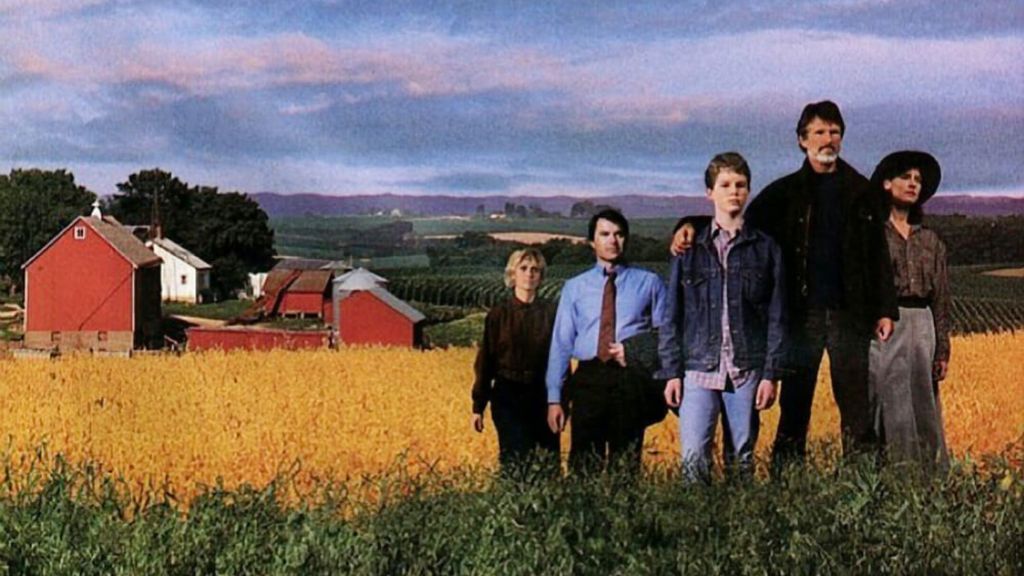
ABC’s 1987 broadcast of Amerika stands as one of the most ambitious and polarizing television events of the Cold War era. Spanning over fourteen hours and making the most of a staggering $40 million production budget, the miniseries unfolds ten years after the Soviet Union managed to take over the United States. The alternate history narrative centers on Devin Milford (Kris Kristofferson), a former politician released from a prison camp who becomes a reluctant symbol of resistance against a puppet government. Rather than relying on action sequences, the production builds tension through bureaucratic oppression and ideological betrayal. This decision to ground the speculative fiction in mundane political maneuvering generated significant controversy upon release, yet it solidified the project as a remarkably bleak and thought-provoking examination of institutional collapse.

4) The Day of the Triffids

BBC proved that science fiction does not require a massive Hollywood budget with its gripping 1981 adaptation of The Day of the Triffids. Based on John Wyndham’s seminal novel, the plot begins when a spectacular meteor shower renders the vast majority of the global population permanently blind. This sudden disability leaves humanity defenseless against the Triffids, a species of bioengineered carnivorous plants capable of walking and killing prey with venomous stingers. The narrative centers on Bill Masen (John Duttine), a biologist who retains his sight because his eyes were bandaged during the meteor event, as he navigates the decaying infrastructure of London. The production team bypassed the need for expensive visual effects by prioritizing psychological horror and practical plant puppetry, both creative choices that allowed the miniseries to age with grace.
3) The Martian Chronicles

Adapting Ray Bradbury’s legendary anthology into a cohesive cinematic narrative presented a monumental challenge, but NBC’s 1980 broadcast of The Martian Chronicles successfully translated the author’s work to the small screen. The three-part miniseries follows Colonel John Wilder (Rock Hudson), tracking a series of devastating human expeditions to the Red Planet and the tragic encounters with the telepathic native population. The script, penned by acclaimed writer Richard Matheson, unifies Bradbury’s fragmented short stories into an overarching critique of human expansionism and ecological destruction. The result is a deeply philosophical exploration of first contact that deliberately prioritizes moral consequence over laser battles, delivering a surprisingly somber meditation on the destructive nature of imperialism.
2) The Hitchhiker’s Guide to the Galaxy

The BBC’s 1981 adaptation of The Hitchhiker’s Guide to the Galaxy translates Douglas Adams’ radio broadcasts into a visually eccentric six-episode science fiction comedy. The story kicks off when an alien constructor fleet demolishes Earth to make way for a hyperspace bypass. Seconds before the destruction, an ordinary Englishman named Arthur Dent (Simon Jones) is rescued by his friend Ford Prefect (David Dixon), who reveals himself to be an alien researcher writing for the titular electronic guidebook. The duo escapes before eventually crossing paths with the two-headed Galactic President Zaphod Beeblebrox (Mark Wing-Davey) and the severely depressed robot Marvin. To render this absurd narrative, the television production utilized heavy practical puppetry and pioneering computer-generated graphics to represent the guidebook’s animated entries. Furthermore, the broadcast proved that science fiction could function as brilliant societal satire, heavily influencing decades of subsequent genre comedies.
1) V

Kenneth Johnson’s V remains the undisputed zenith of the science fiction miniseries format in the 1980s. The two-part NBC event introduces the Visitors, an ostensibly benevolent alien race offering advanced technology in exchange for Earth’s resources, only to slowly reveal their true reptilian nature and sinister intentions. Focusing on investigative journalist Mike Donovan (Marc Singer), the narrative effectively functions as a massive allegory for the rise of fascism, methodically demonstrating how authoritarian regimes manipulate the media and exploit human prejudice. Beyond its thematic ambition, V used its robust budget to deliver unforgettable visual centerpieces, including the colossal motherships hovering over major cities and the shocking reveal of the extraterrestrials’ true forms. The explosive success of the broadcast instantly spawned a sprawling multimedia franchise, making V one of the most influential sci-fi stories of its decade.
Which iconic 1980s science fiction miniseries do you think features the most compelling vision of the future? Leave a comment below and join the conversation now in the ComicBook Forum!
More TV Shows
-

Image Courtesy of Marvel -

Courtesy of The Walt Disney Company -

Courtesy of Hulu