Gene Roddenberry launched Star Trek in 1966 on a premise deceptively simple on the surface and genuinely radical in execution, establishing the Federation as an utopic possible future where interspecies diplomacy is the rule, and exploration doesn’t translate into colonialism. Nearly six decades later, that founding vision has spawned more than a dozen television series, thirteen theatrical films, and a 60th anniversary currently being celebrated with Starfleet Academy, which recently ended its first season run on Paramount+, and a new live-action movie in development. In addition to its perpetual optimism, Star Trek‘s longevity can also be explained by its willingness to experiment with the formula. In fact, the franchise has proven elastic enough to accommodate wildly different tones and time periods, from the political desperation of Deep Space Nine to the swashbuckling energy of Strange New Worlds
Videos by ComicBook.com
The creative teams behind Star Trek productions have spent decades inserting Easter eggs to other classic sci-fi franchises, with dozens of nods to Star Wars hiding across the franchise. The relationship with Doctor Who runs even deeper, with a 2012 comic series staging a full team-up between the Eleventh Doctor and the Enterprise-D crew. Many other sci-fi franchises could cross over with Star Trek, though, and some characters would perfectly blend in with the Enterprise crew.
5) Malcolm Reynolds (Firefly)
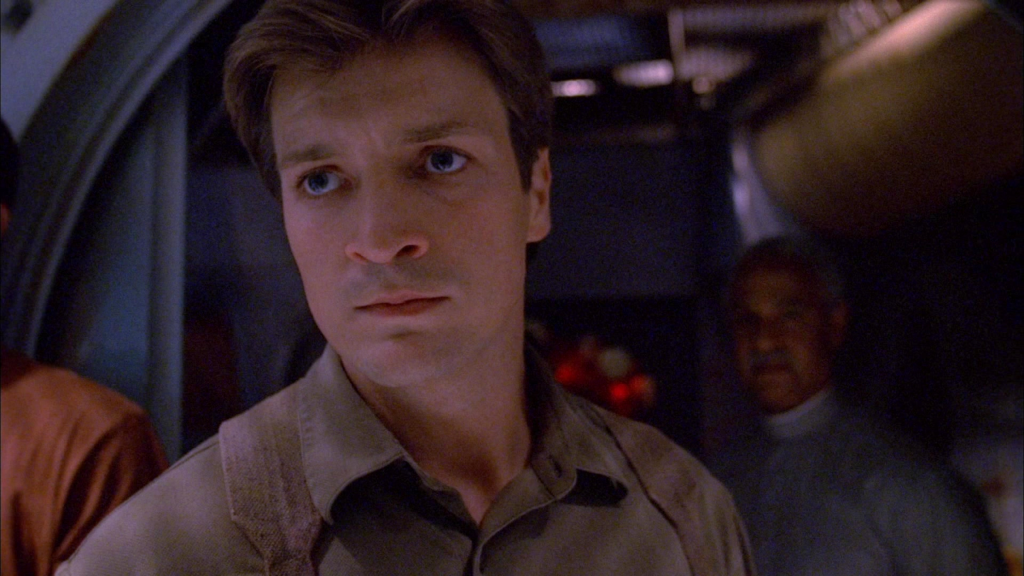
Malcolm Reynolds (Nathan Fillion) commands the Serenity in Firefly with a staunch anti-authoritarian streak and a deep resentment for centralized governments. Star Trek‘s United Federation of Planets projects a utopian image, yet it operates as a massive interstellar bureaucracy that heavily mirrors the Alliance Reynolds fought against during the Unification War. Therefore, introducing him into the Star Trek universe creates an immediate ideological conflict. In addition, Reynolds operates the Firefly-class transport Serenity on the fringes of the Alliance’s reach, running cargo and taking jobs that the law would rather not acknowledge. The Federation’s fringe territories, the contested spaces where Starfleet’s reach grows thin and independent operators fill the vacuum, are the natural environment for a character like Reynolds.

4) James Holden (The Expanse)

James Holden (Steven Strait) serves as the moral compass of The Expanse, consistently prioritizing absolute transparency over political stability. In the Star Trek franchise, Starfleet captains frequently balance diplomatic secrecy with the Prime Directive, often withholding information to preserve fragile treaties with the Klingons or Romulans. Starfleet’s tradition of diplomatic secrecy and classified mission profiles would put Holden in direct conflict with the chain of command before his second briefing concluded, which is already an enticing idea for a crossover. Furthermore, The Expanse and Star Trek share the same foundational question about whether humanity can build institutions capable of governing without reproducing our species’ worst instincts, although the two franchises present different answers.
3) John Crichton (Farscape)

John Crichton (Ben Browder) enters the cosmos in Farscape as a contemporary Earth astronaut abruptly thrust into an uncharted and hostile region of the universe. Unlike the heavily trained academy graduates of Starfleet, Crichton navigates alien politics relying purely on survival instincts, sheer unpredictability, and endless pop culture references. The Star Trek franchise routinely deals with spatial anomalies, but Crichton possesses a unique knowledge of wormhole mechanics that makes him a highly coveted asset. Introducing him to a Starfleet crew places a 20th-century human perspective directly alongside highly evolved 24th-century professionals. Furthermore, given that wormhole science sits at the intersection of Deep Space Nine‘s Bajoran politics and Starfleet’s temporal security concerns, a crossover could make the best of both Star Trek and Farscape canon.
2) Kara “Starbuck” Thrace (Battlestar Galactica)

Kara Thrace (Katee Sackhoff), widely known by her callsign Starbuck in Battlestar Galactica, is one of the finest combat pilots in science fiction. The Star Trek franchise frequently features capable helmsmen and dedicated tactical officers, but Starfleet’s rigid disciplinary structure would provide a fascinating friction point for Kara, whose tactical instincts repeatedly outpaced the institutional frameworks designed to contain her. Placing Kara Thrace aboard a Starfleet vessel during a major tactical crisis, such as a Borg incursion or a Dominion border skirmish, would highlight the stark differences between an optimistic explorer and a hardened warrior, even though her spiritual journey perfectly aligns with the bizarre cosmic anomalies the Enterprise encounters regularly.
1) Samantha Carter (Stargate SG-1)
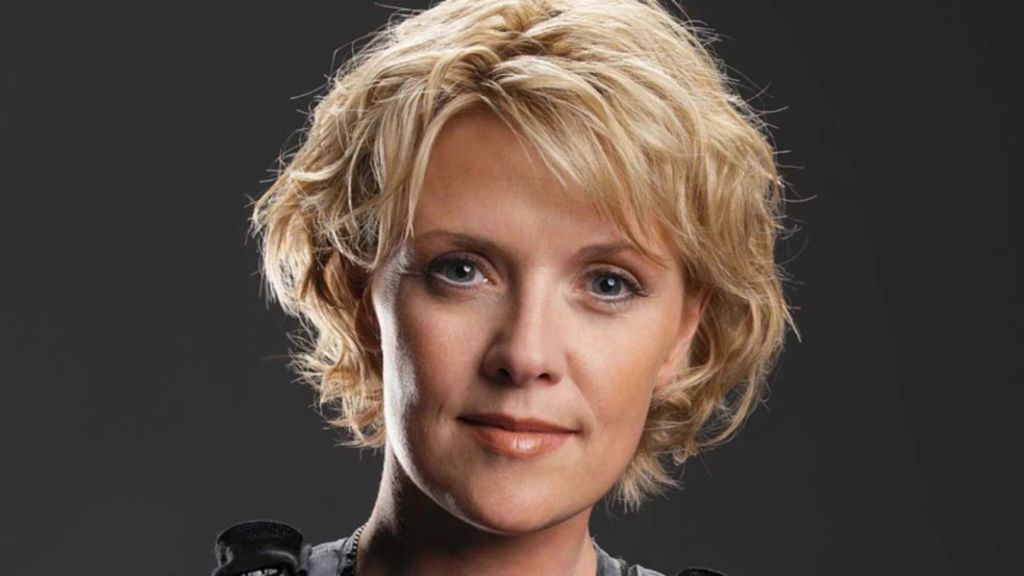
No character in science fiction is more plausibly a Starfleet officer than Samantha Carter (Amanda Tapping). The Stargate SG-1 astrophysicist and Air Force officer spent ten seasons applying rigorous scientific methodology to phenomena that should have been impossible, from wormhole stabilization to the reverse-engineering of alien propulsion systems. The story also forced Samantha to make hard decisions when the military needs of the Stargate operation clashed with the genuine scientific wonder of exploration. Because of that, she integrates flawlessly into a Starfleet engineering or science division, yet her experience fighting parasitic empires grounds her scientific optimism in a harsh tactical reality, making her the ultimate operational hybrid for deep-space exploration.
Which sci-fi character from outside the Federation do you most want to see step onto a Starfleet bridge? Leave a comment below and join the conversation now in the ComicBook Forum!
More TV Shows
-
A Tusken Raider faces a Mandalorian -
Multi-media adventure Circuit Breaker features Jo Martin's Fugitive Doctor working alongside UNIT agents Kate Lethbridge-Stewart, Patronella Osgood, and Martha Jones -
What's going to happen next on HBO's Lanterns, and will the real villain of the series reveal themselves? -
Poster for Voltron: Legendary Defender