TV fans turn to the science fiction genre for a variety of reasons. Some want to be whisked away to another world, where they can explore the consequences of technology or tyranny. Many simply love the robots, aliens, or epic battle sequences. Ironically, some even engage with sci-fi primarily for nostalgia. Ultimately, most casual viewers just want a fun story they can wrap their heads around, but there’s another category of sci-fi superfans who want a story so complex it threatens to short-circuit their cognitive wiring.
Videos by ComicBook.com
If you’ve ever created a visual aid to help you understand a show, or if you find yourself gravitating towards dense series that you have to pause and rewind frequently, you may be one such fan, and if so, this list is for you. These complex, labyrinthine narratives involve time travel, parallel universes, or non-linear mysteries that make the audience do the heavy lifting. If you’re up for the challenge, here are five shows so complicated they’ll break your brain.
5) Fringe
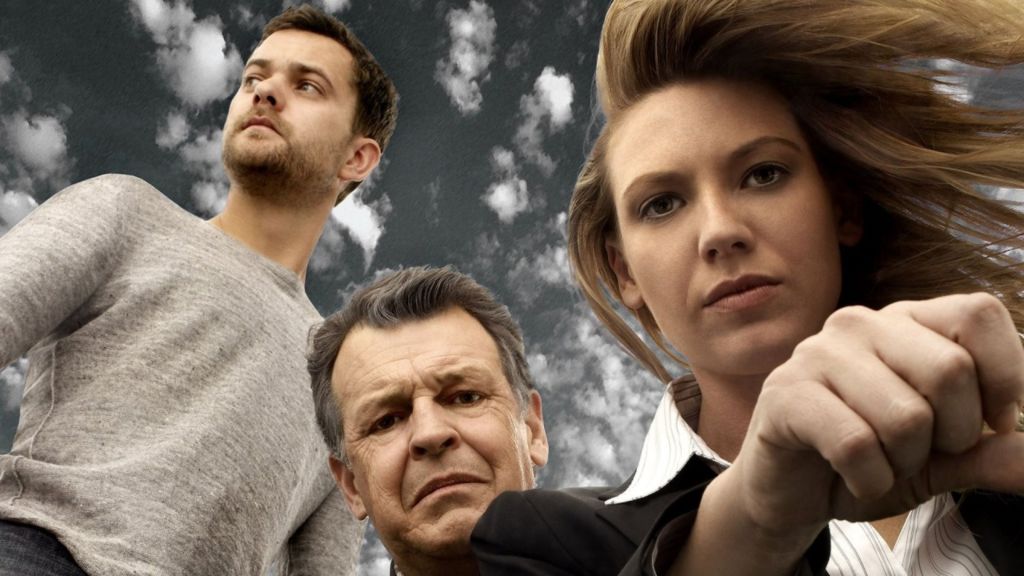
Fringe premiered on Fox in 2008 and initially seemed like it might be another “case of the week” procedural about strange science experiments. In it, we follow FBI agent Olivia Dunham (Anna Torv), eccentric scientist Walter Bishop (John Noble), and his son Peter Bishop (Joshua Jackson) as they investigate bizarre phenomena connected to a mysterious organization called Massive Dynamic.
Yet by the second season, Fringe had dropped its mask, revealing a sprawling multiverse narrative involving two parallel Earths whose timelines had diverged decades earlier. If that’s not enough, later seasons tossed time travel into the mix, particularly through the Observers, or the bald, emotionless beings from the dystopian future who’d been manipulating the timeline. By the final season, the show has its viewers juggling multiple universes, altered timelines, and a future resistance.
4) Lost

Another show that begins with a humble first season is Lost. At first, ABC’s hit series looks like a simple survival drama that begins when Oceanic Flight 815 crashes on a mysterious island, leaving dozens of survivors stranded. Characters Jack Shephard (Matthew Fox), Kate Austen (Evangeline Lilly), and John Locke (Terry O’Quinn), and others, try to figure out how to survive, uncovering strange secrets about the island while their fraught pasts are revealed through flashbacks.
From there, however, the show unravels into one of the most infamous puzzle boxes of the network TV era. In season 3, we get the first hints at time travel. By season 5, the survivors are jumping through time across different eras of the island’s history, including the 1970s era of the Dharma Initiative. Daniel Faraday (Jeremy Davies) attempts to explain the rules of time travel, and the idea that “whatever happened, happened,” but the complex narrative and the introduction of flash-forwards and “flash-sideways” timelines proved too much for the general public. Contrary to popular belief, however, the series doesn’t devolve into gibberish, but actually has a solvable mystery at its core.
3) Westworld

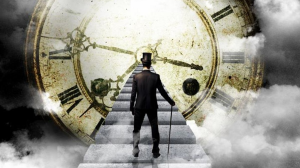
HBO’s Westworld germinated from the concept of Michael Crichton’s 1973 sci-fi western, featuring a futuristic theme park populated by lifelike android “hosts” that wealthy guests can interact with. The hosts include Dolores (Evan Rachel Wood) and Maeve (Thandiwe Newton), who are programmed into narrative loops within the park. Meanwhile, the human visitors, such as William (Jimmi Simpson) and the Man in Black (Ed Harris), treat the park like a consequence-free playground, and behave more like monsters.
Yet as season 1 progresses, it becomes clear that things in Westworld are not what they seem. The show soon unveils multiple timelines, perspectives, and twists that are difficult to untangle on a first watch. Episodes often jump between different points in the park’s history without any visual cues, and as the series expands beyond the park in later seasons, it adds even more complexity with things like simulations and parallel realities. The result is a mystery box where the question isn’t just what’s happening, but when it’s happening.
2) Twin Peaks: The Return

Created by David Lynch and Mark Frost, Twin Peaks originally aired on ABC in 1990, beginning as an offbeat murder mystery after the death of Laura Palmer (Sheryl Lee), drawing FBI Special Agent Dale Cooper (Kyle MacLachlan) into the strange small town of Twin Peaks. Almost right off the bat, you can sense something much stranger lurking beneath the surface. Then, Cooper encounters the Black Lodge, an otherworldly dimension inhabited by entities like the Man From Another Place (Michael J. Anderson), the malevolent spirit BOB (Frank Silva), and the strange behavior of time inside the Red Room.
However, the real mind-bending chaos came 25 years later with Twin Peaks: The Return on Showtime, which throws out the OG show’s continuity. Instead of one Dale Cooper, there are now multiple versions existing at the same time: the evil doppelgänger “Mr. C,” the catatonic manufactured replacement Dougie Jones, and eventually the restored Agent Cooper himself. Meanwhile, the Black Lodge and its associated spaces (like the Mauve Zone and the White Lodge) appear to exist completely outside of linear time, with scenes that represent the past, future, or an entirely different dimensional framework. Needless to say, it’s not your usual box, and the real challenge is figuring out what it all means.
1) Dark
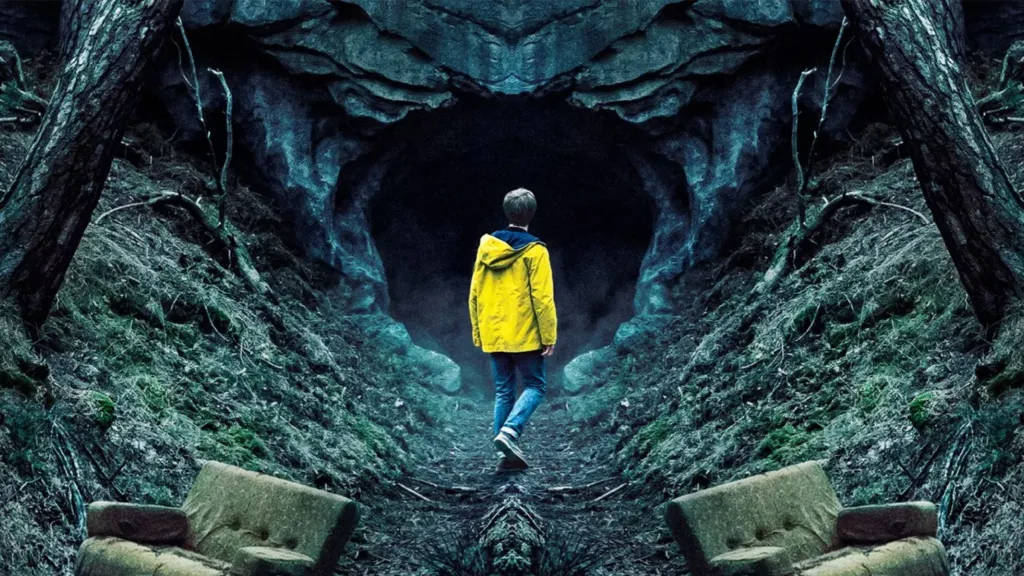
The crown for the most complicated and most elegant time travel show ever made has to go to Netflix’s Dark. The German sci-fi thriller begins in the small town of Winden, where a missing child triggers a chain reaction of revelations about secret tunnels, time travel, and tangled, intertwining family trees. Our primary protagonists are Jonas Kahnwald (Louis Hofmann) and Martha Nielsen (Lisa Vicari), two teenagers who gradually discover that their town’s tragedies are linked to a time loop spanning centuries.
Building its complexity with each season, characters repeatedly encounter younger or older versions of themselves across several primary time periods: 1888, 1921, 1953, 1986, and 2019. The final season even introduces a second parallel universe. Untangling the show might require drawing a family tree and a chart of timelines, as the character links and intersection points reveal themselves. Moreso than any other show on this list, Dark rewards that level of engagement, because when everything clicks, it really clicks. The mystery, no matter how complicated it seems, has been spun around the airtight planning of creators Baran bo Odar and Jantje Friese. If you haven’t seen it yet, watching Dark is the most satisfying way to break your brain.
Which sci-fi timeline broke your brain the first time you watched it? Leave a comment below and join the conversation now in the ComicBook Forum!
Most Viewed
-

Image Courtesy of Crunchyroll -

Image Courtesy of TOHO -
Image courtesy of Marvel Studios