In the past decades, animation has expanded into one of the most creatively ambitious spaces in television, capable of sustaining complex character arcs, serialized mythology, and thematic depth across dozens of hours of runtime. The challenge of maintaining that ambition across multiple seasons is where most series falter, regardless of medium. Character dynamics calcify, narrative momentum stalls, and the creative vision that marked a debut season erodes under the pressures of continued production. The animated series that successfully resist that entropy are genuinely rare achievements, and the best of them demonstrate that the format places no ceiling on what serialized storytelling can accomplish.
Videos by ComicBook.com
We’ve previously talked about seven great animated shows that managed to keep a high quality from their premiere to their finale, but we wanted to give the spotlight to a handful more projects that deserve praise. To keep things fair, each TV show on this list ran for a minimum of three seasons, completed its run, and sustained the creative standards of its opening episodes through its conclusion.
7) Kipo and the Age of Wonderbeasts
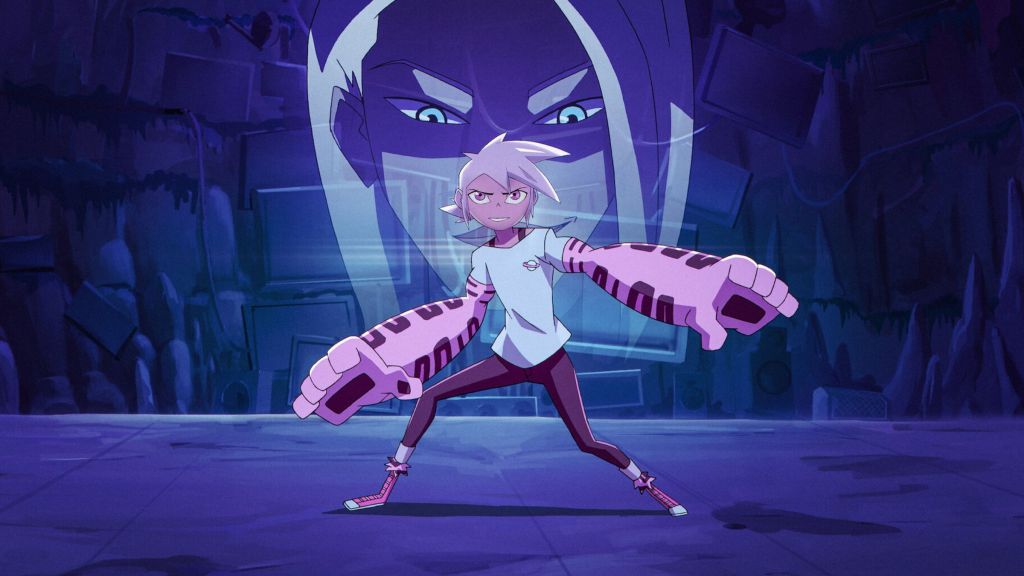
Kipo and the Age of Wonderbeasts launched all three of its seasons on Netflix across a single calendar year, 2020, a production model that ensured creator Radford Sechrist’s team maintained total control over the narrative from its opening episode to its finale. Adapted from Sechrist’s webcomic, the series is set in a post-apocalyptic surface world populated by hyper-evolved mutant animals organized into different factions, where protagonist Kipo Oak (Karen Fukuhara) emerges from an underground burrow and discovers a chaotic surface society that functions more like a community than a wasteland. That premise consistently inverts the standard genre assumptions about collapse and survival. Kipo concluded before it had the opportunity to overstay its welcome, and the three-season arc it completed tells a coherent, satisfying story that knew exactly when to stop.
6) Infinity Train

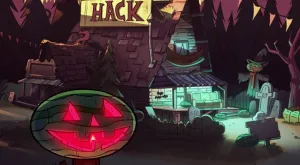
Infinity Train unfolds in the titular vehicle, a seemingly infinite train populated by bizarre creatures and puzzles, whose passengers are assigned a glowing number on their hand that decreases as they confront unresolved psychological wounds. Creator Owen Dennis built each “book,” or season, around a different protagonist, allowing the series to explore radically different emotional territories without the tonal fatigue that comes from spending forty-plus episodes with the same characters. The first book, centered on a teenage girl processing her parents’ separation, established the format’s potential for genuinely affecting drama beneath its surrealist exterior, and each subsequent book deepened the show’s mythology while maintaining that standalone accessibility. Infinity Train was cancelled by Cartoon Network in 2021, and while the abruptness of that decision frustrated fans, the four stories that do exist stand as one of the most creative series in modern American animation.
5) Regular Show
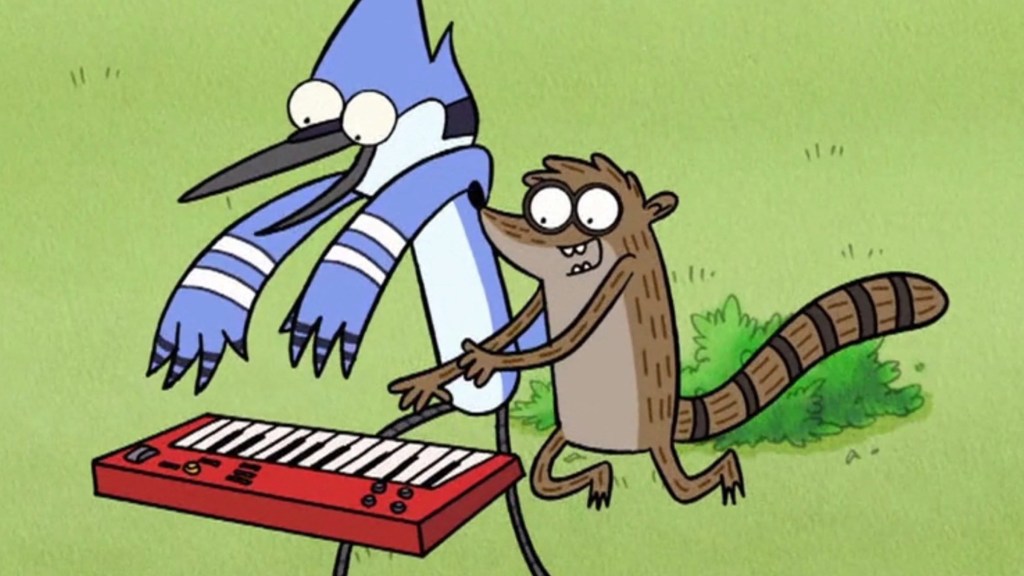
Regular Show ran for eight seasons on Cartoon Network between 2010 and 2017, a tenure that concluded with a series finale and a television film that resolved every major narrative thread the show had established across 261 episodes. Created by J.G. Quintel, the series follows Mordecai (voiced by Quintel), a blue jay, and Rigby (voiced by William Salyers), a raccoon, as they work groundskeeping jobs at a park that routinely becomes the epicenter of supernatural events triggered by their own laziness and poor decision-making. The structural engine of the series, mundane slacker problems spiraling into universe-threatening crises, never exhausted itself, largely because Quintel’s writing staff understood that the absurdist premises only worked insofar as the central friendship remained grounded in recognizable human behavior. Regular Show won six Emmy Awards during its run and attracted a demographic that extended well beyond its target audience, with a sustained quality that’s unusual for a long production run.
4) The Owl House
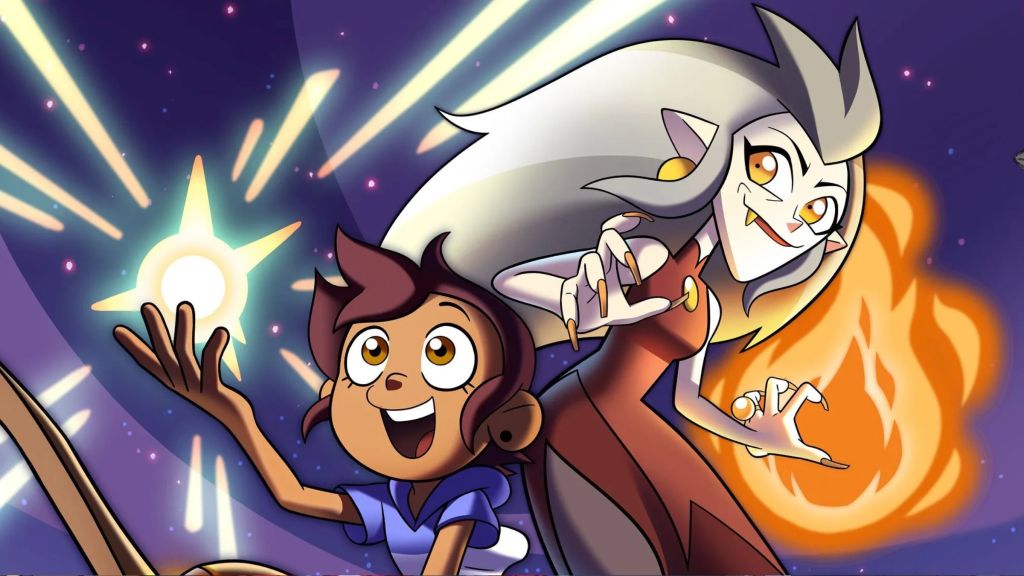
Disney Channel’s decision to reduce The Owl House to limited episode orders for its final two seasons after creator Dana Terrace had pitched a longer arc paradoxically produced some of the tightest storytelling in the show’s run, as Terrace’s writing staff compressed the narrative material into shorter, denser chapters. The series follows Luz Noceda (voiced by Sarah-Nicole Robles), a human teenager who stumbles into the Boiling Isles, a demon realm governed by the tyrannical Emperor Belos (voiced by Matthew Rhys), and begins training as a witch under the eccentric Eda Clawthorne (voiced by Wendie Malick). Running from 2020 to 2023 across three seasons, The Owl House became the first Disney Channel animated series with a confirmed bisexual lead and incorporated LGBTQ+ representation as a structural element of its narrative. The show maintained its emotional and creative ambitions through its shortened finale season, delivering a conclusion that resolved its central conflict without sacrificing character development.
3) She-Ra and the Princesses of Power

She-Ra and the Princesses of Power reimagined Mattel’s 1985 property across five seasons on Netflix between 2018 and 2020, transforming a toy-commercial premise into a serialized fantasy epic with a sophisticated understanding of trauma, identity, and systemic coercion. Creator Noelle Stevenson structured the series around the relationship between Adora (voiced by Aimee Carrero) and Catra (voiced by AJ Michalka), childhood friends whose ideological split drives five seasons of escalating conflict and eventual reconciliation. Unlike most franchise revivals that preserve the iconography of the original while hollowing out its narrative potential, Stevenson’s version built an entirely original mythology that used the She-Ra IP as a foundation rather than a ceiling. The final season demonstrated how thoroughly the show had developed its ensemble, delivering a conclusion that paid off character work established across two years of production.
2) Castlevania

Castlevania proved that a video game adaptation could function as prestige television when Netflix released the first season in 2017, and the three seasons that followed never abandoned that standard. Based on Konami’s gothic action franchise, the series begins with Dracula (voiced by Graham McTavish) declaring war on humanity after the church executes his wife, then tracks the unlikely alliance between disgraced monster hunter Trevor Belmont (voiced by Richard Armitage) and Alucard (voiced by James Callis), Dracula’s half-human son. Powerhouse Animation gave the series a visual vocabulary drawn from Japanese animation, staging fight sequences as character studies in which choreography revealed psychological information about the combatants. Furthermore, the fourth and final season resolved Dracula’s conflict with a finality that served the narrative rather than extending it for commercial reasons, a decision that distinguished Castlevania from adaptations that prioritize franchise longevity over creative integrity.
1) Adventure Time

Adventure Time ran for ten seasons on Cartoon Network between 2010 and 2018, concluding with a series finale that cemented its status as the most influential animated series of its generation. Created by Pendleton Ward, the show follows Finn the Human (voiced by Jeremy Shada) and Jake the Dog (voiced by John DiMaggio) as they roam the Land of Ooo, a post-apocalyptic world whose surrealist surface conceals an elaborate mythology. The series began as a comedic adventure aimed at children and gradually revealed that its setting was the aftermath of a nuclear conflict called the Mushroom War, a revelation that recontextualized every element the show had built in its earliest seasons without invalidating them. Adventure Time also demonstrated that animation could sustain genuine artistic evolution across a decade-long run without losing the playful energy of its premise, a balance it maintained through the HBO Max special series Distant Lands and the subsequent spinoff Fionna and Cake.
Which animated series do you consider the most consistent in quality from its premiere to its finale? Leave a comment below and join the conversation now in the ComicBook Forum!
Most Viewed
-
Courtesy of Sony Pictures Animation / McDonalds -
Image Courtesy of Netflix -
Courtesy of Wizards of the Coast -
Image Courtesy of Marvel Comics -
Courtesy of ENGI / Kadokawa / Sentai Filmworks