My Hero Academia, after more than nine years since the anime first premiered, came to an end on December 13, 2025, bringing its long-running legacy to a close. The final episode features major changes, reflecting how Deku’s actions against Shigaraki reshaped the world for the better. It opens with an elderly woman helping a troubled child, the same woman who was once too afraid to help Tenko Shimura as a child, showing that Deku’s actions inspired others to reach out as heroes, creating a true shift in society. As the episode progresses, it also shows the final moments of the Class 1-A members at U.A. High before transitioning into a surprising time skip of nearly a decade.
Videos by ComicBook.com
After the long time skip, the finale reveals that Deku has been living a quirkless life as a teacher at U.A. High, passing on his wisdom and continuing to inspire others. However, as the series comes to a close, it is revealed that Deku will once again pursue his dream of being a hero, aided by support items and a high-tech suit that allow him to keep fighting. As the final episode’s credits roll, brief descriptions of the other Class 1-A members and their current lives are shown, revealing the kind of hero paths they follow in the future.

My Hero Academia’s Class 1-A Members Achieve the Future They Envisioned
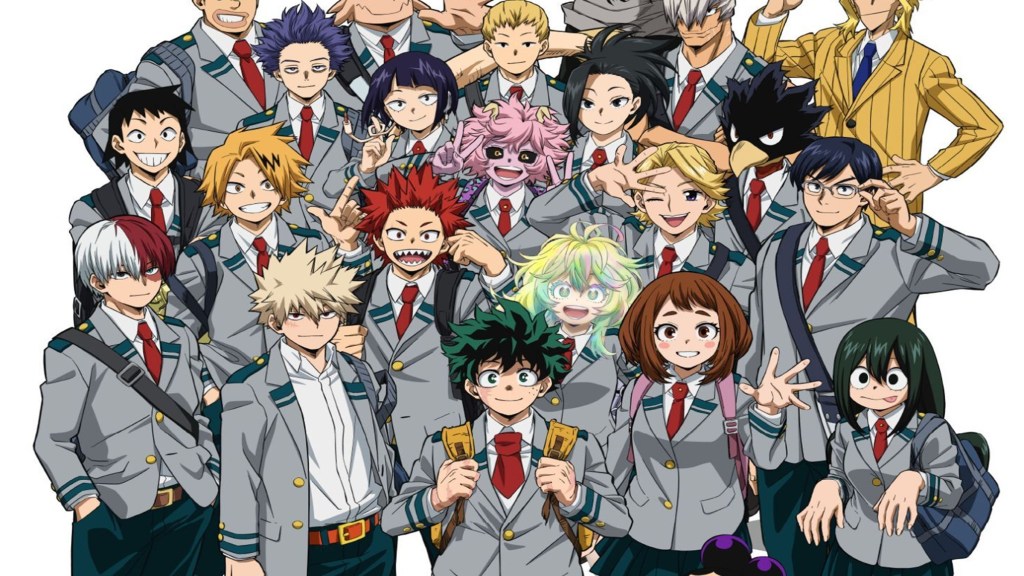
The final episode concludes by unveiling the futures of the Class 1-A members, beginning with Yuga Aoyama and Toru Hagakure. Hagakure is revealed to have gone independent and opened her own agency, with Aoyama joining her in his renewed attempt to become a hero. The duo works exceptionally well together, as their Quirks complement each other, allowing them to shine brightly and gain public recognition. Next are Kirishima and Ashido, with Kirishima established as a popular hero, evidenced by his chivalry-themed calendar selling out, while Ashido enjoys popularity among younger fans and continues to captivate audiences by participating in major dance events. Froppy and Uravity are also revealed to have gone independent after previously working as sidekicks.
A major revelation is that Froppy and Uravity are heavily involved in Quirk counseling for young children, a path clearly influenced by Toga’s impact on them. Mezo Shoji and Koji Koda, as expected, are shown to be actively addressing heteromorph human rights issues, reflecting their roles during the final war. Jiro and Kaminari are revealed to have opened agencies next to each other, with Kaminari’s earlier anxiety about being himself subtly implying that the two have grown even closer.
Mashirao Ojiro and Rikido Sato are shown to be popular with the public, with Ojiro also planning to open his own martial arts studio. Tokoyami and Shinso have become more mysterious figures, as they are now involved in deep-cover operations. Tenya Iida has inherited his brother’s agency, while his brother has made a return with the help of support items, and together they continue to serve society with kindness. Momo Yaoyorozu remains a research prodigy, contributing to society through her knowledge and discoveries.
Sero is revealed to be doing well as a hero, while Mineta, who went independent in hopes of achieving widespread popularity, has not found the success he expected. Todoroki is revealed to have debuted at the eighth rank on the Hero Chart after going independent, while Bakugo continues to push toward becoming the number one hero, though his personality remains a hurdle. Finally, Deku, the series’ protagonist, is shown struggling through his hectic life as a U.A. teacher. With the opportunity to become a hero again through support items, he continues to push forward with a smile, determined to keep inspiring others.
My Hero Academia‘s Ending Is Perfect
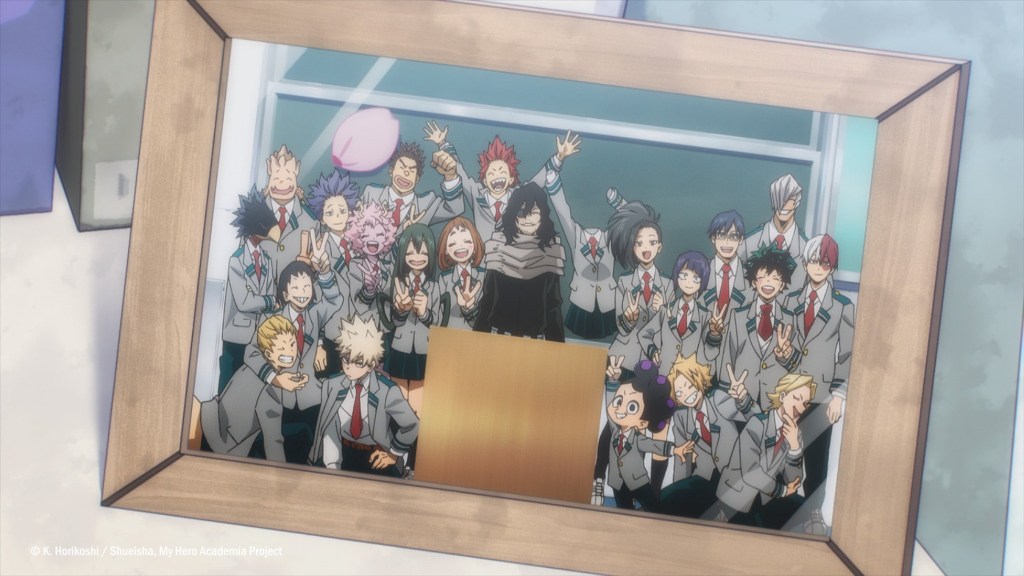
Many series struggle to deliver a satisfying conclusion, and shonen anime in particular are often criticized for failing to achieve a truly strong ending. In comparison, My Hero Academia’s finale stands out as one of the most complete endings the genre has seen. By revealing how each member of Class 1-A largely achieves what they hoped for, albeit with some struggles along the way, the series reinforces the idea that the ending is as close to perfect as possible.
Although Deku is forced to retire as a hero for eight years after losing his Quirk, his eventual return through support items shows that this was the most fitting way for him to realize his dream. More importantly, the ending makes it clear that My Hero Academia was always built around the idea of inspiring others, a theme that reaches its peak through Deku’s actions in the final war. With the time skip showing a brighter future for both Deku and the rest of Class 1-A, alongside meaningful societal change, My Hero Acacdemia could not have concluded on a stronger note.
What do you think? Leave a comment below and join the conversation now in the ComicBook Forum!
Most Viewed
-

Image Courtesy of Disney -

Image Courtesy of Netflix