
More than almost any other Marvel super-hero, Spider-Man emerged fully-formed. In the first decade of Spider-Man stories, Stan Lee and artists Steve Ditko and John Romita introduced virtually all of his most recognizable foes. Take just the span from issues #13-15, when Lee and Ditko introduced Mysterio, Green Goblin, and Kraven the Hunter one issue after the next. While virtually every subsequent creative team to work on Amazing Spider-Man and its sister titles would introduce new additions to Spidey’s rogues’ gallery, few have had the staying power of those classic sixties villains. By the early eighties, the staying power of Green Goblin was proving a problem for Spider-Man writers and artists. Although Goblin alter-ego Norman Osborn was killed at the climax of Amazing Spider-Man #122, Marvel editorial would insist on Green Goblin’s return several times throughout the decade. That forced increasingly bizarre plot developments to justify a new face behind the Green Goblin’s mask. In 1983, writer Roger Stern and artist John Romita Junior decided to try something else.
Videos by ComicBook.com
The result was Hobgoblin, a mysterious new villain using Green Goblin’s salvaged technology to his own sinister ends. The mystery behind Hobgoblin would prove an editorial nightmare of its own, with his machinations and secret identity becoming the longest running, most convoluted Spider-Man story of the decade. Hobgoblin’s introduction came in Amazing Spider-Man #238, published in December of 1982, which happened to coincide with a bizarre, one-off promotion between Marvel and Lakeside Tattooz. That month, Lakeside was including free temporary tattoos in several Marvel comic books, including Amazing Spider-Man #238, and accidentally creating a decades-long headache for collectors. Although the Tattooz are irrelevant to the issue itself, collectors consider it incomplete without them, and will pay more than double the price for a copy with its Tattooz intact. Next week, Hakes is set to auction a 9.8 Near Mint copy, and the price has already climbed above $1k – Tattooz included, of course.
How Hobgoblin Became a Decade-Long Headache For Marvel’s Writers and Artists
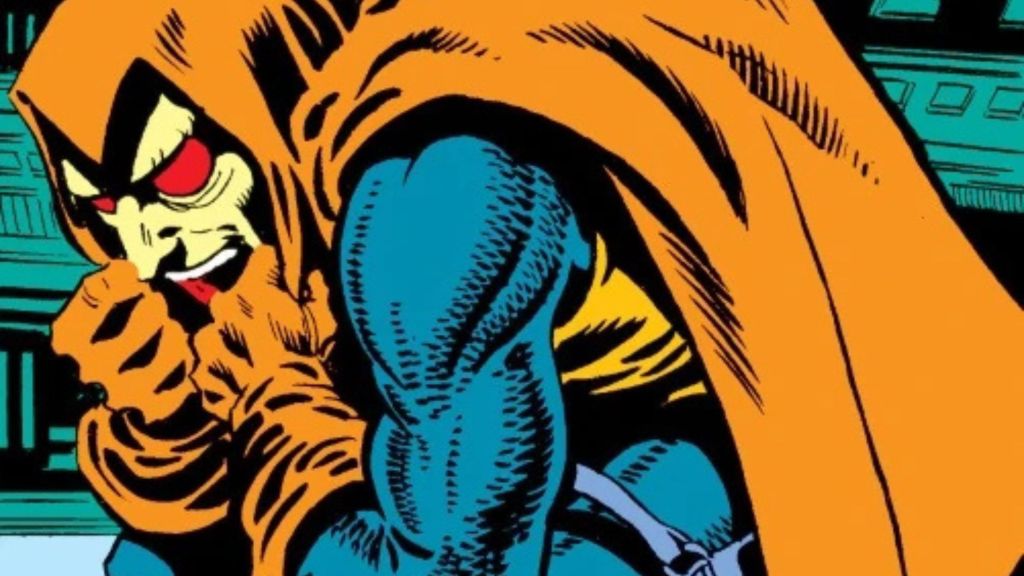
After penning Norman Osborn’s still-iconic demise, Gerry Conway was reluctant to capitulate to Marvel editorial’s demands to revive the Green Goblin. His precedent-setting solution was to keep Norman dead, and to have his son, Harry, assume the Green Goblin mantle for Amazing Spider-Man #136-137. Conway’s successor, Len Wein, received the same request; he created a third Green Goblin, Bart Hamilton, Harry Osborn’s demented therapist. When Roger Stern and John Romita Junior were asked to bring back Green Goblin, they hesitated. Neither were keen to have Harry Osborn relapse to villainy, and Bart Hamilton was killed at the end of Amazing Spider-Man #179. A fourth character in the Green Goblin identity would have been self-parody. Instead, they pitched a new character called “Hobgoblin,” using Green Goblin’s technology and a similar costume – satisfying editorial’s need for a Green Goblin story and telling a fresh story.
As Stern explained in Back Issue magazine: “I plotted that first story with no strong idea of who the Hobgoblin was. As I was scripting those gorgeous pages from [John Romita, Jr.], particularly the last third of the book, and developing the Hobgoblin’s speech pattern, I realized who he was. It was Roderick Kingsley,” a character Stern had introduced in an issue of Spectacular Spider-Man. Wanting to throw readers off, Stern devised a secret twin brother for Kingsley, Daniel, who impersonated Roderick and enabled Roderick to seem to appear in the same room as Hobgoblin. Stern wanted to keep readers guessing about Hobgoblin’s identity for years to come, and thought the deception was a perfect way to do so. His successor did not: Roger Stern left Amazing Spider-Man after #251, with the mystery of Hobgoblin’s identity still open-ended. The “Daniel Kingsley” deception had also yet to be revealed, coming as a surprise to new writer Tom DeFalco when he asked Stern about Hobgoblin’s secret. DeFalco hated the twist, and thought readers would too. DeFalco set out to come up with a solution to the now years-long mystery of Hobgoblin, settling on Richard Fisk, the Kingpin’s son, as Hobgoblin’s secret identity.
While DeFalco disagreed about who Hobgoblin should be, he did agree with Stern that the intrigue around his secret identity was the most interesting element of the character. DeFalco kept the mystery going for another two years and more than thirty issues, and was so absorbed in maintaining secrecy that he even lied to his editor, Jim Owsley (in charge of all Marvel’s Spider-Man titles), about Hobgoblin’s secret identity. Shortly before departing from writing duties on Amazing Spider-Man (in part due to a strained relationship with Owsley), DeFalco told Owsley that Hobgoblin was Ned Leeds. Owsley killed Leeds off in his own Wolverine and Spider-Man one-shot, and instructed Spectacular Spider-Man writer Peter David to reveal Hobgoblin’s identity as yet a fourth character, the Foreigner. David refused, and honored what he thought was DeFalco’s creative vision by post-humously revealing Ned Leeds as Hobgoblin through a flashback in Amazing Spider-Man #289. After Leeds was killed off, a fifth character, Jason Macendale, became the second canonical Hobgoblin in that same issue. Confused yet?
How Amazing Spider-Man #238’s Tattooz Have Become a Decades-Long Headache for Comic Book Collectors
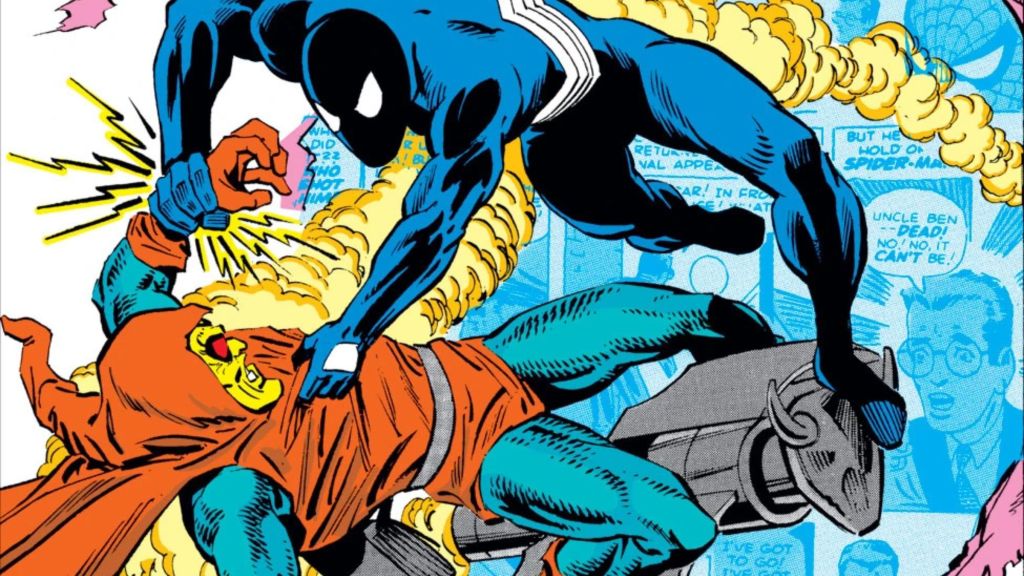
The CGC has a special grading certificate it issues to incomplete books, giving them a green label and referring to them as “qualified.” In the eyes of the CGC, the Tattooz insert is necessary to a complete copy of Amazing Spider-Man #238, and a copy without one is “qualified.” Even graded at a 9.8, the ceiling for the value of a qualified copy is around five hundred dollars, versus fifteen hundred or higher for a 9.8 complete with Tattooz. Collectors have discovered a solution, though many are divided on its ethics. Two comics published in December, 1982 included Tattooz: Amazing Spider-Man #238 and Fantastic Four #252. The Tattooz are identical between both issues. A copy of Fantastic Four #252, even with its Tattooz, is worth around five dollars. Collectors have devised the practice of “marrying” Tattooz into an incomplete, high grade Amazing Spider-Man #238, increasing its value two or three times over.
If done correctly, marrying Tattooz into an Amazing Spider-Man #238 is seamless, and even the CGC won’t know the difference: numerous collectors have testified that they have submitted a married copy to the CGC and gotten back an unqualified, “universal” grade. Others have gotten back a qualified label, with the CGC detecting and noting the added Tattooz. It’s high risk and high reward, making a difference of as much as a thousand dollars. To some collectors, they see nothing wrong with the practice, as the Tattooz are identical and original: it isn’t a fake, it’s a restoration. Again, it can be done well enough that even the people grading the issue cannot tell the difference. To others, it feels like cheating – similar to the gradual shunning of “restored” comics. For this contingent, the fact that it is theoretically possible that the Tattooz in any complete copy they come across aren’t original only heightens their frustration.
Controversial though this practice is, it’s done nothing to harm the value of a universal-grade, complete 9.8 copy of Amazing Spider-Man #238. The comic is considered one of the most important issues Marvel published in the eighties, and is valued accordingly. Last year, a one-of-a-kind graded 9.9 copy sold for more than $31k. While the copy on auction through Hakes is unlikely to reach these heights, its current price gives every indication it will at least meet the $1.5k value held up by price guides like Overstreet – and the fact that it’s already reached $1k with more than a week left to bid indicates it might go for even more, helping to redefine this book’s value.

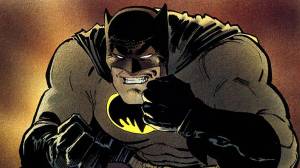

Forum Conversation: Best copycat Wolverine characters
Go to ForumI saw the article, but no one posted so here are ones they forgot… 1) Shadowhawk from Image. Not a mutant, but an armoured and clawed hero, like if Batman and Wolverine crossed like…
2) the actual Amalgam hero Dark Claw! The real Batman/Wolverine hybrid
3) Catman from Comely Comics ( no, not Splatter). Going back to the 1970’s he used an alien artifact to change into Catman. Claws, strength, unable to feel the elements like cold or heat. He was cool.
Others?