
One of the most iconic creations of the Silver Age not to emerge from Marvel or DC, Vampirella’s 1969 first appearance is today one of the rarest and most sought-after keys of its era. The CGC population report lists only 1,353 graded copies of the comic magazine in existence, only fifty of which are certified at a grade of 9.4 or higher. As a point of comparison, the CGC population report lists more than 4k copies of Amazing Fantasy #15 – albeit with even fewer in near-mint condition . Although the 1960s were a decade dominated by the established DC Comics and its upstart competitor Marvel, these two companies were far from the only significant players on the comic book market. Warren Publishing, best known for its beloved and highly influential Famous Monsters of Filmland, skirted comic book censorship regulations with its horror magazine publications like Eerie and Creepy, and in 1969, launched its more enduring and iconic character: Vampirella. A fixture of comic book stores for nearly sixty years through statues, action figures, and numerous comic stories, Vampirella’s image is instantly recognizable to fans, even those who have never read a single story featuring the character.
Videos by ComicBook.com
While her provocative costume can certainly be credited for some of Vampirella’s lasting appeal, to attribute all of her popularity to the comics’ cheesecake qualities is to do Vampirella a disservice. It also does a disservice to the work of a legion of the medium’s best writers and artists a disservice, including names like Mark Millar, Grant Morrison, and Alan Moore. Vampirella’s earliest years with Warren Publishing are still among the best stories to feature the character. Warren’s Vampirella began as a horror anthology in the tradition of Tales from the Crypt or Warren’s own Eerie and Creepy before evolving into a horror-tinged super-hero comic with Vampirella at its center. However, this came at the cost of lacking the widespread distribution enjoyed by more traditional, kid-friendly comics. As a result, all issues of the Warren Vampirella are scarce, and it’s among the most challenging Bronze Age comic titles to collect a complete run of. No issue is rarer than Vampirella #1, and next week, Heritage is giving collectors the chance to own one of just thirty-five copies CGC-graded at a 9.4.
How Vampirella Ended Up With One of the Most Convoluted Backstories in Comic Book History
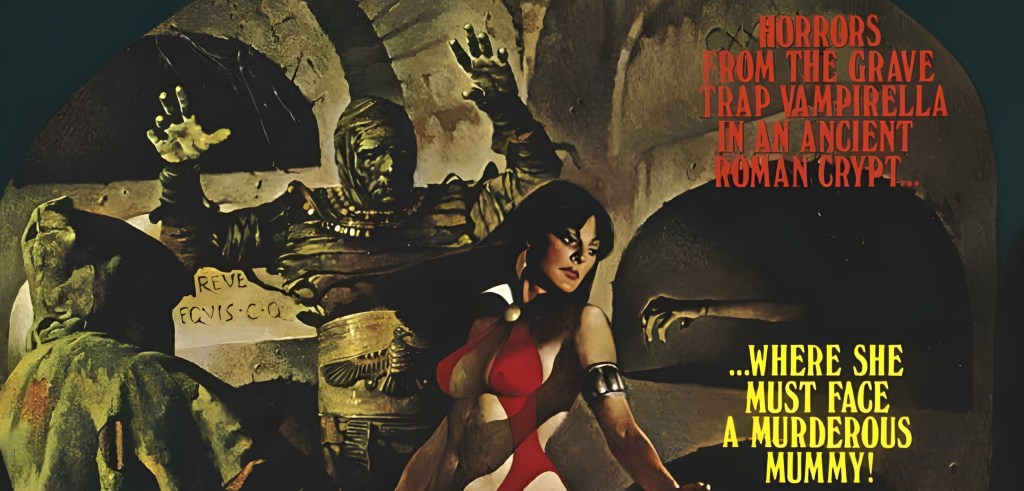
Not belonging to one of the “big two” (Marvel and DC), the rights to Vampirella have changed hands several times across her history, first from Warren Publishing to Harris Publications, then from Harris Publications to Dynamite Entertainment. Between these three publishers, Vampirella has been relaunched as an ongoing comics series fifteen times from 1992 to the present. Almost every writer to take on one of these monthly titles has had their own spin to put on her origins, character, and world. As a result, depending on who you ask, Vampirella is an alien from planet Drakulon, the daughter of the Biblical Lilith, a scream queen, a secret monster-hunting agent for the Vatican, and the bride of Dracula. For the past seven years, Christopher Priest has been at the helm of Dynamite’s Vampirella, and has somehow taken all of these disparate elements and made them (mostly) work in one canon.
To begin with, yes, really: Drakulon. Vampirella’s classic comic book origin is absolutely ridiculous, though her real-world origins carry a surprising pedigree. The character is credited, broadly, as emerging from the imagination of Famous Monsters editor Forrest J. Ackerman. Apocryphally, the name came from Ackerman combining “vampire” and Barbarella, the Roger Vadim film adaptation of which was a major cult hit the previous year. Underground comic writer and artist (and later comic book historian) Trina Robbins designed Vampirella’s costume and overall look, some of her first major mainstream work. Tom Sutton illustrated her first appearance, while Frank Frazetta contributed the cover. Ackerman wrote the issue, which introduced Vampirella as an alien from Drakulon, planet of the vampires, where blood flows from great rivers. Faced with a great catastrophe as Drakulon’s rivers dry and its people starve, Vampirella is forced to flee the planet for Earth, hitching a ride aboard a crash-landed space probe. On her journey to Earth, Vampirella discovers that the blood she needs to survive flows in the veins of these alien “humans,” forcing her to kill for sustinence.
Vampirella disappeared to the background of her magazine for its first few years, serving as a hostess to the anthology horror stories within, introducing them like the Crypt-Keeper or DC’s Cain and Abel. Sporadically, she’d get a short feature story. Readers responded well to her stories, and she gradually took over the book. Naturally, this eventually included a confrontation with Dracula, revealed as a member of her own species, the “Vampiri.” Eventually curing herself of her thirst for blood through the Necronomicon-esque book of magic the “Crimson Chronicles,” Vampirella became a force for good and a hunter of monsters, teaming with characters like the sorcerer Pendragon and Adam Van Helsing, descendant of Dracula’s nemesis. The Warren run lasted one hundred and thirteen issues, ending in 1983 when Warren Publishing filed for bankruptcy. Harris Publications bought their assets at auction, this included Vampirella. Harris reprinted the entire Warren run throughout the eighties, finally launching a new Vampirella title in 1991 – naturally coming in the midst of the era’s comic speculation boom.
What Vampirella’s Half-Dozen Origins Say About the Character‘s Lasting Impact
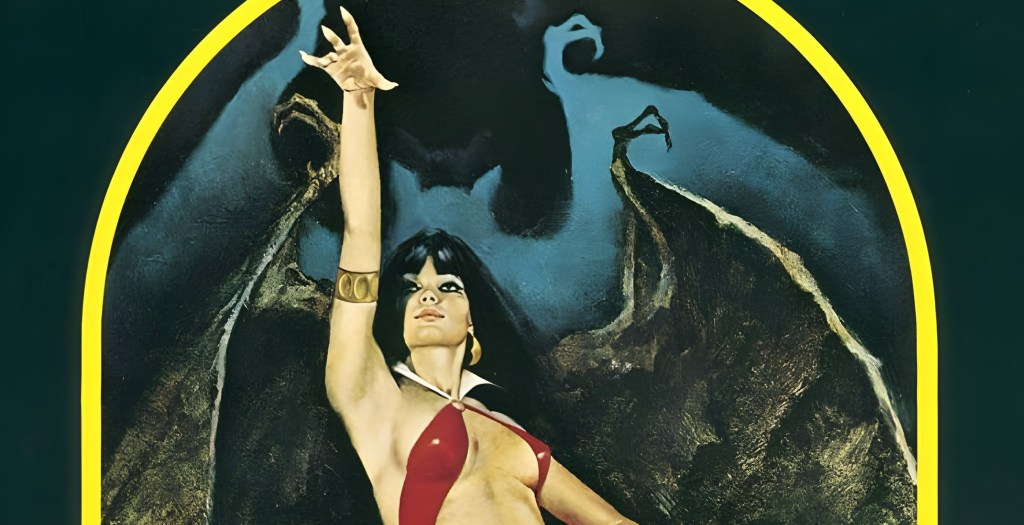
Kurt Busiek revamped Vampirella’s origins for Harris Publication, introducing the alternate backstory that she is the daughter of Lilith, the first wife of Adam and the “mother of demons” in traditional Judeo-Christian myth. Repentant, Lilith trained her daughter Vampirella to battle the demons she had spawned. Warren Ellis incorporated “Drakulon” back into canon with his Vampirella Lives mini-series, which establishes it as Vampirella’s birthplace and a realm of Hell. Grant Morrison and Mark Millar’s work on the Vampirella ongoing title is considered a high water mark for the Harris era, featuring religious conspiracies, vampire gangsters, and a new nemesis for Vampi with the lich Von Kriest. Characters and continuity from Harris were kept roughly intact for the early Dynamite era, which also reintroduced Warren-era characters like Adam Van Helsing and Pendragon. A reboot reimagined her as an agent of a B.P.R.D-esque monster-hunting organization run by the Vatican; another reboot put her in a dystopian future. For the better part of a decade, Christopher Priest has been trying to make all of these interpretations make sense together.
For the most part, Priest has succeeded: his Vampirella run has been upheld by readers as one of the best iterations of the title, with more complex characterization and intricate storytelling than many of its precursors. That it’s managed to fly under the radar is a reminder that Vampirella remains a cult character, maintaining a dedicated fanbase while never cracking most readers’ pull list. It’s that niche status that enables writers like Priest, Morrison, or Alan Moore (who penned a 1997 Vampirella/ Dracula cross-over) to exercise unrestrained creativity when writing for Vampirella: they aren’t subject to the same pressures and oversight that comes with working on a mainstream title.
Tying together science fiction, horror, and a traditional super-hero comic, Vampirella is a surprisingly versatile character. While the combination of these genres doesn’t work for every reader, for those who it resonates with, it really resonates, making Vampirella an ardent favorite of theirs. It’s those hardcore fans that drive the high aftermarket prices on her classic Warren appearances, with Vampirella #1 seldom selling for less than $500. The copy on auction at Heritage has already attained a price of more than $3k – higher than average for the book in high grade condition, but explicable given its exceptional 9.6 Near-Mint condition. With more than a week left to bid, the price is likely to climb even higher, cementing Vampirella’s status once again as an underrated icon, far more than an outrageous costume and a campy name.
Do you collect Vampirella comics and magazines? Leave a comment below and join the conversation now in the ComicBook Forum!

Forum Conversation: Which Superman Costume Is Your Favorite?
Go to ForumAs of now the Kingdom Come suit
My main answer to this is that when Dan Mora draws Superman, it’s instantly my favorite. I think I prefer the modern suit best, which is just an updated take on the classic costume.
Now, two honorable mentions here if we are going a little more out there with the designs. First, Michael Turner’s Godfall suit is wild but actually rules. Second, I will always have a soft spot for the Electric Blue Superman suit. It just looks so flipping cool.
I actually like the New 52 costume a lot but Kingdom Come might be my absolute favorite. Alex Ross is just amazing.