
Godzilla fans in America today don’t know how good they have it. This decade has turned out to be a golden age for Godzilla merchandise in North America, driven by regime changes at the King of the Monsters’ parent company, Toho. With an eye toward international expansion, Toho has seen fit to line the shelves of retail and specialty stores with new and licensed Godzilla action figures, comics, and collectibles. In the world of comics, Godzilla has faced off against the Justice League, the Marvel Universe, and even classic literature. But this hasn’t always been the case: for decades, Godzilla merchandise was only sporadically available outside Japan, creating a high-priced, high-demand secondary market in the United States. Even today, vintage Godzilla collectibles are some of the most coveted lots in collectible auctions — just look at this $30k collection of action figures sold last month at Heritage. The Japanese history of Godzilla merchandise is storied, both in the world of action figures and comics. Though Godzilla first appeared in American comics courtesy of Marvel in 1977, his Japanese comics history went decades deeper, beginning even before the original film was released.
Videos by ComicBook.com
Science Adventure Picture Story Godzilla was issued the first week of November 1954, at the exact same time as Toho’s landmark Gojira arrived in theaters. Part of a marketing blitz from Toho and released alongside a novelization, it marks the first cover appearance of Godzilla in a comic — though not the true first appearance, depending on who you ask. The manga was published as a bonus insert in Japanese children’s magazine Omoshiro Book (which translates more or less to “Funny Book” in English), deepening its historical significance: Omoshiro Book is functionally the grandparent publication of Weekly Shonen Jump, the anthology title that spawned virtually any manga you can name (just a few: One Piece, Dragonball, Naruto, and Demon Slayer). Although the Gojira adaptation began in the October 1954 issue of Omoshiro Book, the Certified Guarantee Company (CGC) has arbitrated the November 1954 Science Adventure Picture Story Godzilla as the kaiju’s first full appearance. There are only four copies in the world in CGC-graded condition, and one is up for auction next week through Goldin, where it has already accumulated a bidding price of close to $10k.
Why Fans Can’t Agree On Godzilla’s First Appearance
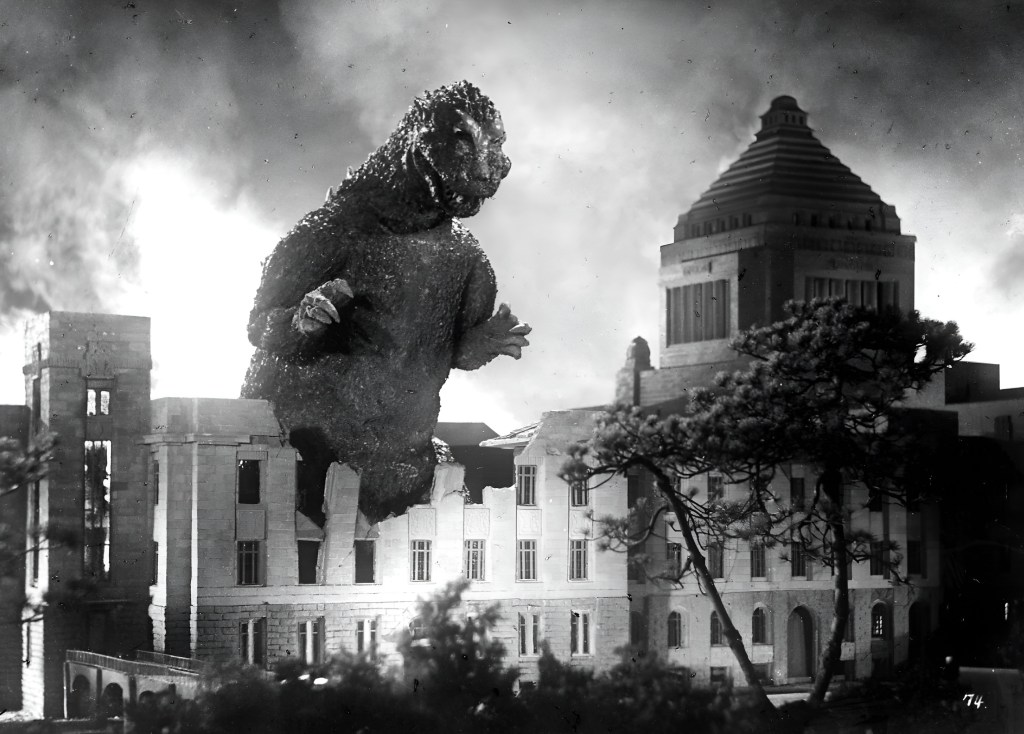
Omoshiro Book began publication in 1949, targeting an adolescent male demographic with a mixture of text and manga stories. Early on, Japanese film companies saw the potential for sponsored content in Omoshiro Book as an advertising tool, and paid for feature article on upcoming releases in the magazine. One of the biggest hit films of the early 1950s in Japan was American monster film The Beast from 20,000 Fathoms. Toho responded to its record-breaking success by commissioning a Japanese giant monster film, Gojira, colored by the destruction endured on the Japanese mainland at the end of the Second World War (not only the atomic bombings of Hiroshima and Nagasaki, but the fire-bombing of Tokyo were a direct influence on the film’s visuals). Imbued with this unique Japanese cultural perspective, Toho felt Gojira would resonate audiences even more than The Beast from 20,000 Fathoms, and despite its heavy themes, they decided to advertise the film in Omoshiro Book with a special insert, Science Adventure Picture Story Godzilla.
The promotion in Omoshiro Book ran across its October and November issues. Godzilla’s on-page appearance within the October issue is limited, just by merit of adapting the early part of the film, which keeps Godzilla largely off-screen. The most interesting thing about this issue is that it predates the film’s release, serving as the vanguard of its marketing campaign. Some Godzilla historians argue that it would have been the first time an official look at the character of Godzilla was released to the public, as the film was still in production and the trailer wouldn’t be released until later in the month. It was written by Shigeru Kayama, author of the film’s script, and illustrated by Wasuke Abe, an artist at Toho who designed Godzilla’s look. Despite Kayama and Abe’s involvement, there are key deviations from the film: the narrative is restructured to focus on a child character, Shinkichi, who is aged down from the film; and Godzilla’s design varies from page to page within the story.
Fans have likened the issue to the eternal debate over The Incredible Hulk #180 versus #181. Like with Wolverine’s first appearance in Incredible Hulk, there is a schism between “first cameo” and “first full appearance,” with the “first full appearance” also the first cover appearance. In the case of the October 1954 Omoshiro Book in particular, this is relevant: the magazine cover is a still of a Japanese child, and lacks any visual connection to its significance. The November 1954 insert has a wrap-around cover depicting Godzilla’s attack on Tokyo, making it a much more appealing display piece. With this in mind, it makes some sense that collectors have come to value the “first full appearance” versus the first cameo appearance of Godzilla.
Despite this, the collector market in Japan actually prizes other early print appearances of Godzilla more highly. The first hardcover manga appearance of Godzilla, published later in 1954, commonly sells for several times the price of either Omoshiro Book issues. As the first time a Godzilla manga was sold independently (rather than as a supplement to a magazine like Omoshiro Book), it’s considered almost as significant as the first appearance. It helps that the hardcover is also published in a format more recognizable to modern manga readers, combining pictures and text with word balloons and a continuous panel flow. The version published in Omoshiro Book is reflective of an earlier style closer to illustration, with large blocks of prose text accompanied by images.
How This Seventy-Year-Old Manga Continues to Influence Godzilla Today
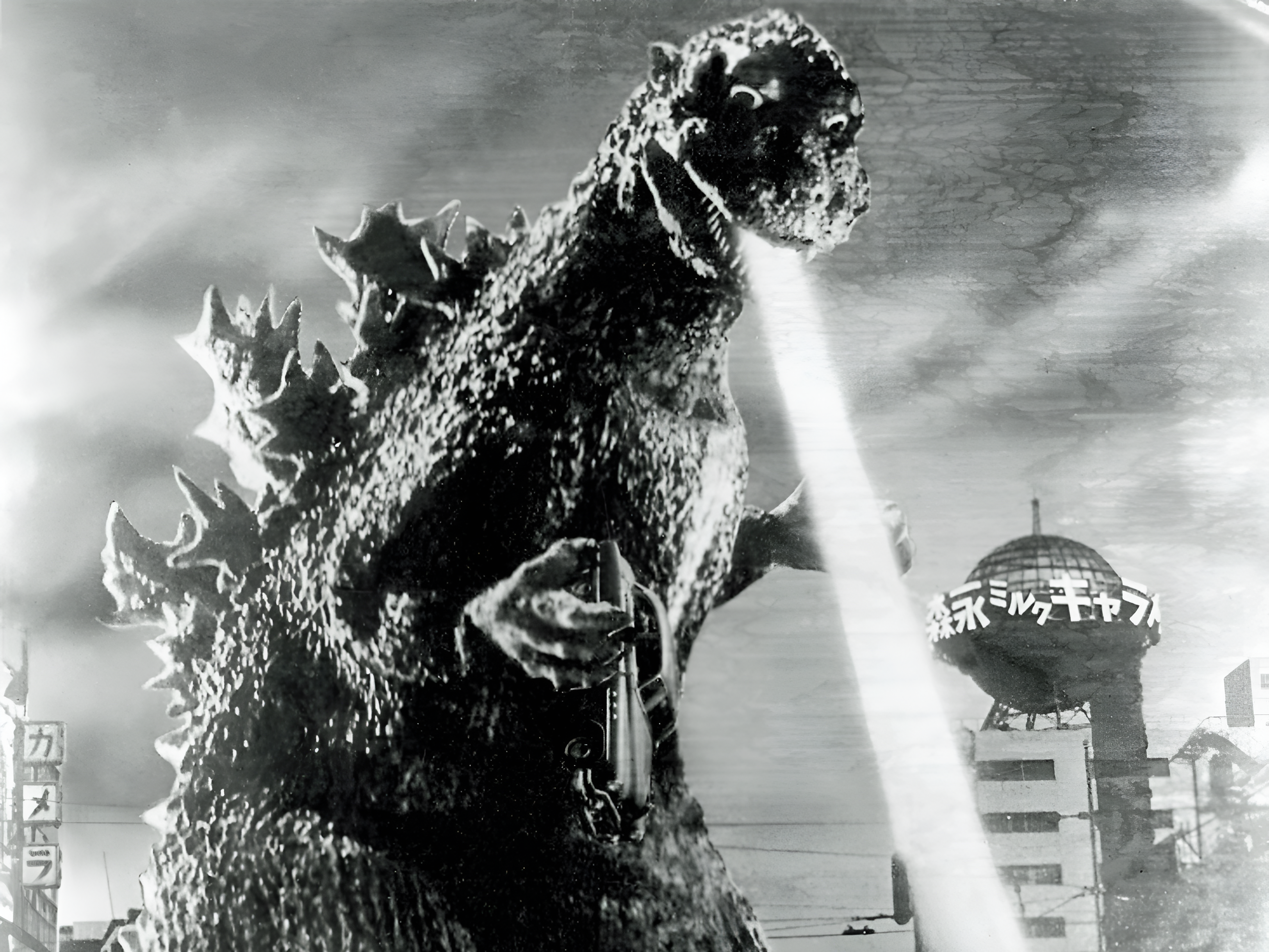
Toho’s decision to advertise their upcoming film in Omoshiro Book is also significant for yet another reason: it marks the first time Godzilla was marketed to children. This is predictive of the franchise’s enduring appeal to children, which caught Toho off-guard and led to a gradual shift toward child-geared Godzilla films in the late sixties and early seventies. It’s especially surprising given the aforementioned adultness of the original Gojira, a dark and somber film, the least likely of the franchise to resonate with a young audience. The choice of advertising in Omoshiro Book adds another layer of historical prescience. While the magazine itself would cease publication in 1959, it would launch a spin-off in 1958 called Shonen Book, which would produce its own spin-off, Shonen Jump in 1968. At the same time, Godzilla would appear in his tenth film, battling alongside a slew of other Toho kaiju in Destroy All Monsters, spawned from the massive kaiju film boom Gojira began.
For a Godzilla fan and collector, owning Science Adventure Picture Story Godzilla is the equivalent of Fantastic Four #1 or Amazing Fantasy #15: it isn’t just a first appearance, it signals a major shift for the medium, ushering in changes we can still recognize today. For the Marvel Comics, that shift was a change in how comic book stories were told, and the birth of a multimedia giant. For Toho, it was the first sign that their inaugural kaiju film was going to leave a indelible mark on Japanese (and eventually global) culture; while for Omoshiro Book publisher Shueisha, it was another sign of the rising popularity of serialized children’s manga. This week, Shueisha will publish a raft of weekly manga and magazine publications. A new American Godzilla comic will return Godzilla to the stark, horrifying roots of the 1954 film later this month. Godzilla himself will make his thirty-ninth big-screen appearance in November. All of this coalesces in Science Adventure Picture Story Godzilla, its legacy spanning seventy-two years and counting.
More Collectibles
-
Image Courtesy The Pokémon Company







Forum Conversation: Best copycat Wolverine characters
Go to ForumI saw the article, but no one posted so here are ones they forgot… 1) Shadowhawk from Image. Not a mutant, but an armoured and clawed hero, like if Batman and Wolverine crossed like…
2) the actual Amalgam hero Dark Claw! The real Batman/Wolverine hybrid
3) Catman from Comely Comics ( no, not Splatter). Going back to the 1970’s he used an alien artifact to change into Catman. Claws, strength, unable to feel the elements like cold or heat. He was cool.
Others?