A lot of people like to point to the failures of the DCEU as proof that DC Comics can’t do media outside of comics well. However, the people who think that are mostly just thinking about movies. In reality, DC has always had way more success on TV than Marvel, with shows like SuperFriends, the Timmverse shows, Smallville, Batman, Wonder Woman, and loads more all doing very well. In the 2010s, while Marvel was breaking records with the MCU, DC was doing their own adaptations on the small screen, starting with a hero that no one ever would have expected them to start with: Oliver Queen, the billionaire who became Green Arrow.
Videos by ComicBook.com
Usually, when DC starts something like this, they go in the same direction, throwing out Superman or Batman. However, Arrow went with Ollie instead and created the Arrowverse of shows, with Legends of Tomorrow, The Flash, and Supergirl all having impressive run. There are a lot of fans out there who point out that Arrow makes Ollie more like Batman, but those fans probably don’t know that Ollie was created to be Batman by way of Robin Hood. Green Arrow has starred in brilliant stories over the years, but one of the best – and the one that I think inspired Arrow more than most people realize – is Green Arrow: The Longbow Hunters. This story fundamentally changed the character, and its darker tone feels like something Arrow lifted whole cloth.
The Longbow Hunters Transformed the Green Arrow Mythos For a New Generation
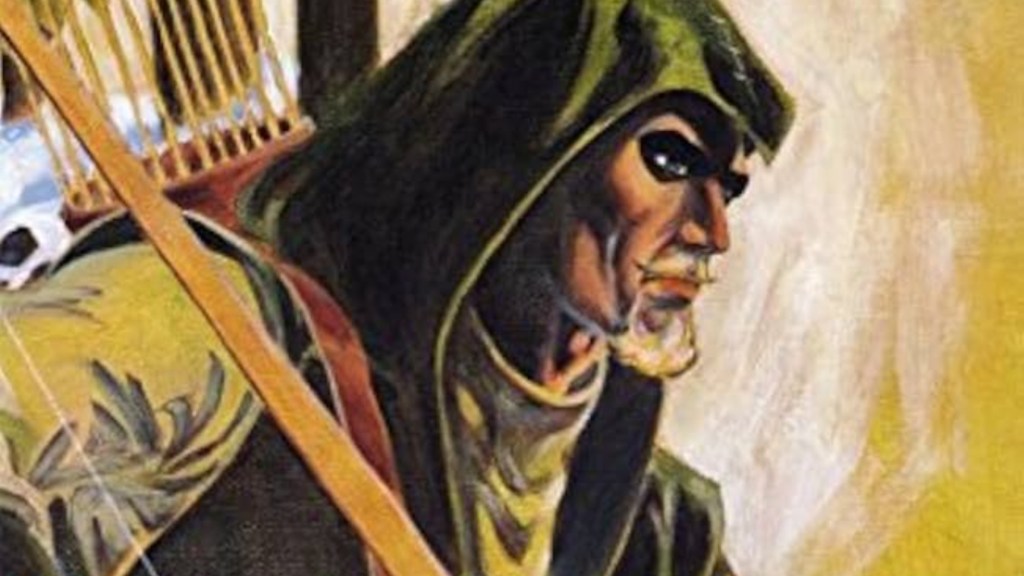
Green Arrow first appeared in 1941’s More Fun Comics #73. Batman had made a huge splash, especially once Robin showed up, and they wanted to replicate that. They made Oliver Queen and Roy Harper, who would become Green Arrow and Speedy. They had an Arrowcave, an Arrowcar, and various other arrow-themed weapons and vehicles. Their quivers were the equivalent of Batman’s utility belt, with trick arrows taking the place of Batman’s weapons. Green Arrow was reasonably successful, but he faded away with the rest of DC not named Superman, Batman, or Wonder Woman.
The character was brought back in the ’60s, where he was basically still the same hero he was back then. However, that would change when Denny O’Neil took over the character. O’Neil was a hippie radical of the day and he made Ollie into his mouthpiece. This has been the default of Ollie almost ever since. Crisis on Infinite Earths changed everything, as DC brought its classic hero into the more grim and gritty comic world of the 1980s, starting with Superman, Wonder Woman, the Justice League, and Batman.
Ollie would get his more “mature” reboot in 1987, a year after Crisis ended. Writer/artist Mike Grell had become well-known for his time on Legion of Superheroes and Warlord, helping mature the team in the ’70s, and DC handed him Green Arrow. Post-Crisis DC was all about change and Grell was going to use his book to completely rework the character in a number of ways. Thus, Green Arrow: The Longbow Hunters was born.
The story is basically about an aging Ollie trying to find the spark in his life again. He moves Seattle to be with Black Canary, changes his costume, and abandons the trick arrows of the past. It’s mid-life crisis Ollie, a man who lost his way somewhere and is looking for that made his life worth living. He ends up going after a serial killer while Canary tried to infiltrate a drug-smuggling ring, leading to a huge kerfuffle that introduced Shado to the world, an assassin who is also going after the drug smugglers.
Post-Crisis DC came in the wake of stories like The Dark Knight Returns and Watchmen. DC’s creators were all about pushing the boundaries at this point and Grell decided that a bowman who didn’t kill people was a dumb idea. The Longbow Hunters was partly about Ollie realizing that some enemies need to be killed, something that Shado shows him. In some ways, the book is about growing up and leaving childish things behind – in this case not killing people – and it was exactly what fans of the character wanted in 1987.
The three-issue miniseries would lead into an ongoing series written by Grell. During this time, he had Shado and Green Arrow start an affair, with Ollie cheating on Dinah and ruining their relationship in the years to come. Grell wrote 80 issues of the series. His Ollie was much less political than the older one – Grell’s work eschewed the character’s usual liberal politics. In fact, I would say another point of the story was an old saying you heard a lot back then: “If you aren’t on the left when you’re young, you’re a coward and if you aren’t on the right when you’re old, you’re a moron.” (This is the baby boomer motto, by the way) Grell was all about maturing the character and to him, that meant leaving his bleeding heart behind.
After Grell left the book, it was taken over by Chuck Dixon, who would write the character until his “death” in Green Arrow #100, leading to Conner Hawke taking up the mantle of Green Arrow from his father. I bring this up because eventually, the Grell version of the character would have to be dealt with. Kevin Smith’s Green Arrow run brought back the classic, funny liberal Ollie. He was resurrected as a younger happier version of himself, allowing the character to have great success in the 21st century. I don’t think it’s a coincidence that Ollie lost popularity once Grell left, leading to his death, and that when he came back as a more old school version, fans showed up again.
Green Arrow Needed The Longbow Hunters to Stay Relevant
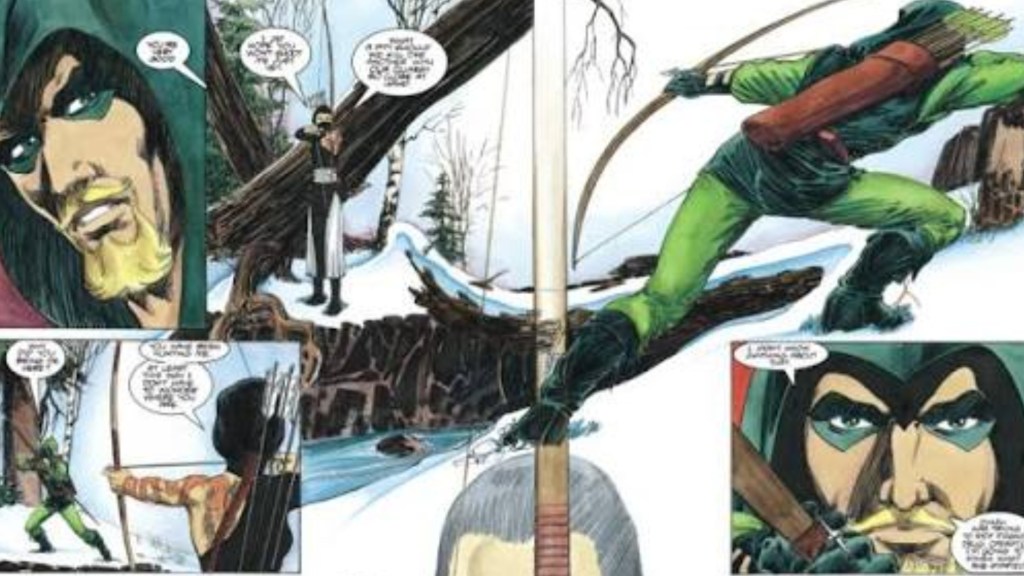
While there’s a conversation to be had about changing Ollie so completely in The Longbow Hunters, I think that it was worth it. DC was moving in a different direction at the time and taking the funny liberal Ollie in the more conservative and gritty ’80s made perfect sense and allowing it change him made perfect sense, a comic that showed the changes to the hippie generation in microcosm. Grell didn’t have Ollie come out and say he was an idiot before, but there was a noticeable change to the character that worked. I don’t like the affair with Shado, but it has made Ollie and Dinah’s relationship more complex over the years.
It also played a huge role in inspiring Arrow. This show wasn’t about ’60s radical Green Arrow or even ’40s wannabe Batman Ollie, but a more violent Ollie who wanted to clean up the mean streets in any way possible, and that was Longbow Hunters Ollie. Green Arrow: The Longbow Hunters showed that you could the character out of his comfort zone and he would still hit the target, something that allowed DC great success in the ’10s.
What do you think about Green Arrow: The Longbow Hunters? Do you think it was the change he needed or do you think it went too far? Sound off in the comment section below.
More Comics
-
Image Courtesy of Marvel and DC Comics -
Image Courtesy of DC Comics -
Image Courtesy of DC Comics -
Image Courtesy of DC Comics -
Image Courtesy of Marvel Comics