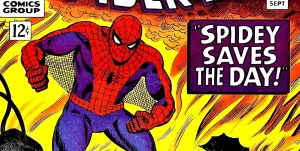
The Kool-Aid Man, Kool-Aid’s official mascot, has had no shortage of wacky adventures for product advertisement. There have been commercials and a recurring appearance on Family Guy. In the 1980s, not only did the Kool-Aid Man have a video game, but he also had a Marvel Comic. It ran for three issues from 1983 to 1985 before moving over to the Archie brand, putting out five more issues and concluding in 1990.
Videos by ComicBook.com
The Adventures of the Kool-Aid Man wasn’t the character’s first comic, either. In 1975, the General Foods Corporation, which produces Kool-Aid, featured the iconic mascot in a two-issue series. Still, even with a total of eleven comic appearances from the late 1970s to the early 1990s, nobody talks about the Adventures of the Kool-Aid Man. Strangely enough, the comic is kinda great.
When Marvel Comics Drank the Kool-Aid
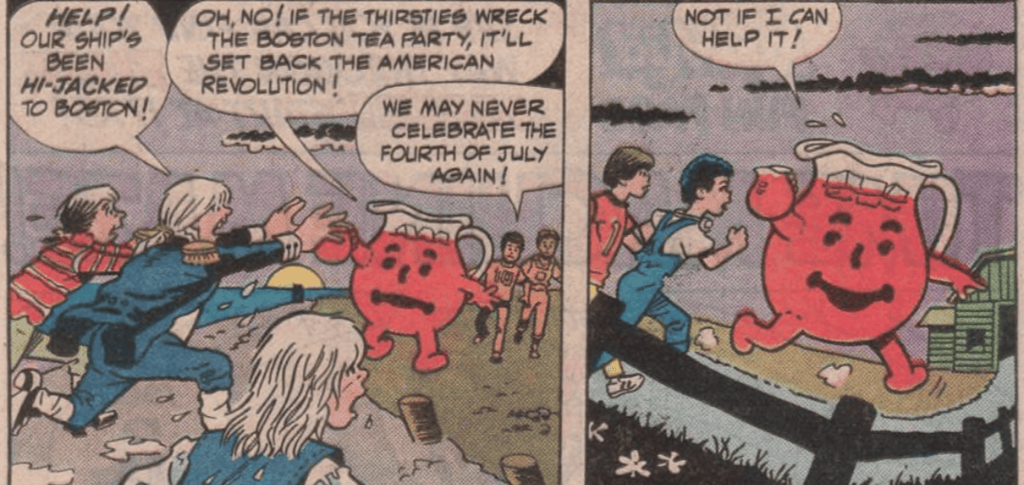
Written by comic book editor Jim Salicrup — known by fans for stints at Marvel Comics, Topps Comics, Stan Lee Media, and Papercutz Graphic Novels, publisher of Nancy Drew and the Hardy Boys — The Adventures of Kool-Aid Man was off to a promising start. The Kool-Aid Man had brand recognition both in name and in his look. Plus, Salicrup had no hesitation in using the Kool-Aid Man’s iconic entrance. The Kool-Aid Man bursts through quite a few walls in the three issues that Salicrup wrote for him.
While the practice vanished from the page for the second and third issues, the first issue is not afraid to name-drop some Marvel superheroes. In “The Thirsties Strike Out”, the Kool-Aid Man comes to the rescue of a youth baseball league, specifically helping out four kids named Sigmund Smart, Cynthia Crystal, Mickey Richardson, and Gloria Greene. The alliterative names are amusing — it brings to mind Marvel’s own alliterative habits with heroes like Peter Parker, Bruce Banner, and Sue Storm — and I’m not sure why Salicrup couldn’t come up with one for Mickey Richardson. Upon meeting the Kool-Aid Man, Mickey says he bets that he’s “as strong as the Hulk”. The second story of the issue “Thirst in Space” has another Marvel Comics allusion. At the sight of the enemy’s spaceship, one of the characters exclaims, “If that’s not a Thirstie spaceship, then I’m the Amazing Spider-Man.”
The allusions are quick, and overall, the comic doesn’t do much with them. It’s for the best that Salicrup dropped them completely for the second and third issues, even if it is a bit funny considering the villains of The Adventures of Kool-Aid Man. In every issue of the comic, Mr. Kool-Aid Man and the various child characters come face to face with The Thirsties. The Thirsties are an original concept for the comic, but given their yellow color and spiky outlines, they are also reminiscent of the Spider-Man villain, Electro. Moreover, Big Thirstie, leader of the Thirsties, is even able to tap into computers and thus tamper with electricity. It’s understandable why it didn’t happen, but a Spider-Man / The Adventures of Kool-Aid Man crossover feels like a massive missed opportunity.
Why The Adventures of Kool-Aid Man was Great
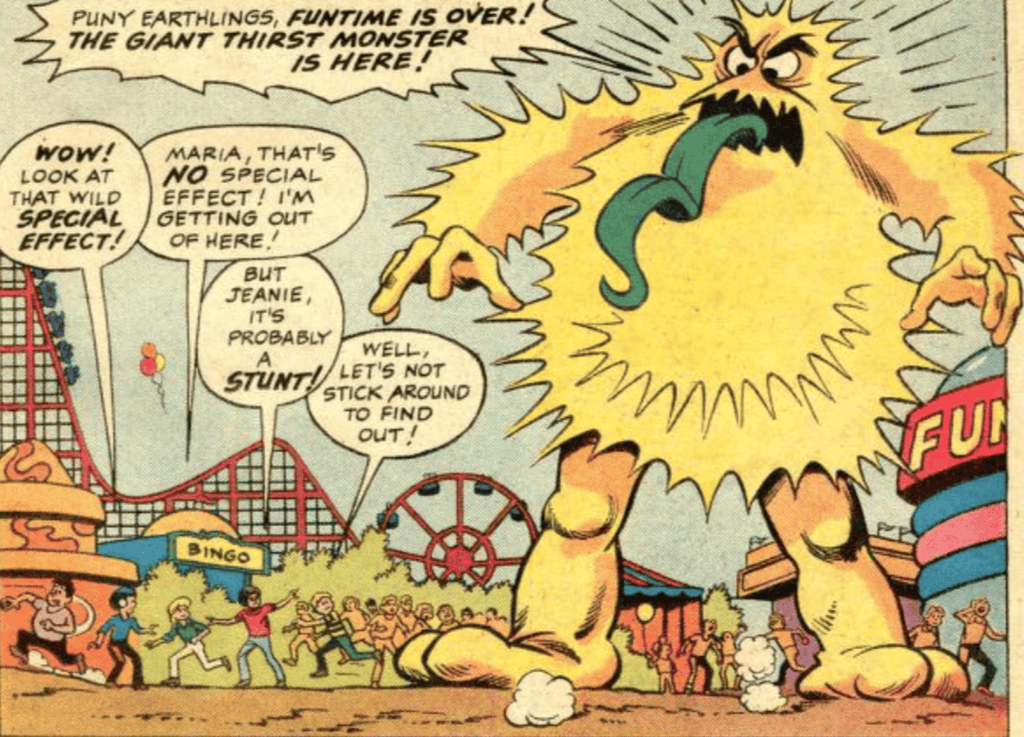
The entirety of The Adventures of Kool-Aid Man feels very tongue-in-cheek. The Thirsties are introduced with little preamble, taking the reader’s assumption that if the Kool-Aid Man is to fill the role of a superhero, then he must have a super-villain. The comic also gives him a secret hideout in “The Thirsties Strike Out”, which he, of course, shows immediately to the children he’s helping, hardly keeping it secret.
“Thirst in Space” gives the Thirsties a thirst ray to use against the Kool-Aid Man, only for the Kool-Aid Man to remind them that there’s no ray that can make the Kool-Aid Man thirsty. The Kool-Aid Man may not have any official superpowers — other than his expertise at crashing through walls — but never getting thirsty feels like it should count as one.
Perhaps the best mini-story that The Adventures of Kool-Aid Man gave fans was “The Kool-Aid Man Meets the Compu-Terror”. As the first story of the third issue, Salicrup utilized recurring characters such as Maria Lopez, Scott Stevens, and Professor Klein, along with the Kool-Aid Man. Taking its cue from other eighties stories, the story revolves around a house computer — a house made out of computer instead of the main computer of the house as kids Maria Lopez and Scott Stevens assumed — that goes haywire and traps the three inside.
The villain introduces themselves as the Compu-Terror and takes hold of all the electronics in the house, only to be revealed as Big Thirstie when the Kool-Aid Man crashes in. Professor Klein recognizes the danger in what he’s created, given the implications of a computer that can control every other one on Earth and in space. The Kool-Aid Man brings the comic back to a wacky place, instead of a serious sci-fi one, when he reminds the kids, and the audience, that Big Thirstie’s aim isn’t power or money, but rather to ruin everybody’s fun. It’s such a silly motivation that one can’t help but laugh.
As a whole, The Adventures of Kool-Aid Man were fun but predictable, with most plots resulting in the kid protagonists having to call out to the Kool-Aid Man for help. Salicrup temporarily subverts this in “A Camping Adventure,” where the kids try going after the Thirsties themselves, only for the Thirsties to tie them up, thus requiring the Kool-Aid Man’s assistance.
Decades before a Spider-Verse crossover, “The Great Balloon Race” featured not only the Kool-Aid Man but also a Sunshine Punch and a Mountain Berry Punch, raising questions about just how many different Kool-Aid pitchers exist out in the wild in the greater Adventures of Kool-Aid Man universe. These questions unfortunately haven’t ever been answered.
Let us know your thoughts on this wacky comic below!
More Comics
-

Image Courtesy of Marvel Comics -
Image Courtesy of Marvel Comics -
Image Courtesy of Marvel Comics -
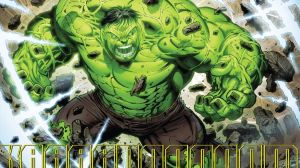
Image Courtesy of Marvel Comics -
Image Courtesy of DC Comics