2020 was an interesting year for gaming, specifically because of how console gaming was evolving. The Nintendo Switch was enjoying its dominant run and follow-up, while PlayStation fans were gearing up for the PlayStation 5’s launch. One thing that stands out is that both Nintendo and Sony released an exclusive game, one being a new IP while the other being an established and well-loved franchise, on the same day. And yet, the reaction to both games was very different. One became the foundation for a brand-new PlayStation pillar, while the other reignited an argument that had been following one of Nintendo’s longest-running RPG series for years.
Videos by ComicBook.com
On July 17th, 2020, Ghost of Tsushima and Paper Mario: The Origami King were released. Both earned generally favorable reviews from critics, but their long-term reception could not have been more different. Ghost of Tsushima quickly established itself as one of Sony’s defining modern franchises, while Paper Mario: The Origami King deepened the rift between longtime fans despite praise for its presentation, humor, and creativity. Six years later, both games remain fascinating examples of how great reviews do not always tell the full story of a game’s legacy.
Ghost of Tsushima Became Sony’s Next Great Franchise

Few games have pulled me into them like Ghost of Tsushima. From the opening moments, I was drawn to the world of Sucker Punch’s Japan and the story of Jin. Everything about the game felt cinematic, from exploration and its subtle visual cues of the Guiding Wind and landmarks to its challenging but fair combat. But what makes it stand out is that it achieved this without taking control away from the player with endless tutorials and quest markers. Instead, Ghost of Tsushima offered an adventure that rewarded curiosity and skill.
Then there is the narrative, the best part of the game. Ghost of Tsushima follows samurai Jin Sakai during the Mongol invasion of Japan in 1274. Combat revolves around carefully timed sword duels, multiple combat stances tailored to different enemy types, stealth mechanics, and exploration across a massive open world. Rather than relying heavily on waypoint markers, the game encourages players to navigate using nature itself, a design choice that quickly became one of its defining features.
The game earned with an 83 Metascore while players embraced it even more enthusiastically. It became Sony’s fastest-selling new PlayStation 4 IP at launch and finished July 2020 as the month’s best-selling game in the United States, a feat it repeated when it eventually came to PC years later. More importantly, it established a brand-new franchise for PlayStation, eventually leading to expansions and a sequel, Ghost of Yotei, proving that Sony had found another flagship series alongside its established exclusives.
Paper Mario: The Origami King Continued Nintendo’s Most Divisive RPG Series
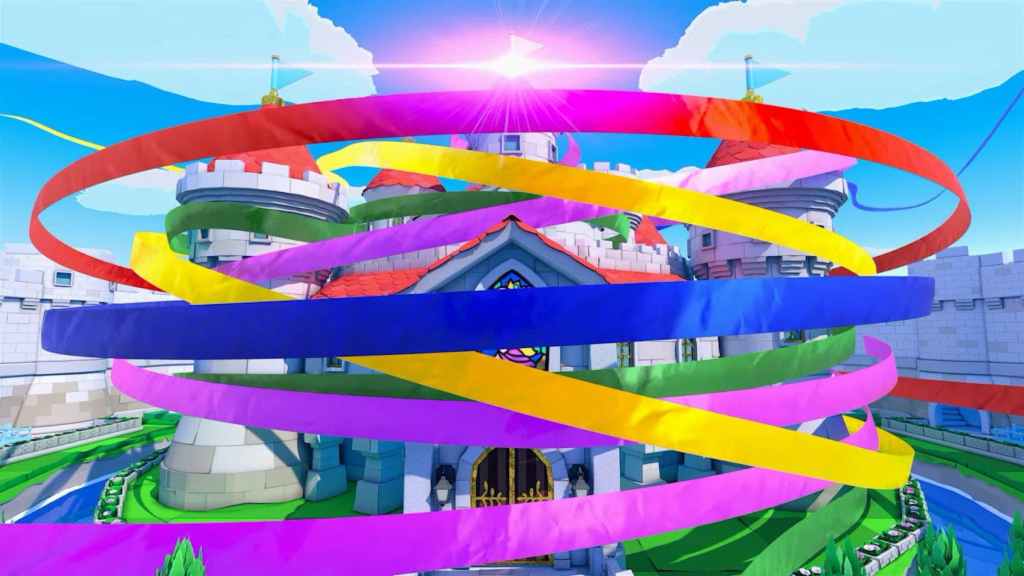
Unlike Sony’s new samurai adventure, Nintendo’s July 17th, 2020 release came with years of expectations. Ever since Paper Mario: The Thousand-Year Door, many fans had hoped the series would fully return to its classic RPG roots, myself included. Every new installment has been measured against the series’ best entry, and fans have continually been disappointed that Paper Mario could not recapture the magic from the GameCube era. Yet, Paper Mario: The Origami King was a step in the right direction.
Paper Mario: The Origami King introduced a clever ring-based battle system that combined puzzle solving with turn-based combat. Outside battles, the game showcased imaginative environments, memorable writing, and plenty of humor as Mario worked to stop King Olly’s origami invasion. Exploration remained enjoyable throughout the adventure, with collectibles, environmental puzzles, and inventive boss encounters giving players reasons to search every corner of its paper-crafted world.
Critics largely praised the experience, giving it an 80 Metascore, but player reactions proved far more divided. Many appreciated its charming world, excellent soundtrack, and creative storytelling, while others continued to criticize the reduced RPG mechanics and experimental combat system. That divide has followed nearly every modern Paper Mario release starting with Paper Mario: Sticker Star, making The Origami King another game that never completely escaped comparisons to its predecessors.
Two Games That Represented Very Different Futures

Although they launched together, these games represented opposite directions for Sony and Nintendo. Ghost of Tsushima introduced an entirely new IP that immediately earned a place among PlayStation’s greatest exclusives. Its success demonstrated that Sony could still create blockbuster franchises even late in a console generation, reinforcing its reputation for cinematic, story-driven adventures.
Meanwhile, Paper Mario: The Origami King reflected Nintendo’s willingness to continue reinventing an established franchise instead of returning entirely to its earlier formula. That decision has frustrated some longtime fans, but it has also allowed each modern Paper Mario entry to experiment with new mechanics and artistic ideas rather than simply repeating past successes. Whether players loved or disliked those changes often depended on what they wanted the series to become, though I and many others long for the series to return to its roots.
Looking back today, both games were incredibly different but showcased the strengths of both Nintendo and Sony. Ghost of Tsushima has become one of Sony’s greatest IPs, with both a released sequel and an upcoming live-action adaptation. Sucker Punch’s pivot from Infamous and Sly Cooper was a huge success and showed Sony could still launch new franchises. Meanwhile, Paper Mario: The Origami King found success, but ultimately divided the fanbase even more. Nintendo would later remaster The Thousand-Year Door, showing the appeal of the original games. July 17th, 2020 was an interesting day for gamers regardless of which console they preferred.
What do you think? Leave a comment below and join the conversation now in the ComicBook Forum!
More Gaming
-
Courtesy of NetherRealm Studios -

Courtesy of Rockstar Games -
Image Courtesy of Marvel Comics