James Bond is a capable spy who can smoothly adapt to overcome obstacles in the field, as shown through decades of films and other forms of media. Such a character is a perfect fit for developer IO Interactive, a team that has spent decades honing its craft making freeform Hitman games. 007 First Light initially seems to not marry these two entities well, since it strangles players with unexpected linearity. And while many games can be accurately summed up with their first few hours, First Light is not one of them.
Videos by ComicBook.com
First Light begins with Bond crash landing on a beach and having to avoid mysterious armed soldiers. To stay hidden, players are forced to take refuge in moderately dense patches of waist-high grass, something in video games that may as well be as concealing as absolute darkness. Just after this, players are forced to climb along an established path of rocks.
007 First Light Is Quite Narrow in the Beginning
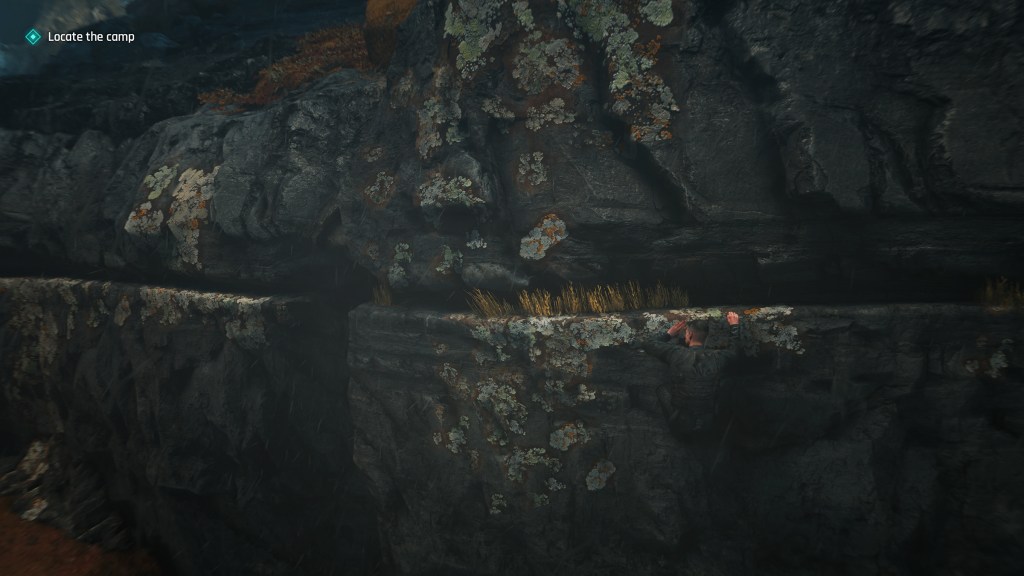
Right off the bat, it seems as though IOI has submitted to the AAA trope machine and flattened out its style in order to be more digestible for the masses. Hanging off well-telegraphed ledges and hiding in tall grass are two of the most cliché parts of most big modern games to the point where it’s a surprise if one — or, in the rarest cases, both — aren’t present. Hitman had both, but they were presented in the wider context of a much more robust variety of options. In First Light, these two actions are among the first few things players do and are some of the only things they can do.
These linear moments lead to a camp, which is comparatively more open — almost anything would be — but players are still guided by the nose and not allowed to experiment much. It almost feels scripted the way players are pulled around by the heavy hand of the designers. Sneak over here, kill this guy, crouch walk around here, mash through this quick-time event. The cage players are trapped is ever so cramped. And all of this wraps up with an explosive set piece that, while bombastic, isn’t much more complicated than running forward. It is essentially a tutorial, but it still is, at the end of a day, a full level, one that paints a picture of a game that’s incredibly linear.

This is incredibly disappointing at first given how Hitman’s sandbox levels are some of the best in the business and demonstrate IOI’s knack for crafting intricate hubs where players are given free reign. Railroading players down a narrow path with little room for deviation is just a less interesting choice since so many other games are linear. A studio that is among the best of the best following trends that run counter to its skills is a disheartening downgrade.
It would be, anyway, if that’s how the rest of the game played out. The next few stages hint at this, since each one is more open than the last. The superb training montage opens up more, as does the nightclub level that succeeds it. However, both are still quite constrained and it still feels like the First Light still has the training wheels on.
007 First Light Takes Some Time to Get Going
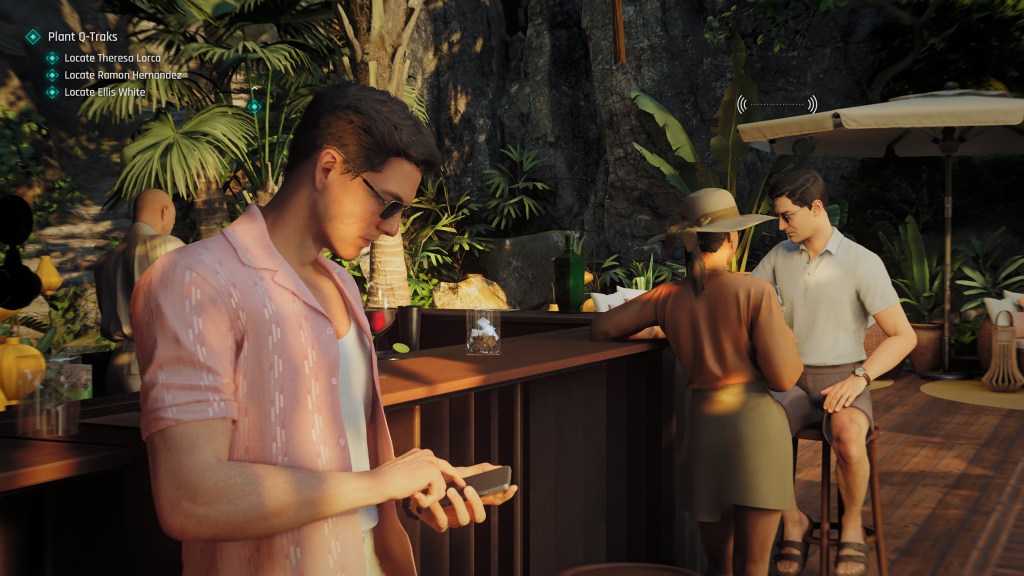
It’s not until the Slovakia mission that has the game opening up in a more spectacular fashion. It emulates the Paris level seen in the 2016 Hitman reboot with its lavish floors and crowded halls. Players get to roam around these expensive and exquisitely detailed rooms and search for ways to complete their mission, which is a refreshing change of pace. It also segues into fist fights and shootouts before capping off with a thrilling car chase and ridiculous plane stunt. Later levels only build on this more and more by throwing in new scenarios and levels that change things up and demonstrate the level of freedom and variety First Light contains.
Essentially, the first level makes for a poor vertical slice for the entire game. It makes sense to build out and expand over time since throwing everything at players immediately would be overwhelming and this mission establishes a unique intro to Bond, but it still plays it a bit too conservatively. Ideally, IOI would have given players more freedom in this level and not immediately have them shimmy across stone walls and crouch walking through tall grass (and mashing through quick-time events later on). All of this put together implies that a creative team sacrificed a key part of itself in order dumb things down enough for a more mass market franchise. It’s not a disaster of a level by any means, it’s just discouraging.
First Light’s later stages explore all sorts of mechanics and tempos and masterfully bounces players between them, a dance that becomes its biggest asset. Missions may start with a cinematic introduction before transitioning to an open hub and then to a firefight or a bare-knuckle brawl before wrapping up with a vehicle chase or boss fight. It’s even possible to pave some of these paths, too, as players can sneak past scenarios, lie through them, shoot their way out of them, punch through them, or a mix of all four — the latter of which is the most rewarding. This spontaneity is at the heart of First Light and is why it’s such a consistent blast. It’s just a little annoying its introduction doesn’t reflect that.
What do you think? Leave a comment below and join the conversation now in the ComicBook Forum!
More Gaming
-

Image courtesy of Moon Studios GmbH -
Image courtesy of Bethesda