There are plenty of farming sims and horror games out there, but Grave Seasons might be the best example of how you can combine them into something truly unique. Developed by Perfect Garbage and published by Blumhouse Games, Grave Seasons is a wild concept that sees the player arrive in the small rural town of Ashenridge as a stranger. Hoping to keep a low profile, the player character has to tend to the crops while investigating a series of mysterious supernatural murders occurring throughout the town.
Videos by ComicBook.com
A blend of the Stardew Valley aesthetic with very scary touches, the game is a wild genre fusion on paper that works great in practice. However, the two leads on the project see a lot more similarities between horror and farming sims than one might realize. During an interview with ComicBook.com, Perfect Garbage Co-Founder/Narrative Director Emmett Nahil and Co-Founder/Creative Director Son M. broke down the creative influences on Grave Seasons and the surprising symmetry that exists between the horror and farming sim genres.
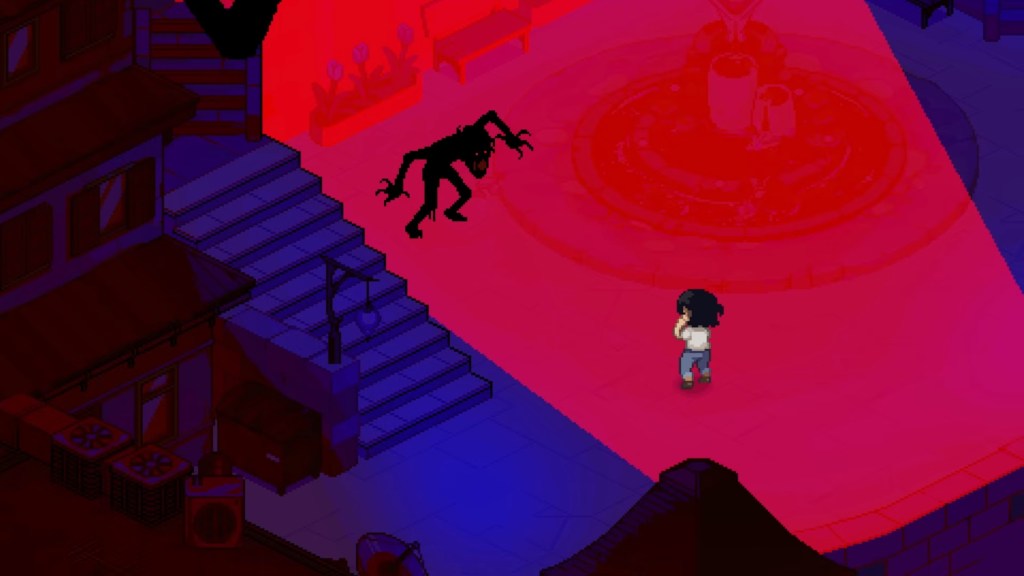
CB: Where did the genre fusion at the heart of Grave Seasons come from?
Emmett Nahil: It’s funny — when we talk about this game, we love to emphasize the fact that the studio really is a perfect fifty-fifty mashup of folks who are hugely enthusiastic about horror and folks who are huge management sim fans. It really came from an authentic blending of everyone’s interests. Not that the folks who are in horror don’t love management as well, but it all came from a genuinely organic place.
Son M: The fun thing about farming sims is that they teach you this concept of preparation. Your crops all die when the season changes if you didn’t prepare. If any final girl has taught me anything, it’s that you have a limited time to prepare to face off with whatever’s coming for you. I think they’re inherently very married genres.
Emmett Nahil: Our main focus was on honoring both types of players and understanding that folks who primarily play management sims might or might not also be horror players. We didn’t want to disregard one audience in favor of the other. Thinking about the interests and wants and needs of both those audiences helps bring out that balance fairly naturally, at least from a narrative point of view.
We didn’t ever want to say that, because you’ve enjoyed the cozy elements of this game, we’re going to make you look foolish for enjoying the coziness. We also didn’t want to abandon the idea of the horror of it all, either. Honoring both audiences and treating both with earnestness is the number one thing that we tried to keep in mind when maintaining that balance.
The rest of our interview with Emmett Nahil and Son M. continues below, as we discussed the surprising game that directly influenced Grave Seasons, the unique way the art design evolved, and how they used a dating sim mechanic to naturally heighten the stakes.

The farming sim is rooted so thoroughly in the player immersion — but it’s also clear that there are characters and narratives at play in Grave Seasons that lean into horror themes the team wanted to explore. How did you approach that balance between the two genres?
Emmett Nahil: We have our fully customizable player character in Grave Seasons, but we do want people to get that sense of immersion, too. We don’t want people to feel hemmed in by choices we’ve made for them in the game, especially in this genre. It’s important for people to get that sense that this is their farm, that they have a sense of authorship over what is happening in the game. That being said, we’re also huge fans of narrative RPGs. One of our core inspirations is Dishonored.
We find a lot of value in giving a character a bit of a backstory for players to cling onto, but then letting them have authorship — where their choices matter in the context of the game. Finding that balance was definitely tricky. Giving it a little bit of architecture in the background, it helps give players a chance to jump on. ‘I’m this character in Ashenridge; I did time in jail. Now I’m going to behave in X, Y, and Z ways.’
Son M: We really wanted to do that core gameplay feature of breaking and entering houses. We knew we wanted you to make a character that enters a town with a terrible mystery you can solve, but we knew we didn’t want it to be a detective. We didn’t want to have any kind of surprise law enforcement. We really wanted you to feel roguish. So the system inherently plays into that character type that would appear in this kind of town.
We want to make certain decisions on why they’re doing something, but with the knowledge that the skill you have in breaking and entering has come from something you’ve done before… If you look at the concept of a farming sim, you’re the stranger that comes to town. You’re always the new person who moves in. If there are already horror themes, the narrative actually lends itself to you being a bit mysterious and weird yourself.
The game’s approach to horror includes a lot of monster variety. How did you go through the process of picking out which supernatural creatures to bring into the game?
Emmett Nahil: We don’t want to say too much about that at this point, obviously, but the creatures we chose were very much inspired by a lot of classic horror. You get the typical monsters you might imagine, but we wanted to take those tropes and find a way to turn them on their heads a little bit. It was all meant to honor those original kernels of creature future horror but make them into something that would feel unique in the genre, too. As a team, we’re generally really inspired by folklore as well. Our game has a lot of those [tropes]; There’s a mystery in this town, something is strange in a town. It just so happens that the strange thing that’s happening in our town has to do with monsters and creatures.
Son M: Emmett and I talked a lot about how we wanted you to experience these characters when they were actively a killer versus when they were just themselves. A big theme for us is that these people are supernatural, whether or not they are murderers, and that was a core part of them. We didn’t want you to shame them one way or the other but rather engage with the supernatural aspect in, I think, both beautiful ways and horrifying ways. We want to approach this as a supernatural way because we want to push you to think of things differently, depending on the circumstance, not just one facet of their personality or aspect, which I think is really cool.
One of the most interesting elements of the game design is the way the team has purposefully encouraged replays by changing the killer’s identity on different playthroughs, letting players meet multiple monsters.
Emmett Nahil: I think that we always knew we wanted to have multiple monsters. To be completely honest with you, though, I don’t really remember the exact point in which it was brought up that this is how we were going to do it. However, we know from the beginning that we want to have a year of gameplay. We are an indie studio, and we really didn’t want to make a game that you could just play forever.
We wanted there to be a story with a beginning, middle, and end. Even though that story is heavily variable and heavily impacted by player choice, we need to have an ending point. But in a farming sim, we want to reward people who want to play again, who want to grow their farm differently, who want to achieve different upgrades, and all that stuff.
I imagine that also applies to the dating sim aspect of the game. What was that development process like?
Emmett Nahil: As a studio, we love romance. We love the idea of character writing leading into relationship building. It’s a really powerful vehicle for a story. But it’s also because when we talk about horror as a genre, what makes something really horrible isn’t just something happening. It’s having people you care about who these things are happening to. Having that dating sim element in there elevates and heightens the stakes of the murder mystery. It’s also just a staple of the genre, and we didn’t want to abandon that side of it completely when creating the narrative.
Son M: We really do love romance. We love horror and crime stories too, and I think that’s something in the ethos of Grave Seasons. A big theme that we really value and really wanted to push, especially in this narrative genre exploration, was having you make an effort to bond with people. They won’t just like you because you’re here now. We wanted to push the idea that farming is important, but that it’s not the only thing that’s important.
We want you to come down from the mountain top and talk to people and engage with the characters. There are so many tropes within farming sims that promote not just romance, but also becoming friends. Talking to people once a day is really meaningful to characters. That’s all very natural in the farming sim; it’s been a staple of the genre. We wanted to put that front and center because then we can track and kill them depending on the situation and your choices.
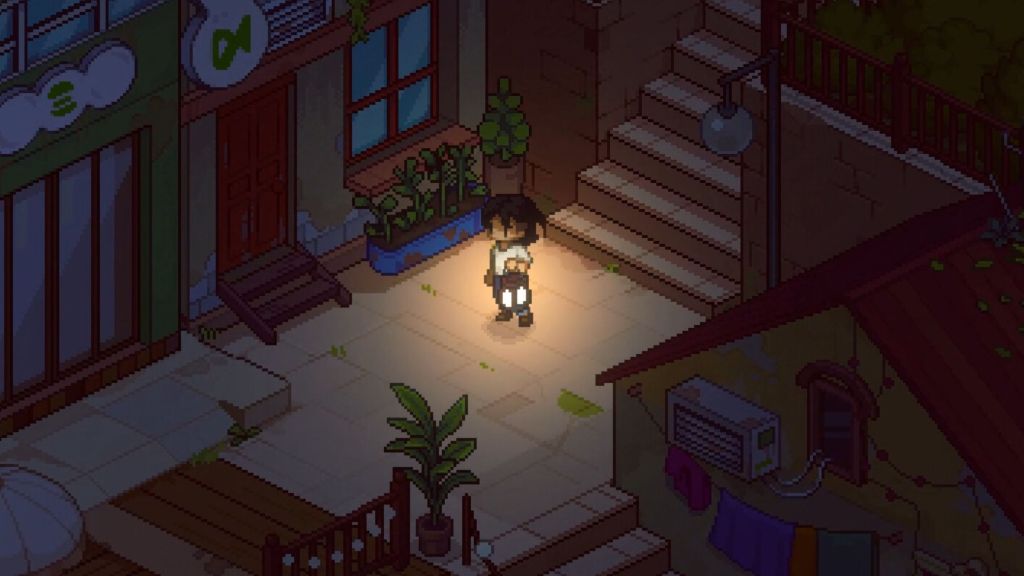
The art design is a great melding of the pixel art aesthetic and both genres, especially with the character design and just how quickly things can take a monstrous turn. How did the team land on this look for Grave Seasons?
Son M: We spent a lot of time deciding the height of the characters and the detail of the characters. If you go find the first screenshot posted when we were just testing the look, it’s much more chippy. We did lots of exploration on that. What’s the right size for characters so that they can still be cute but can show you the viscera when we murder them? We spent a long time negotiating and discussing the cozy style, but also the holistic pixel art direction.
[The monster designs] are a little bit more detailed and not pixel-perfect in specific ways… There was a lot of care put into how much detail you could get so that when something or someone was mucked up or destroyed or eviscerated, you could still read it very clearly and could feel the weight of that. We didn’t want to go too cute, where it was all infantilized a little bit and became a little too hard to discern, but we also didn’t want to go too much into detail.
Emmett Nahil: We really wanted to nod to some of our inspirations from older farming sims without leaning directly to them as a sole point of influence. We have a lot of different sources of visual inspiration. Bringing in those diverse points of interest really shapes the visual style of the game, which has helped it evolve throughout the development process.
Son M: I’ll always brag about the art team. All the lighting is hand-painted. Every color change, every light source, every impact to a character, that’s hand-done. There are no wide swap filters; there is no light source that’s actually in a 3D space. It’s all 2D painted, and it’s gorgeous.
I’m haunted by the amount of work it took to make a 2D isometric plane. I only see things and grids in 2D spaces in isometric [Laughter]. I remember when we started Grave Seasons, we were like, ‘Yeah, let’s make it isometric.’ We don’t really see it a lot in farming sims. You usually get 3D or chopped down.
Then we built it, and we said, ‘Oh, we know why now.’ I’m so happy with it because I love how it looks and how it feels. I love that you can run through the crops and they shake and all of that good stuff. I think the surprise was how much effort it would take to get to a point, and how happy we are that we made it.
Grave Seasons comes to Nintendo Switch, PlayStation 5, Xbox Series X/S, and PC on August 14, 2026.
More Gaming
-
Image Courtesy of Fast Travel Games/Bethesda Softworks/Capcom