There’s a contradiction at the heart of many open-world games where developers spend years building enormous environments for players to explore anyway they please, only to suddenly become very particular about what they’re allowed to do once a mission begins. Take a different route? Mission failed. Try an unexpected approach? Mission failed. Use a perfectly reasonable tool that the game has used hours teaching you to use? Somehow, also mission failed. It’s a frustrating disconnect, particularly when the whole appeal of an open-world game is supposed to be the freedom to make your own decisions.
Videos by ComicBook.com
For this reason, among others, Rockstar has spent a long time refining its approach to mission design. Grand Theft Auto IV is an encouraging step toward resolving that contradiction. The studio has made a conscious effort to accommodate different approaches instead of constantly pulling players back toward one prescribed solution. Allowing for player agency is one of the most powerful tools a developer has, and it’s something the entire industry could stand to embrace more often.
GTA 6 Shows Why Missions Shouldn’t Punish Players for Experimenting
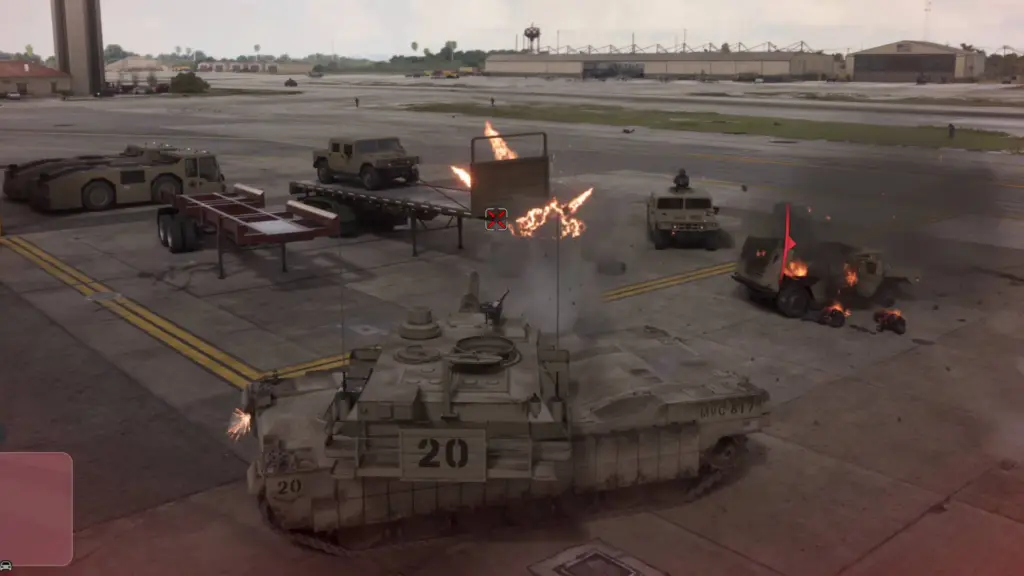
Rockstar’s approach to mission design has been controversial on the small scale for quite a long time now. Their open worlds encourage players to experiment with practically everything, but that freedom can disappear the moment a story mission begins. GTA 5 and Red Dead Redemption 2 are particularly familiar examples of this disconnect, with missions that often expect players to follow a very specific sequence of events. You might have an entire arsenal at your disposal, yet suddenly find yourself unable to use a particular weapon because the mission expects something else. Even wandering too far from the intended route can bring an abrupt end to an otherwise successful attempt. There’s a difference between guiding players toward an objective and insisting they complete every step exactly as the developers imagined.
GTA 6 makes a welcome effort to loosen those restrictions, and that becomes apparent within the first few hours. Missions feel less concerned with keeping players on a predetermined path, giving them more room to improvise when things don’t go according to plan. Whether you’re approaching an objective from an unexpected direction or finding your own way out of a dangerous situation, the game is more willing to accommodate decisions that might once have resulted in an immediate mission failure. It doesn’t mean every situation has countless possible solutions, but there’s a greater sense that players are allowed to figure things out for themselves. That’s a meaningful shift in how Rockstar approaches the relationship between its authored missions and the people playing them.
I particularly appreciate that this doesn’t require Rockstar to abandon what makes its storytelling work. There are moments when a mission needs to deliver a specific sequence of events, and giving players complete control over every interaction would make that considerably harder to accomplish. There’s a considerable amount of space between a completely scripted sequence and an experience with no creative direction. GTA 6 demonstrates that developers can preserve the moments they want players to experience without dictating every single step required to reach them.
Player Agency Is What Makes Games Worth Remembering

The games that stick with us most are the ones that give us something to talk about afterward because of something we did, not something obviously pre-ordained. Maybe a carefully planned encounter went completely sideways, or an unexpected decision created a situation the developers somehow anticipated. Those moments can be far more memorable than a perfectly choreographed sequence because they belong to the player. When you are responsible for that insane sequence of events that somehow let to a success, that distinction makes an enormous difference in how we remember an experience.
This why player agency should always be an absolute priority for developers across practically every genre, even those built around relatively linear narratives. A tightly authored adventure doesn’t need branching storylines or dozens of different endings to give players meaningful control. Sometimes it’s enough to let someone approach a combat encounter with their preferred strategy instead of insisting they use a particular ability. Other times, it means allowing players to interact with an environment in ways that feel natural rather than arbitrarily restricting them because the designers only accounted for one solution. Those decisions might seem relatively minor during development, but they can completely change how someone experiences a game. More importantly, they give players ownership over the moments they’re creating.
There’s a reason people love sharing stories about the ridiculous things that happened during their playthroughs. Those experiences become personal in a way that a developer’s carefully constructed set piece rarely can, even when that set piece is spectacular. I don’t want every game to become an immersive sim, nor do I think developers should sacrifice their creative vision in pursuit of endless possibilities. But there’s a difference between giving players a story to experience and giving them the tools to make that experience their own. GTA 6 is a strong step in the right direction, that those two things don’t have to work against each other. I’d love to see more developers recognize just how much that freedom can add to their games.
Do you prefer open-ended missions that let you experiment, or more tightly scripted experiences designed around a specific vision? Feel free to scribe your thoughts in the comments below.