It seems like all the internet can talk about right now is Xbox Project Helix, the upcoming console destined to set the gaming world ablaze, although perhaps not in a good way. Rumors are snowballing into a deadly storm of disappointing half-truths, official statements about the console are unbelievably vague and unhelpful, and the general direction of Xbox as a company remains largely in flux as the new leadership team decides what of its predecessor’s decisions it should renage on. Simply put, it isn’t a particularly fun time to be an Xbox fan, especially one hoping to feel any modicum of excitement about the next-gen console.
Videos by ComicBook.com
While Project Helix has been 10-years in the making, I can’t help but feel a little concerned that not only will it fail to live up to expectations, but it could end up splitting the fanbase even further, potentially dismantling it entirely. There is a lot to be worried about with Project Helix, and these fears have been exacerbated further with the introduction of Xbox’s new leadership and their potential shift in approach to certain aspects of the business model. It isn’t just concerning that Project Helix could be a financial failure and maybe even lead to the downfall of the brand, but also that so many of us will lose access to our favorite franchises altogether.
Xbox Project Helix Is Destined To Fail

In theory, Xbox Project Helix should be an easy win for the studio, especially as it is rumored to be more powerful than the PlayStation 6. It is an opportunity for renewal, to bring back the core Xbox crowd that abandoned the brand in favor of its competitors after the somewhat disastrous Xbox One era. Promoting a healthy lineup of exclusives and lowering the price to make it an affordable entry point for both returning fans and newcomers seems like a logical solution to the dwindling sales numbers Xbox has suffered for the past few years. Unfortunately, that isn’t the direction Project Helix is allegedly going in.
To be absolutely clear, Xbox’s leadership team has been exceptionally vague when it comes to the next mainline Xbox console. Beyond announcing its existence and the project name, we know very little about it or the strategy surrounding it. So, naturally, much of my doom and gloom stems from speculation and rumor, but not unfounded ones. It has been very well documented that the next Xbox will cost an absolute fortune, with some analysts and journalists speculating it’ll cost a minimum of $1,000. For context, at launch, the Xbox Series X cost $499, which would only be around $620 today, adjusted for inflation.

Sarah Bond more or less supported this claim by referring to the console as a “very premium and high-end curated experience“, and the understanding that it is a PC-console-hybrid would also further cement the notion of it being prohibitively expensive. Many suspect that it will largely take the guise of a home console version of the Xbox ROG Ally X, a device that, by all accounts, is well-beloved by those who can afford it (for context, it cost $999 at launch). All of this, at least to me, is extremely concerning. The shift away from a console experience will push those who want gaming to be an affordable and simple hobby, while also not particularly appealing to those who predominantly play on PC, as they typically want a greater level of control over the customization of their hardware. More importantly, it ultimately means people will become priced out of their favorite franchises.
Xbox Might Be Pricing Out Fans Of Their Favorite Franchises
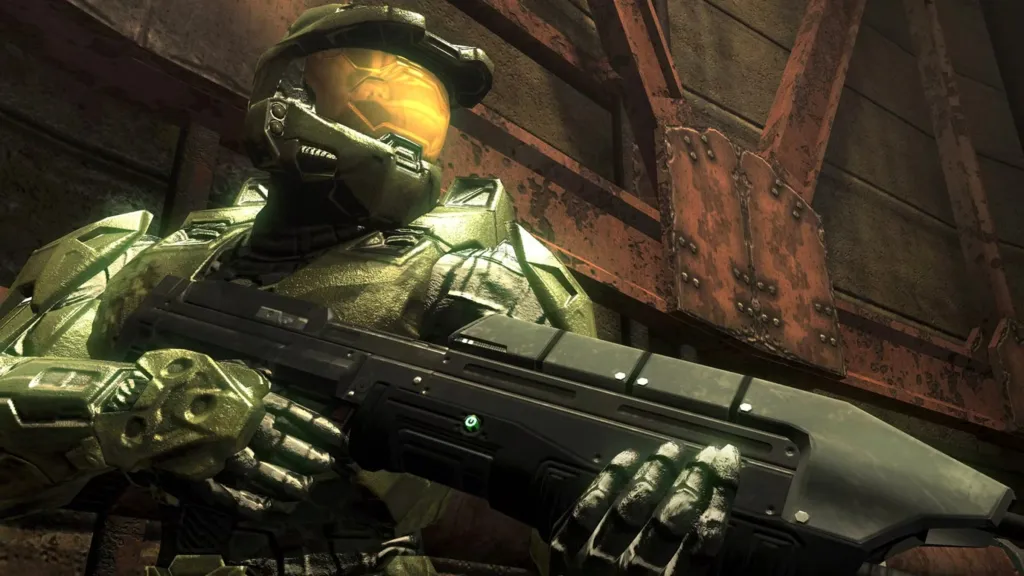
As gaming has become more widely adopted, franchises have been allowed not just to blossom into multi-million dollar successes, but also to foster impressive communities that feel an intense sense of adoration for them. Xbox, owing to its domination of the seventh-generation era of consoles, has done this to a staggering degree with the likes of Halo, Gears of War, Forza, and many more. Even as the company floundered in the Gen 8 and Gen 9 eras, people still continued to flock to its well-beloved IP to try out the latest experiences. Not even Halo 5 could kill Halo, and that is really saying something.
Xbox will almost certainly want to leverage those franchises to boost sales of its next console, even if its multi-platform approach has proven financially successful. It is not cheap to develop a new console, especially one as allegedly high-end as Project Helix is reportedly turning out to be. Even with the high price-point, Xbox will want to give consumers a reason to switch to it beyond simply being more powerful. Additionally, Xbox’s new leadership team has largely been suggesting that it will begin to pivot away from its multi-platform approach, especially after the actions of Phil Spencer and Sarah Bond proved controversial internally.
Matt Booty, Xbox’s new EVP and CCO, recently told Windows Central that “[Xbox’s] studio system is fully built around being first-party. We’re not built to just be a publisher.” Should this be the case, and Xbox returns to producing more exclusives, or at least makes its games exclusive for a few years, then Project Helix’s alleged price becomes all the more alarming. Halo will no longer just be a $70 or $80 game, but one that requires an initial investment of $1,000+. Of course, you could argue that there has always been the need to buy an exceptionally expensive piece of hardware upfront to access any games, but for that price, one could purchase a Nintendo Switch 2 and an Xbox Series X and still have a little money left to spare.
At this point, who is winning? As aforementioned, I can only imagine Project Helix will sell poorly if it launches with a pricetag of $1,000+, fans won’t be able to access their favorite franchises if they’re used to help sell the console no one will buy, and those who bought into the PlayStation ecosystem with the expectation that Xbox had gone multi-platform will be left disappointed. If Xbox does launch its first-party games on its competitor’s platforms, then there really will be no incentive to spend so much money on the new Xbox, and its sales will dwindle even further, likely leading to the death of Xbox as a hardware brand. In a situation in which no one wins, one can only wonder what the point of it all truly is.
Xbox Project Helix Could Change Gaming Forever
I think the aspect of all of this that worries me the most is how it will affect gaming as a hobby. Even as movies, TV, and reading have gotten more expensive, they remain somewhat affordable for the masses. We’re a long way off the cinema becoming as prohibitively expensive as the West End or Broadway, and reading will likely remain an extremely cost-effective form of entertainment for those who enjoy it, especially with the rise in digital books, which, logically, cost less than their physical counterparts.
Gaming, however, is an entirely different kettle of fish. It started off being extremely expensive as it was deemed a niche, albeit one with plenty of room to grow. As it began to broaden its appeal, it felt as if the gaming industry was shifting to produce more affordable experiences. Games got cheaper, consoles had cheaper variants, and the rise in platforms like Steam catered to the booming indie scene, which saw the creation of near-endless affordable entertainment the likes of which the movie and publishing industry simply could not keep up with.

Xbox Project Helix is a slap in the face to this progress to make gaming a more inclusive, accessible, and affordable hobby. It, of course, isn’t the start of the end, as the rise in $80 games and the fixation on technological advancements, alongside the real-world part shortages caused by shifting political and social tensions, have been spelling the downfall of gaming as a hobby for quite some time. However, it is particularly damning for a recognizable brand that has been catering to the affordable side of the hobby with the likes of the Xbox Series S, to forgo all pretences of affordability in favor of a boutique console. It establishes a bad pretence that opens the floodgates for its competitors to follow, much like the theatre industry before it.
You could argue that PCs are expensive, and Project Helix is merely trying to fit into that market. However, at least there are cheaper alternatives to the high-end PC market, such as the Steam Deck, original ROG Ally, or even less powerful laptops or second-hand PCs. Project Helix is exclusively entering the higher end of the PC market with the intention of appealing to a more hardcore crowd, which goes against the whole point of consoles in the first place: devices designed to eschew the expensive nature and complexity of PC gaming. I hope I am wrong and that Xbox Project Helix ends up being substantially cheaper than we all thought, because, at the end of the day, art should be accessible to all. If we want to inspire the next generation to create the entertainment we so desire, then it is best not to prohibit them from enjoying it with extortionate price tags.
Are you worried about Xbox Project Helix? Leave a comment below and join the conversation now in the ComicBook Forum!
Most Viewed
-

Image courtesy of Warner Bros. Pictures -

Image Courtesy of Netflix