The Super Mario Bros. franchise has been a foundational part of the gaming landscape for forty years, with several different iterations of the character coming to life over a dozen consoles. At its core, the series is typically driven by a pick-up-and-play ethos that leans more into fun than anything else. However, thirty years ago today, an unexpected spinoff took the opportunity to prove that Mario could be something more.
Videos by ComicBook.com
Super Mario RPG: Legend of the Seven Stars debuted on the SNES in North America on May 13, 1996. A fusion of Square’s RPG mechanics and Nintendo’s most prolific franchise, the game is a delightful little fantasy-adventure that laid the groundwork for plenty of great games that followed. Still, thirty years later (and with the recent remake still fresh in the memory), it’s worth noting just how radically the game reinvented the already established Mario formula and how the series could continue to take inspiration from those tweaks.
Super Mario RPG Proved Mario Can Be A Narrative-Driven Experience
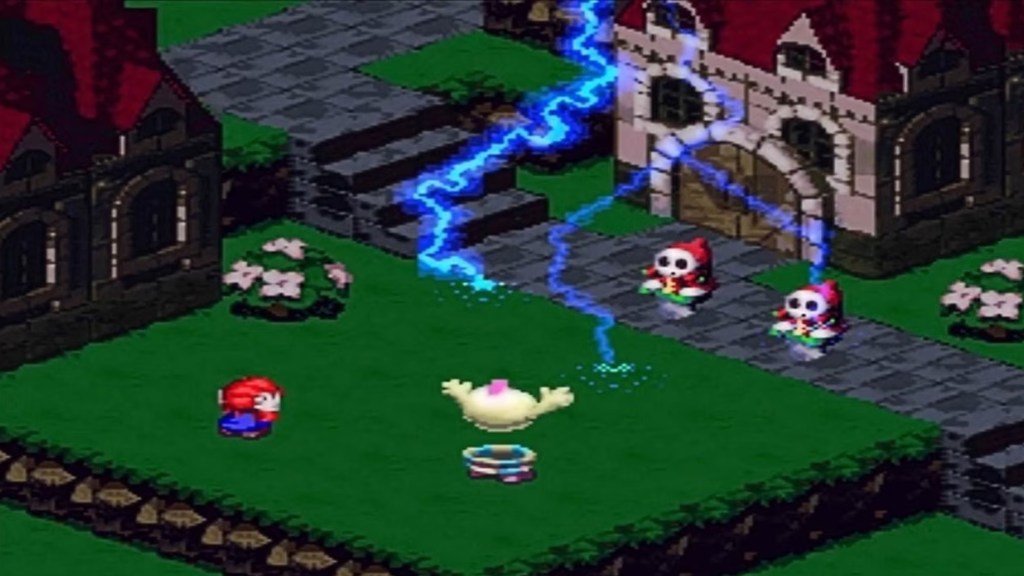
Super Mario RPG was a very crucial early example of the franchise’s potential as a narrative-driven story, which has influenced many of the best 21st-century iterations of the character — and needs to keep being a driving factor in Mario game development. At the core of Super Mario RPG is the underlying fantasy adventure that the developer has long been famous for, with all the globe-trotting exploration and worldbuilding that entails. While that was common ground for Square Enix when the game was developed, it was a major shift for Mario.
Up to that point, the narratives in Super Mario games were largely non-existent or conveyed completely in side-scrolling adventures. Super Mario RPG made a much better case for Mario and his cast as genuine characters with distinct personalities, something that has been refined in subsequent games starring the plumber and the characters in his orbit. Actually getting to go on a winding adventure as Mario was a blast, leading to further exploration of the RPG genre with Paper Mario and Mario & Luigi — as well as a greater emphasis on straightforward but clear narratives for games like Super Mario Sunshine, Super Mario Galaxy, and Super Mario Odyssey.
Giving Mario’s adventures a new sense of stakes felt by the characters and the player alike improved the game and made it far more compelling as an experience. While there’s a certain delightful sense of whimsy to the non-stop adventures of most Mario games, actually giving the characters a storyline helped connect the specific game with the player. Giving Mario new enemies to confront and new allies to team up with gave the game a sense of uniqueness that helped the story stand out. Super Mario Bros. games have always been fun, charming, and engaging, but Super Mario RPG proved they can also have larger storylines that really stick with players afterwards. It’s a trend that other games in the series refined, and a creative drive that modern entries in the series should keep trying to build upon.
Super Mario RPG Played With The Conventions Of The Franchise In Key Ways
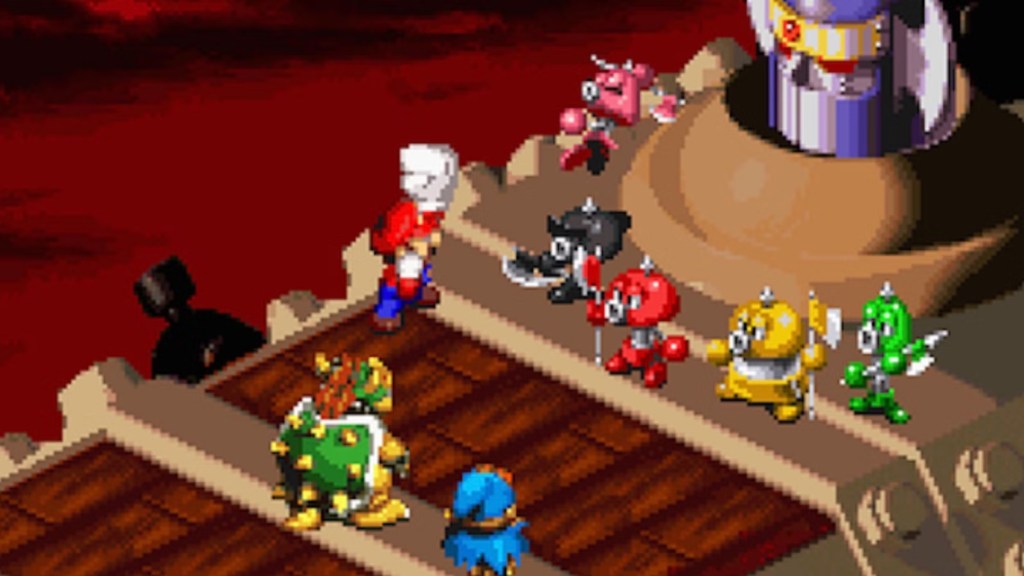
The Super Mario RPG wasn’t just a reinvention of the gameplay format of Mario but the narrative structure as well. Released a decade after the first Super Mario Bros. became a fundamental console gaming title, Super Mario RPG feigned a typical narrative of pitting Mario against Bowser for Peach’s fate before switching things up by introducing the Smithy Gang. The threat posed by the Smithy Gang forces Mario to team up with plenty of new faces. On top of also making Peach a party member and giving her more agency as the story went on, the game also played a key role in reinventing Bowser. This game added a cartoonish sense of personality to the King of the Koopas, an interpretation that has lived on alongside the character’s more fearsome moments.
Subverting expectations and pairing Mario up with his greatest enemy was a fun way to raise the stakes and keep the player guessing, while also highlighting the ease with which Mario’s antagonists could be quickly turned into protagonists or, barring that, unexpected allies. Future Mario games should embrace that natural inventiveness, especially after so many mainline entries in the series have largely kept Bowser in the lead villain role. Beyond that, Super Mario RPG threw in plenty of new characters to keep things interesting and move the plot along.
The fact that otherwise obscure characters, like Genos, still get so much love from Nintendo fans speaks to how effective a new character or two can be within the larger recurring cast of regular Mario characters. There’s room for more character invention that bounces off the established dynamics without wholly reinventing them. Super Mario RPG laid the groundwork for the character-driven adventures and memorable side characters of Paper Mario and Mario & Luigi games, but has never been quite matched in terms of introducing truly memorable characters or subverting narrative expectations. Future Mario games should take inspiration from that approach as they continue to evolve the character and his world.
More Gaming
-
Image Courtesy of Fast Travel Games/Bethesda Softworks/Capcom