For decades, fighting games have lived and died by their competitive scene. Players buy them for ranked matches, tournaments, and the endless pursuit of mastery. Franchises like Street Fighter, Tekken, and Mortal Kombat remain relevant because of the competition they bring. The downside is that newcomers and casual players are often intimidated by complex mechanics and skilled players. Even as someone who has grown up playing fighting games like the ones mentioned above, Soulcalibur, Super Smash Bros., and more, I want more from the genre.
Videos by ComicBook.com
That is why Virtua Fighter Crossroads immediately caught my eye. While the game’s technical fighting system looks impressive, the biggest surprise was its ambitious story mode. After seeing the in-depth look at its narrative, I am sold. Story modes are often second thoughts or not even included in this genre, but if Virtua Fighter Crossroads is successful, we could see that change at last. By putting narrative and character development front and center, Sega and Ryu Ga Gotoku Studio may have found a way to expand the audience for fighting games while giving longtime fans something they have rarely received from the genre.
Fighting Games Have Ignored Casual & Offline Players for Too Long

One of the biggest challenges facing fighting games has always been accessibility. Modern titles include tutorials, training modes, and beginner-friendly control schemes, but many players still feel overwhelmed. Even someone who has played fighting games all their life, I rarely rise past Silver in the genre. It takes players hours to master the skills needed to climb the ladder, learning mechanics before they can fully appreciate what makes these games special. That can be a difficult sell compared to genres that offer immediate narrative hooks or progression systems.
Historically, Virtua Fighter has been one of the most mechanically demanding fighting game franchises ever created. The series helped establish the foundation for 3D fighting games when the original Virtua Fighter launched in 1993, influencing countless titles that followed. The series has long been known for its depth, precision, and focus on realistic martial arts. However, the story has rarely been a major selling point. In fact, most entries provided only minimal narrative context compared to competitors.
But Virtua Fighter Crossroads is taking the opposite approach with this. Rather than treating casual players as an afterthought, the game appears designed to welcome them into its world. The extensive narrative showcase revealed a level of investment in characters, locations, and storytelling rarely seen in fighting games. If players become attached to the cast through narrative experiences, they are far more likely to stick around and learn the deeper mechanics later. Having the story mode focus on four brand new fighters is a clever way to show how the game was designed for newcomers, allowing them to get into the series through an in-game set of fresh perspectives.
Virtua Fighter Crossroads Feels Like the Spiritual Successor to Shenmue
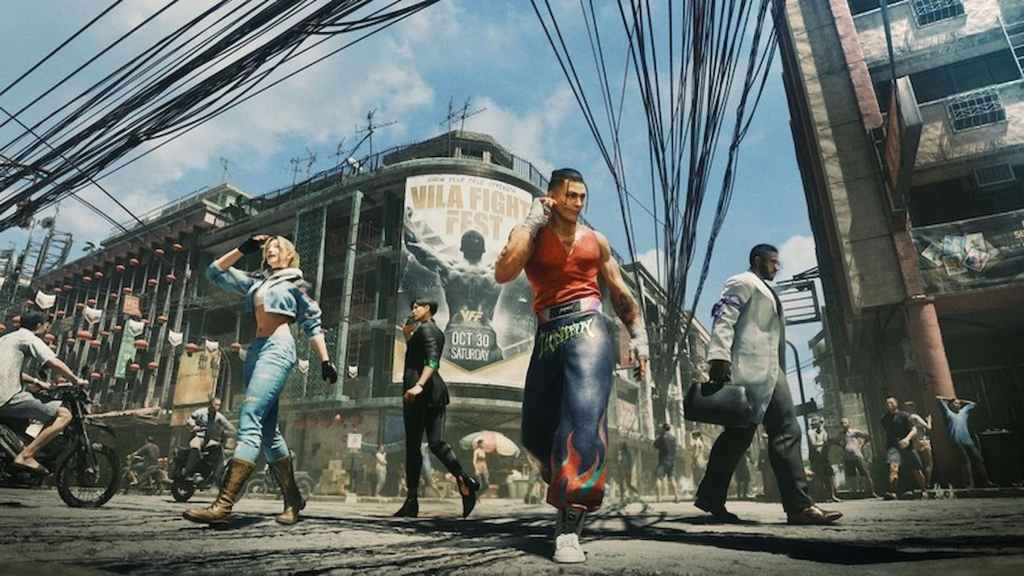
The moment I watched the latest footage, one thought immediately came to mind: this feels remarkably close to a modern Shenmue. Both series have always focused heavily on martial arts but taken different approaches. These have now collided in Virtua Fighter Crossroads, and it is plain to see the vision. Sega’s history and a focus on martial arts, world-building, and character-driven experiences, and Virtua Fighter Crossroads appear to be borrowing ideas that helped make Yu Suzuki’s legendary adventure series memorable.
From what we know, Virtua Fighter Crossroads’ story mode will feature exploration, narrative choices, side activities, and a living setting built around martial arts culture. The campaign takes place in Vilasapara, a fictional city centered on martial arts, and follows multiple protagonists throughout a larger narrative. Ryu Ga Gotoku Studio’s involvement is particularly notable given the team’s experience creating rich story-driven experiences through the Like a Dragon franchise. The grounded world of the series is perfect for this take on a fighting game story mode.
The comparison to Shenmue becomes even stronger when looking at community reactions. Many fans immediately noticed the similarities between the game’s narrative focus and Sega’s beloved adventure series. That connection could give Virtua Fighter Crossroads a unique identity within the fighting game market. Rather than simply competing with Tekken 8 or Street Fighter 6 on mechanics alone, it offers something fundamentally different. Players who are not traditionally interested in spending hours grinding to compete can still enjoy the genre through a focused narrative, and that makes Virtua Fighter Crossroads special.
Virtua Fighter Crossroads Is the Fighting Game I Have Been Waiting For
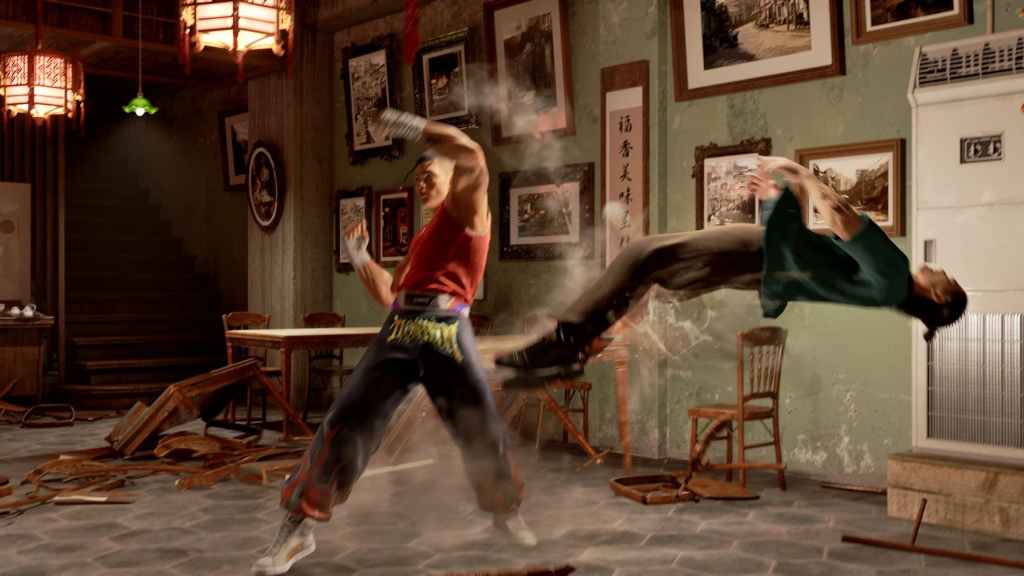
The most exciting aspect of Virtua Fighter Crossroads is what it could mean for the future of the entire genre. Fighting games have traditionally struggled to tell compelling stories because narrative often exists only to justify matches between characters or teach players mechanics gradually. Even franchises known for extensive lore usually deliver it through cutscenes scattered between fights or in-game text. That approach rarely attracts players who primarily enjoy narrative-driven games. Even Soulcalibur, one of my favorite fighting game narratives, suffers from this.
Virtua Fighter Crossroads looks to be the game I have been waiting ages for, because it can finally change that about the fighting game genre. Even the brief look we received shows that the story mode is far more involved than anything we’ve seen. The project also features notable creative talent behind its narrative, including David Hayter, known for his work as the voice of Solid Snake and as a screenwriter. Combined with Ryu Ga Gotoku Studio’s storytelling expertise, there is reason to believe Virtua Fighter Crossroads could raise expectations for single-player content across the genre.
The expanded narrative focus creates opportunities for new characters to make a major impact. Fighting games often struggle to introduce fresh faces because players have limited opportunities to connect with them outside of combat. A robust story mode solves that problem by giving newcomers screen time, motivations, and relationships that players can follow throughout the campaign. Virtua Fighter Crossroads could become one of the most important fighting games of the modern era, not because of a new combat mechanic, but because of its willingness to rethink what a fighting game can be by embracing story, character development, and exploration.
What are your thoughts on Virtua Fighter Crossroads? Leave a comment below and join the conversation now in the ComicBook Forum!