If you have spent any real time with Where Winds Meet, you have probably noticed how carefully paced it feels. Progression is meant to unfold slowly, systems layer in over time, and the world gives you room to breathe instead of pushing you forward. That pacing is part of the game’s identity, which is why the newly revealed global roadmap immediately stands out. The global version is not following the same release order or timing as the original build, and that difference is already changing how the game feels.
Videos by ComicBook.com
With the recent rollout of version 1.1, that gap has become impossible to ignore. The global version is pulling in content from far later updates from the original, with features confirmed as late as version 1.7 already making an appearance, including a boss encounter tied to that future update. On top of that, progression systems like Breakthroughs are happening much faster than they did in the original. Everstone and NetEase are clearly restructuring the global version’s release cycle, en masse, and if you care about how this game plays and evolves, that shift matters.
How the Global Roadmap Deviates From the CN Timeline
When Where Winds Meet originally launched in China, its update cadence was slow and intentional. New regions, mechanics, and story beats arrived in a specific order that made the world feel cohesive. Each update assumed you had spent time learning what came before it. That structure supported the game’s grounded tone and made progression feel earned rather than rushed.
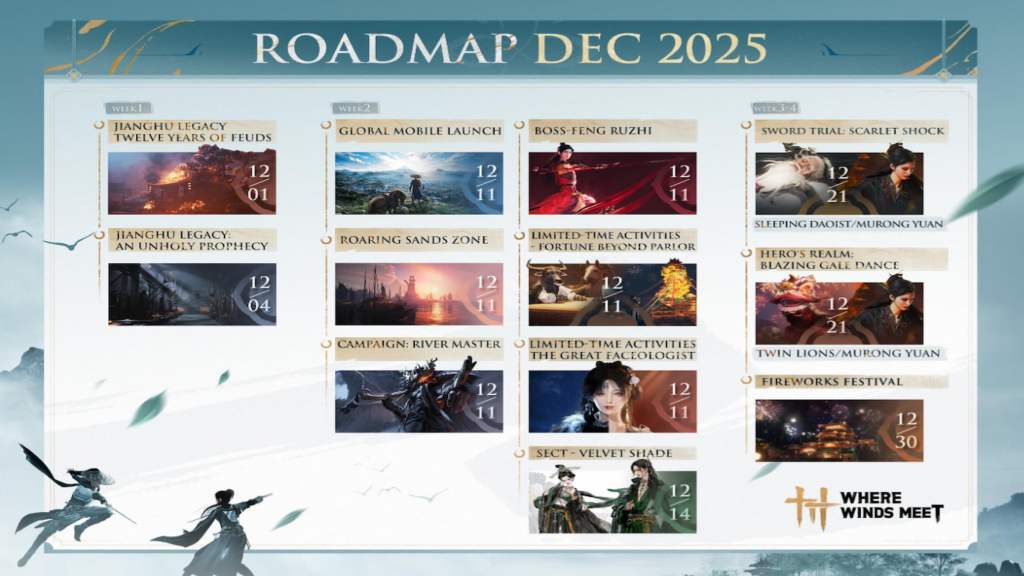
The December 2025 global roadmap throws that structure out almost immediately. Version 1.1 alone includes content that the CN version did not see until much later in the game’s life. This is not speculation driven by community theory crafting. Developer communication has directly confirmed that the global version is designed to catch up faster, even if that means reshuffling the original timeline. Instead of recreating the original’s experience step by step, the global build looks to be fast-tracking content.
Another clear example of this shift is the Breakthrough schedule. In the original version, Breakthrough milestones were spaced out over considerably longer periods, with some that stretched over the span of a month. In the global version, those same milestones are already arriving much sooner. Progression jumps are already happening faster, and the time between Breakthroughs is noticeably shorter. It is a fundamental change in how quickly the game is moving forward in terms of content releases.
What These Changes Mean Moving Forward
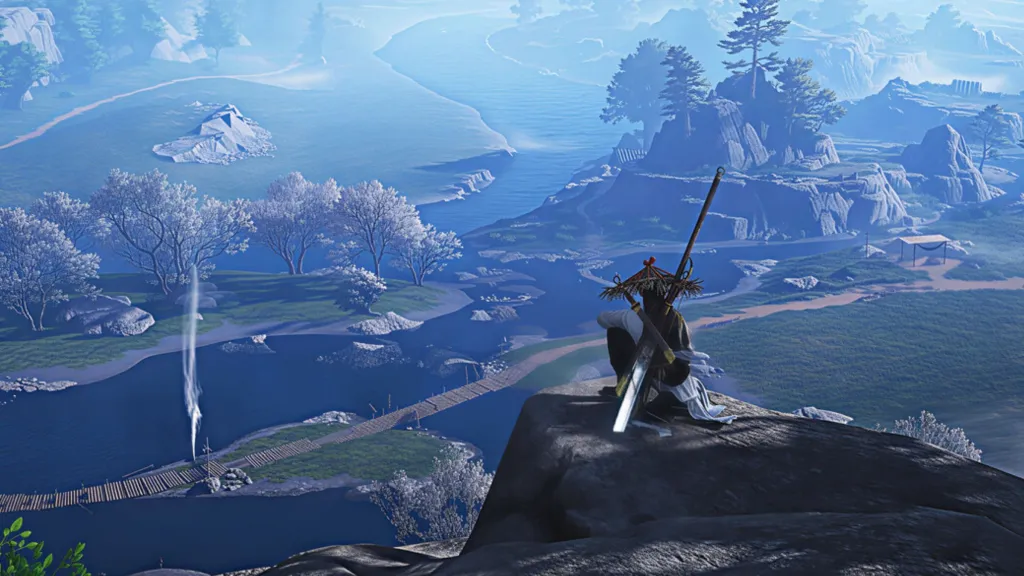
From a surface level, the faster pace can feel great. There’s less downtime to be concerned about; we’ll be getting new content at a much brisker pace than the original version. We get access to deeper systems earlier, and tougher bosses show up sooner. There is always something new waiting just around the corner. If you have been watching the original version for a while, it can feel like the global release is skipping the line and heading straight for the highlights.
That speed does come with tradeoffs, though. When content arrives earlier than originally planned, some of the natural buildup gets lost in translation. Most of that mentioned build-up is largely tied to the story, but we may also unlock mechanics before the game fully explains their place in the world. We may face encounters that feel like they belong later in the journey. Whether or not this is a good thing is up to your interpretation. However, generally speaking, catching up to the original version is likely the ideal situation in the long run.
Looking ahead, this release strategy likely points to a long-term goal. By accelerating the global version now, Everstone and NetEase may be aiming to bring the global and original updates closer together in the future. A unified release schedule would make ongoing development smoother and prevent one version from constantly trailing behind the other. If that is the plan, then this early reshuffling is a calculated move rather than any sort of mistake. The roadmap that was released recently confirms this. In truth, we are experiencing a version of the game that is actively being reshaped for a global audience, for better or worse, in real time.
What do you think? Leave a comment below and join the conversation now in the ComicBook Forum!
Most Viewed
-

Image Courtesy of Studio Pierrot -
Image Courtesy of Madhouse -
Courtesy of David Production