With Halloween right around the corner, your Dungeons and Dragons group might be planning a special one-shot or other spooky adventure to celebrate the holiday. However, you may not know what kind of character to make, with so many builds for the iconic TTRPG rooted in ideas of heroism rather than something sinister. Thankfully, there are plenty of archetypes you could pursue for a much scarier role in your party, frightening your allies with strange abilities that can turn you into as much of a villain as the monsters you end up fighting.
Videos by ComicBook.com
Some common D&D archetypes for a “scary” or “spooky” build might be something like the Necromancer Wizard, who can summon undead creatures to fight alongside them. However, there are far more nuanced horror-themed paths to explore, especially with the newer release of Ravenloft: The Horrors Within, which includes several character options introduced to the game’s 5.5 Edition earlier this year. Players who want to get creative with any Halloween inspired build ideas should investigate classes that you might not typically associate with horror in any way.
5. The Haunted Rogue

| Background | Species | Class – Subclass |
| Mist Wanderer | Reborn | Rouge – Phantom |
The Phantom Rogue is a subclass that taps into the veil between life and death, helping opponents and allies alike make the transition to the afterlife through a sort of mystical connection with what lies beyond. These types of Rogues are often a spookier variant of an already edgy class, infusing strikes with energies of death itself to reap souls into trinkets that grant special abilities. When playing as a Phantom Rogue, your Sneak Attack and stealth options are enhanced by features like Wails from the Grave, where you can unleash Necrotic damage to multiple enemies in an AoE burst.
As you level up in this archetype, you gain the ability to harvest souls into Tokens of the Departed, which can be spent in various ways. For example, you can spend a Trinket of someone you’ve killed to grant yourself advantage on death saving throws, or use Wails of the Grave without any cost. Speaking to the dead combines with ghost-like movement abilities at higher levels, allowing your character to fly, pass through solid surfaces, and even be nearly impossible for your foes to hit. Rogues are already effective assassins and spies, but as a Phantom, you become a specter of death incarnate.
Try pairing this subclass with a couple of the new character options from Ravenloft: The Horrors Within, such as the Haunted One background. Not only does this Background grant you a bonus in Constitution to raise the Rogue’s normally poor health, but it also enhances the Rogue’s favorite ability score — Dexterity. You also gain a Dark Gift, with Mist Walker being perfect for this build by granting you the ability to leech enemy vitality and teleport out of the Grappled or Restrained conditions. As a Reborn species who has already died once, your connection with death can be explained, as well as give you knowledge of your past life and advantage on death saving throws.
4. Spreader of Rot

| Background | Species | Class – Subclass |
| Hermit | (Forest) Gnome | Druid – Circle of Spores |
The latest Unearthed Arcana (UA) playtesting for D&D introduced several Underdark themed archetypes for 5.5e, including the fan-favorite Circle of Spores Druid. Originally playable in base 5th Edition over the years, this new and improved version of the Spores Druid is a great alternative to the traditional Necromancer, giving your character the means to passively gain allies rather than dedicating themselves to complex spellcraft to do so. This subclass gains access to a Halo of Spores that can create telepathy with allies who breathe said spores in, already adding to the uncanny nature of the build.
At the same time, the Circle of Spores Druid can reactively use their spores to damage enemies, eventually creating fungal-infested zombies from those they kill. In time, a small army of zombies may look like a scene out of The Last of Us, with the creatures even able to explode and spread more spores at high enough Druid levels. Resistance to certain conditions and access to great spells like Blindness/Deafness and Confusion make this subclass incredibly disruptive in a fun way, making them instantly memorable within your party.
One build you could try is pairing the Gnome species with the Hermit background, giving you access to more magic tied to nature. A Forest sub-species of Gnome gains Minor Illusion and Speak with Animals, giving you a way to interact with the natural world beyond your innate powers. You also gain advantage on Intelligence, Wisdom, and Charisma saving throws this way, with your strange magic fortifying you against other spell casters. Through the Hermit background, you gain the Healer Feat, a skill that’ll let you heal party members and zombies should they get hurt. Other boosts to important Ability Scores through this background also give this build more direction than you’d expect.
3. It’s Alive!!

| Background | Species | Class – Subclass |
| Investigator | (Infernal) Tiefling | Artificer – Reanimator |
Players looking to tap into their inner Victor Frankenstein might want to make a monster of their own in D&D, and thankfully, the game provides a build path for exactly that. The Reanimator Artificer is a subclass of the Intelligence-based Artificer, a class dedicated to the tinkering and creation of magic items and other tools. This archetype dedicates that Intelligence directly into making a Reanimated Companion, a loyal undead ally that follows your every command. This creature is born of special lightning this subclass controls through their magic, and can attack enemies, grow stronger, and gain new abilities as your character levels up.
You can modify your Reanimated Companion over time too, improving other qualities of it while making it a stronger fighter alongside your party. Some players may want their Companion to be nimble and fast, while others desire a tank-like juggernaut to make up for a party’s weaknesses. Either way, this type of Artificer can customize their Companion in a variety of ways, while also learning special magic like Enhance Ability, Lightning Bolt, Blight, and Animate Dead over time. With the Artificer’s natural skills already granting the class Arcane Infusions and magic item creation, the Reanimator can easily be one of the most broken subclasses in D&D.
For those worried that townsfolk will try to burn their beloved creation with torches and pitchforks, perhaps the Infernal Tiefling species could help with that. Tieflings are already classic D&D options, with darkvision to help discover graveyard parts for your monster. Yet, a Tiefling with an Infernal legacy also has resistance to Fire damage, with the ability to cast it on others through the Fire Bolt and Hellish Rebuke spells. By taking Investigator too, you can gain a boost to your Artificer’s Intelligence, gaining both Insight and Investigation skill proficiency along with the Sharp Eye Feat. This buff lets you take the Search or Study actions with advantage on the skill check roll, making your Reanimator versatile for many unique situations.
2. Dark Forest Protector

| Background | Species | Class – Subclass |
| Haunted One | (Wood) Elf | Ranger – Hollow Warden |
The Ranger class doesn’t often has as many interesting options as other D&D archetypes, but Ravenloft: The Horrors Within dropped the perfect Halloween option for players who want to make the role work. The Hollow Warden Ranger is based entirely in folk horror, representing an ancient and bloodthirsty terror lurking deep within the old places of the earth. Characters draw power from those forces, taking on frightening appearances to becoming merciless guardians of wild places that others would threaten to destroy or corrupt. In gameplay, this manifests through several powerful spells the subclass learns, such as Phantom Steed and Wrathful Smite.
When you take this subclass, you can adorn Ancient Armor that provides protection to your character and damages enemies near you. An aura called Wrath of the Wild transforms a use of the Ranger’s Favored Enemy into a ghastly transformation, causing you to terrify foes and retaliate against their attacks faster should they harm your friends. As you get stronger, the Hollow Warden gives you ways to regain health while preventing enemies from doing the same, combining strong self-buffs with equally potent debuffs for others. Fear empowers your violence, easily making this archetype one of the most interesting D&D developers have made for the Ranger in years.
A Wood Elf is perfectly suited for this build, as they have an increased Speed and the ability to make their mobility even better with spells like Longstrider in their arsenal. Pass Without Trace is another spell this species gets, giving you a way to be a lurking shadow in the hollow spaces you protect. Keen Senses improve your Insight, Perception, and Survival too, with the species type also giving you a Fey Ancestry that doesn’t let you be charmed easily. Choosing the Haunted One background gives you a much-needed Wisdom boost, while also giving you the Survivor Feat, a skill that gives you a chance to roll higher on Initiative or escape being charmed or frightened during battle.
1. Death’s Own Speaker
| Background | Species | Class – Subclass |
| Wayfarer | Halfling | Bard – College of Spirits |
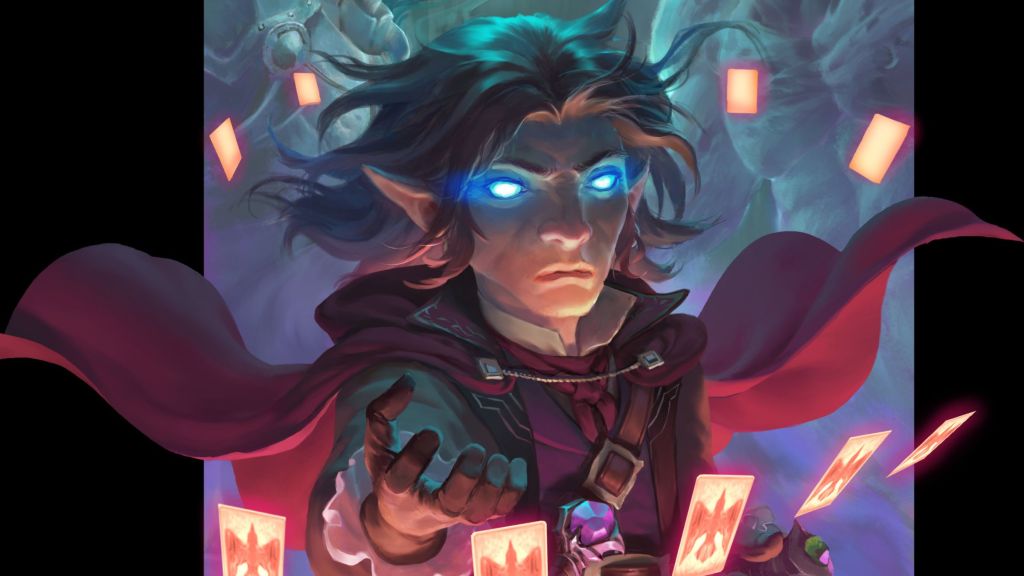
Arguably the greatest build you could make for a Halloween D&D game would be one tied to the College of Spirits Bard, a subclass dedicated to creating communication between the living and the dead. Not only is this build amazing for role-playing opportunities, but it comes with several abilities that are narratively rich during battle. This type of Bard comes with the usual magical flair of the Bard class, but lets you summon a variety of spirits at random, who all do something different in combat. At Level 3, you gain Spirits from Beyond, a core ability that lets you spend a use of Bardic Inspiration to call upon a spirit from the afterlife.
Each spirit does something distinct, such as the Fortune Teller giving you advantage on d20 checks, or the Shade making you invisible for a temporary amount of time. A Beloved, Sharpshooter, Avenger, Renegade, Wayfarer, Coward, or even Arsonist are all possible to channel through this skill, and that’s not even all the types of spirits available. 12 unique ghostly spirits can let you call upon powers from beyond, which only get better as you level up. Some deal damage, others buff your allies, but generally all the effects provided by the Spirits from Beyond table are positive ones that can turn the tide of battle in an instant.
You almost couldn’t go wrong with a background for this build, but the Wayfarer is definitely one of the most thematic. This origin gives you a boost to the Bard’s Dexterity and Charisma, improving the skills the class needs to have the most. At the same time, you gain the Lucky feat, which gives you Luck Points to spend on advantage for your rolls or disadvantage for enemy rolls. Pair this with a Halfling species that gives you even more Luck to work with, and your College of Spirits Bard will be one that turns randomized outcomes into twists of fate powered by the souls of the departed.
What D&D build would you want to use for a Halloween themed one-shot? Let us know in the comments below!
More Gaming
-

Courtesy of The Dreamer's Guild