Few franchises in gaming have produced as many iconic and memorable heroes as Final Fantasy. Across decades, the series has introduced players to characters who feel larger than life, driven by complex motivations and placed in worlds filled with political conflict, magic, and personal struggle. Cloud Strife is easily one of the most recognizable characters in the industry, and he played a major role in defining what players expect from video game protagonists, and Clive Rosfield carries that torch in the latest entry.
Videos by ComicBook.com
However, not every protagonist has had quite the impact as Cloud. Over time, both early and modern Final Fantasy games have introduced main characters that feel disconnected from their own stories or lack depth. Sometimes it comes down to writing, other times design or narrative focus. Each of these five Final Fantasy protagonists struggles in their own way, whether through weak characterization, limited involvement in the plot, or a design that fails to stand out.
5) Noctis
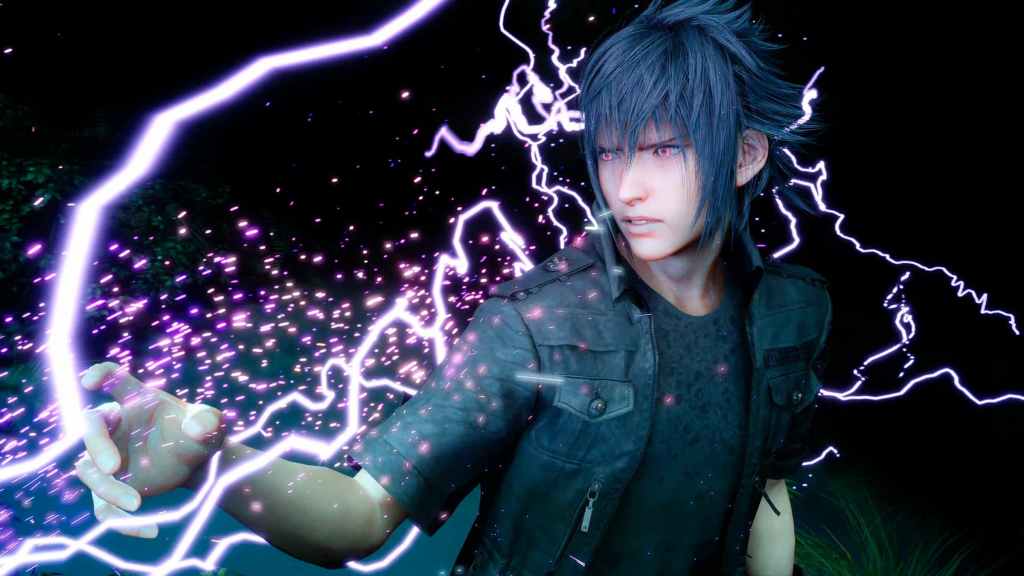
Noctic Lucis Caelum is one of the most controversial characters in Final Fantasy. As the lead of Final Fantasy XV, he has everything you’d want in a protagonist, at least on paper. His character has strong potential; a prince burdened by destiny, forced to grow into a leader while dealing with loss and responsibility. The foundation is solid, and there are moments where that potential shines through.
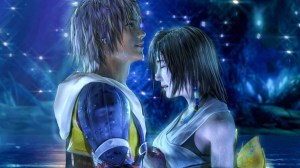
The issue arises with how Square Enix delivers his story. Much of Noctis’ development is spread across external media, including films and DLC. Players who only experience the base game often feel like key parts of their arc are missing. This creates a disconnect where his emotional moments do not always land as intended because the buildup is not fully present within the game itself.
His design is a bit weak compared to other protagonists. It fits the overall Final Fantasy aesthetic but with a more grounded, contemporary look. But it ends up blending in with the world thanks to the all-black attire, especially considering his three companions are also all dressed in black. Noctis isn’t necessarily a bad Final Fantasy hero, but it’s his presentation that holds him back.
4) Vaan
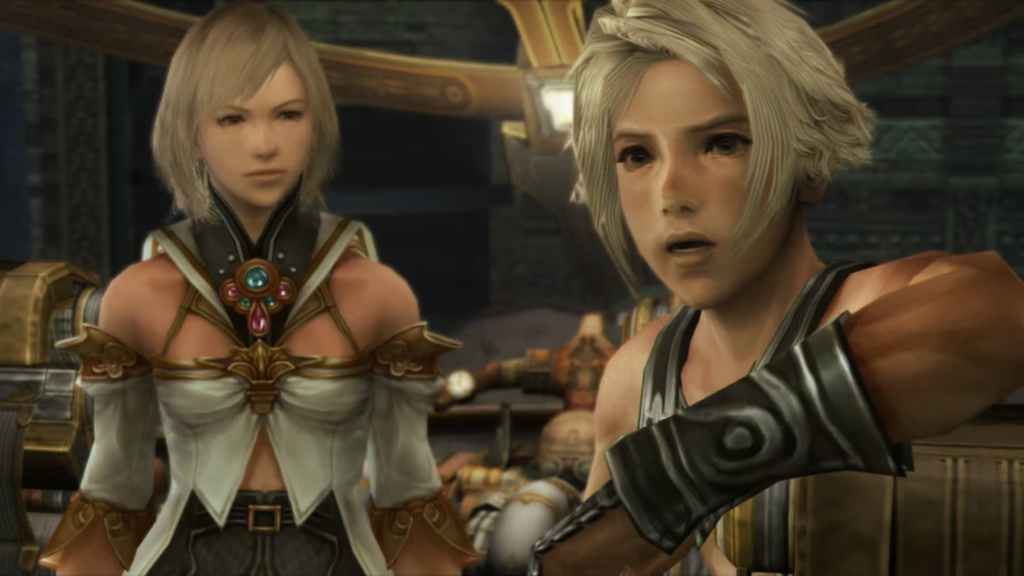
In Final Fantasy XII, Vaan is the protagonist, but he really feels unnecessary to the story. The narrative heavily focuses on political intrigue, war, and the struggles of the nations, with other characters such as Ashe and Baltheir driving the plot forward. Their motivations and stakes are obvious and play a crucial role in Final Fantasy XII. The same cannot be said for Vaan, which could be because the character was added later in a forced request by Square Enix executives.
The result is a character that feels more like an observer than a central figure. His forced role in Final Fantasy XII makes little sense, as his goals feel small-scale and his influence is minimal. He was added to give players a younger and more appealing protagonist, but this had the opposite effect. Many players found it difficult to connect with him as the lead, considering how other party members feel more important to the narrative and game’s events.
His design is also somewhat forgettable. He looks like a mix of Zidane from Final Fantasy IX and Tidus from Final Fantasy X. His aesthetic leans into the young adventurer, but feels heavy-handed and shows just how much Square Enix was trying to force him into the leading role. Vaan ends up fading into the background of the world and the cast of Final Fantasy XII.
3) Bartz
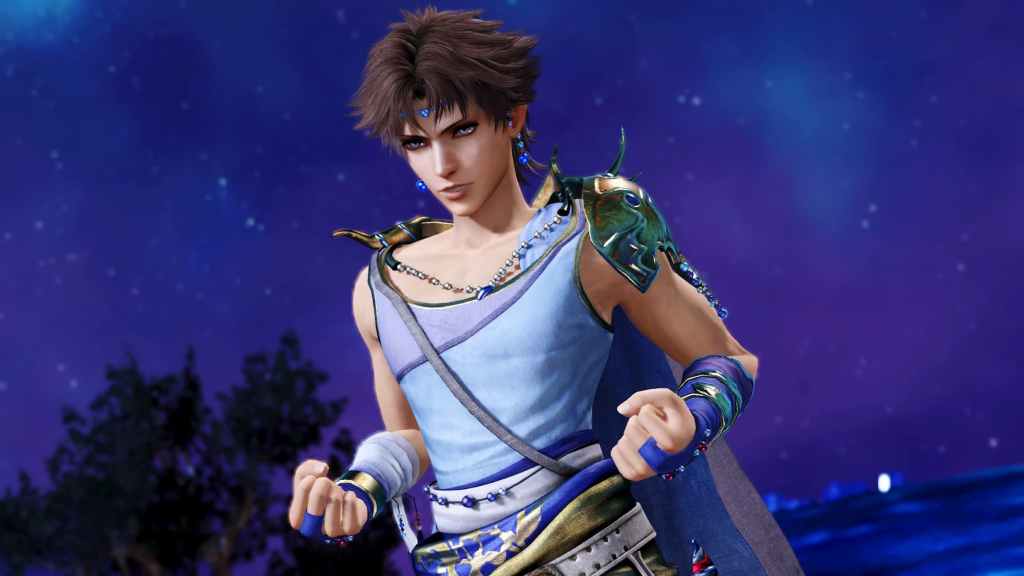
Bartz Klauser from Final Fantasy V represents a different kind of issue. He is not a poorly written character, but rather one who lacks the depth seen in later protagonists. His personality is lighthearted and adventurous, fitting the tone of the game, but it rarely goes beyond that. This could be an issue of the early Final Fantasy games that were more focused on job systems and gameplay mechanics, neglecting the story and characters somewhat.
Bartz also had to follow Cecil, one of the most compelling protagonists in the early games. He was also succeeded by Terra, a fan favorite hero in the series. Overall, Bartz feels like a vehicle for the player rather than a fully realized individual and leans more into the classic fantasy hero archetype rather than diving into deep character development.
Visually, Bartz’s design reflects this. His design is clean and recognizable and could fit within many fantasy games. While it has a himbo design that matches his carefree and spirited personality, it doesn’t have the same distinctive flair as other Final Fantasy protagonists do. Compared to more complex characters in the series, he can feel forgettable despite being part of a strong overall game.
2) Firion
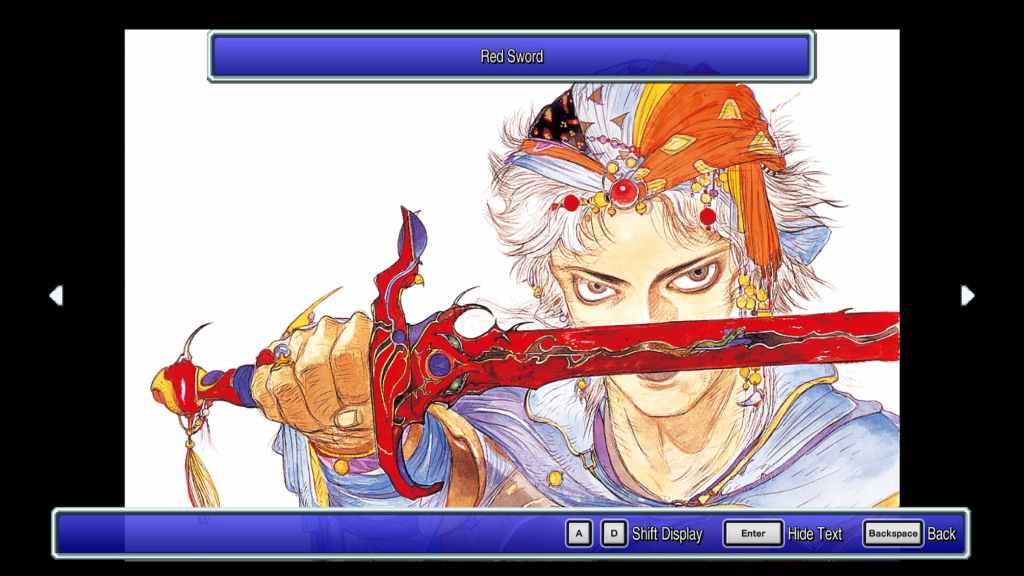
Firion is the lead of Final Fantasy II and suffers because of this. While Square Enix introduced a stronger narrative focus compared to the first game, Firion still struggles to leave a lasting impression. His character is defined largely by his role in the rebellion against an empire. While this gives him a clear goal, his personality is not explored in much detail.
Much of his dialogue and motivation feel generic, especially when compared to the more nuanced characters that would come later in the franchise. This becomes apparent as Firion interacts with the world and its characters. Many of his interactions could easily have been replaced with another character, and it wouldn’t have had a major impact on the plot. This is likely an issue of the early Final Fantasy titles, and Firion could have seen more development in a later game.
Another issue with being Final Fantasy II is the early hardware limitations. His design does not stand visually in his own game, but later versions and spin-off games gave more depth to Firion’s design, and it actually looks good. This isn’t enough to save him, especially compared to other Final Fantasy heroes. Ultimately, he serves his role in the story, but he rarely rises above it, making him one of the less memorable leads in the series.
1) Luneth
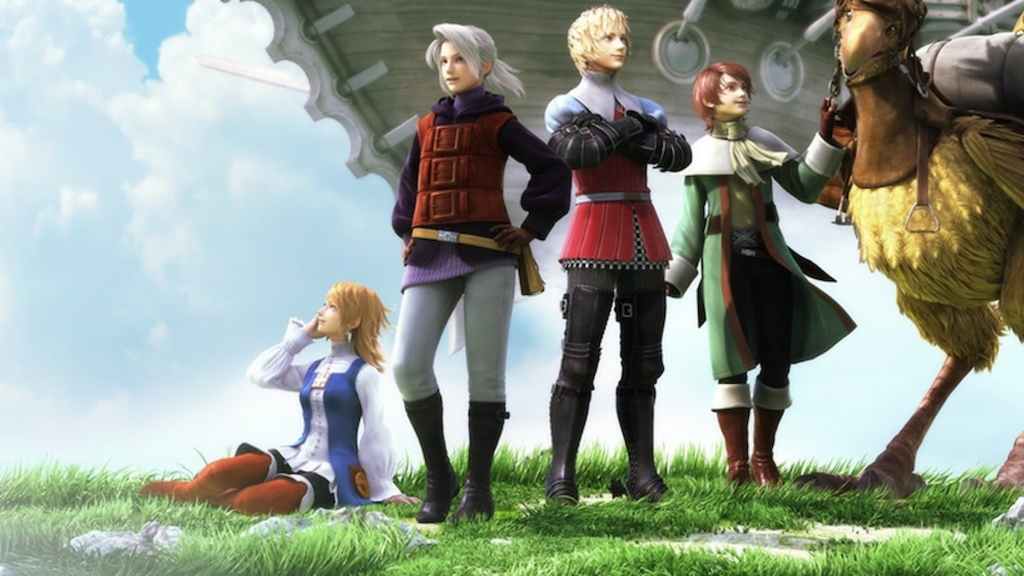
If any character suffered because of early limitations, it was Luneth.In the original version of Final Fantasy III, the heroes were blank slates; four orphans given the title of the chosen ones. Later remakes and spin-offs introduced them with proper names, but they still felt like limited characters with little true definition. This lack of depth is Luneth’s main issue.
While the remake gives him a personality, it remains fairly basic and does not evolve much throughout the story. He fulfills the role of a hero chosen by fate, but the narrative does little to explore his internal struggles or growth. Luneth is present throughout the story but not particularly impactful. The plot focuses more on the broader quest and the world itself rather than his personal journey. Additionally, Luneth is one of four chosen ones in Final Fantasy III, further showing how irrelevant he is.
His design is probably one of the most generic in the series. He doesn’t come across as a Final Fantasy protagonist but rather an NPC in some random fantasy world. Ultimately, Luneth represents a transitional period in the series where character-driven storytelling had not yet fully developed. Compared to later protagonists, he feels like a placeholder rather than a defining hero.
What do you think? Leave a comment below and join the conversation now in the ComicBook Forum!
Most Viewed
-

Image Courtesy of Crunchyroll -
Image Courtesy of TOHO