Almost a decade ago, a movie that looked like just another entry hit theaters. It was a thriller arriving in the middle of several others making waves at the time, like Split, Baby Driver, and Atomic Blonde. But then, unexpectedly, it started impacting everyone who watched it, and it didn’t rely on monsters or brutal murder sprees to do that. It wasn’t a CGI-heavy blockbuster or a sequel to an explosive franchise either. What set it apart was its ability to make audiences feel deeply uncomfortable in a way that crept up on them, using situations that could absolutely happen in real life. It’s the kind of film you walk out of still thinking about, because it’s disturbingly easy to realize how terrifyingly real its story actually feels.
Videos by ComicBook.com
And it didn’t take long for critics and cinephiles to rally around it, either. Yes, it was a psychological horror movie, but it was also much more than that. It delivered social commentary on a sharp, intelligent level, all wrapped inside a deceptively simple premise. Even today, it’s considered a modern cinematic masterpiece, and arguably the most artistically significant movie of the century so far.
Get Out Is a Brilliant and Unmatched Work of Cinema
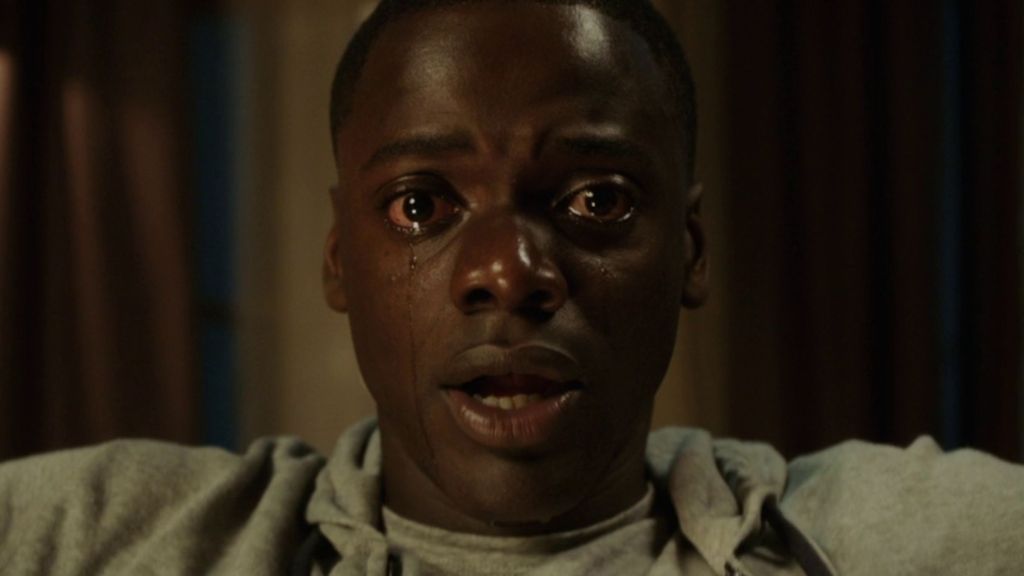
It might sound like over-the-top praise, but in this case, it’s absolutely earned. Get Out, directed by Jordan Peele, was released on February 24, 2017, and follows Chris Washington (Daniel Kaluuya), a Black photographer who travels to spend the weekend with the family of his white girlfriend, Rose Armitage (Allison Williams). At first, it seems like a normal family visit. But slowly, an uneasy energy begins to take over. The family is polite, progressive on the surface — but something is off. Chris starts noticing small tensions, strange expressions, and awkward comments that hint at something darker underneath. As the plot unfolds, he realizes he’s trapped in a psychological nightmare filled with pure tension and horror. And the movie builds that discomfort minute by minute without relying on traditional jump scares.
Get Out is iconic because it keeps the audience feeling unsafe the entire time. That’s the experience, and it’s completely intentional. There aren’t any obvious villains, because the horror lies in normalcy: It’s the friendly smile hiding manipulation and the casual conversation that quietly turns threatening. In its essence, the film is a sharp analysis of modern racism disguised as liberalism, politeness, and good intentions. It argues that the real danger for Black people doesn’t only come from blatant attacks, but from systems, attitudes, and microaggressions that mask exploitation and violence. That’s why every detail matters: a look, a gesture, or a seemingly harmless comment. This is horror that works on your mind, since it makes you think while making you uncomfortable.
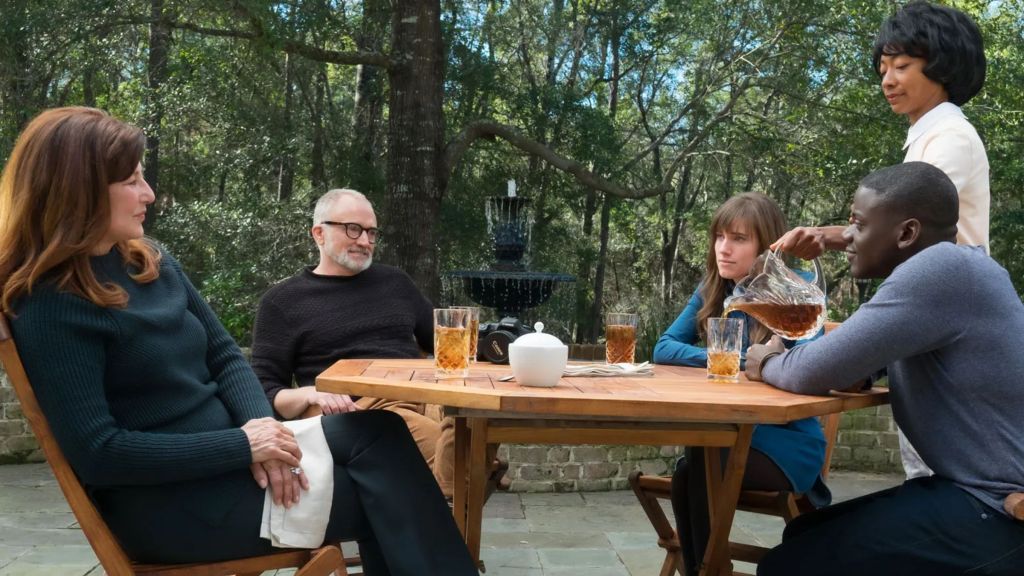
And Kaluuya is absolutely essential to why the movie works. He’s the emotional anchor, bringing vulnerability, intelligence, and fear in a way that connects the audience to Chris’ experience. Then there’s Allison Williams as Rose, who perfectly balances charm with an unsettling ambiguity — you never feel completely safe watching her, and that tension is exactly what keeps the film on edge. And even the supporting characters serve a very specific purpose: they aren’t just background noise; each one behaves just strangely enough to heighten the feeling that Chris is trapped inside the Armitage house, turning it into a psychological and social prison that feels suffocating.
Also, of course, you can’t talk about Get Out without mentioning the production design and cinematography. To achieve what the movie sets out to do, strong writing and performances alone wouldn’t have been enough. The colors, lighting, and framing are carefully crafted to unsettle the audience from the very beginning.
The Sunken Place scene? It’s iconic for that exact reason. Missy (Catherine Keener), the Armitage family matriarch, hypnotizes Chris and sends him into an altered state of consciousness. During the session, he falls into a dark, empty void where he can see what’s happening in the real world but can’t move or speak. It doesn’t rely on spectacle to shock you. And when you think about that scene, it’s honestly hard to find another horror sequence that’s both that disturbing and that layered with meaning.
Get Out Almost Didn’t Get Made

Made on a budget of around $4.5 million, Get Out went on to gross over $250 million worldwide, opening doors for other filmmakers (shoutout to Ryan Coogler, who later made history with Sinners) and changing how Hollywood views the genre. It earned widespread acclaim, was named one of the best films of 2017 by major institutions like the American Film Institute, and received four Academy Award nominations: Best Picture, Best Director, Best Actor, and Best Original Screenplay — winning the latter. But did you know the film actually started as more of a personal creative exercise for Peele than a commercial expectation?
When the director began writing Get Out, he wasn’t even sure it would ever get made. At the time, he was primarily known for comedy, especially because of the success of Key & Peele. The idea that he would debut as a director with a socially driven horror thriller seemed risky to studio executives.
Peele himself has said in interviews that he wrote the script almost as a creative test, with no guarantee that Hollywood would finance a horror film centered on structural racism and led by a Black protagonist who wasn’t a superhero or a genre stereotype. “It started as a fun project. I didn’t know it was ever going to get made. I’d go home, smoke a little bit of weed and I would write,” he told The Hollywood Reporter. “I would watch this movie in my head, this movie that I wish somebody would write for me to watch and that was it.”

And honestly, the cultural context at the time didn’t make things easier. While public discourse suggested America was “post-racial” after 2008, Peele felt the opposite — there was a growing discomfort that mainstream cinema rarely addressed directly. So he saw an opportunity to explore that modern fear. Still, turning that into a marketable horror film didn’t sound like a safe bet. To give an idea, Peele even mentioned in an interview with Vulture that after reading the script, Kaluuya questioned whether they would get in trouble for telling this kind of story.
Peele has explained that he wanted audiences to openly discuss race, including white viewers who might never have been forced to confront that kind of discomfort in a movie theater. He didn’t want a villain shouting racial slurs; he wanted to expose the racism that hides in plain sight, embedded in everyday life, even when people pretend it isn’t there. It’s about recognizing nuance, and possibly recognizing yourself within it. That’s a bold idea, and a necessary one. And it’s exactly what modern filmmaking should be about.
If the industry’s conservative instincts had prevailed, we might never have seen this film on screen. Fortunately, they didn’t, and it became a cultural landmark. Get Out shifted expectations, set a new standard for socially conscious horror, and proved that sometimes the riskiest ideas are the ones that matter most. It’s powerful, it’s influential, and still today, it remains unparalleled.
Get Out is now available to stream on HBO Max.
What do you think of the movie? Leave a comment below and join the conversation now in the ComicBook Forum!
Most Viewed
-

Image courtesy of Tor Books/Macmillan -

Official art by Bastien Lecouffe-Deharme