Although more than a decade has passed since the Star Wars sequel trilogy began with Star Wars: The Force Awakens, these movies—which fans largely consider to be among the worst Star Wars movies—are still a hot button issue within the fanbase. While Star Wars: The Rise of Skywalker is broadly considered the worst of the three, particularly because of its “Somehow, Palpatine returned” plot twist, all three movies have received ample criticism, with The Force Awakens being criticized for seeming too similar to A New Hope and Star Wars: The Last Jedi getting hate for a multitude of reasons. Perhaps the biggest grievance with the latter, however, was the fact that Luke Skywalker’s characterization didn’t match what many audiences wanted.
Videos by ComicBook.com
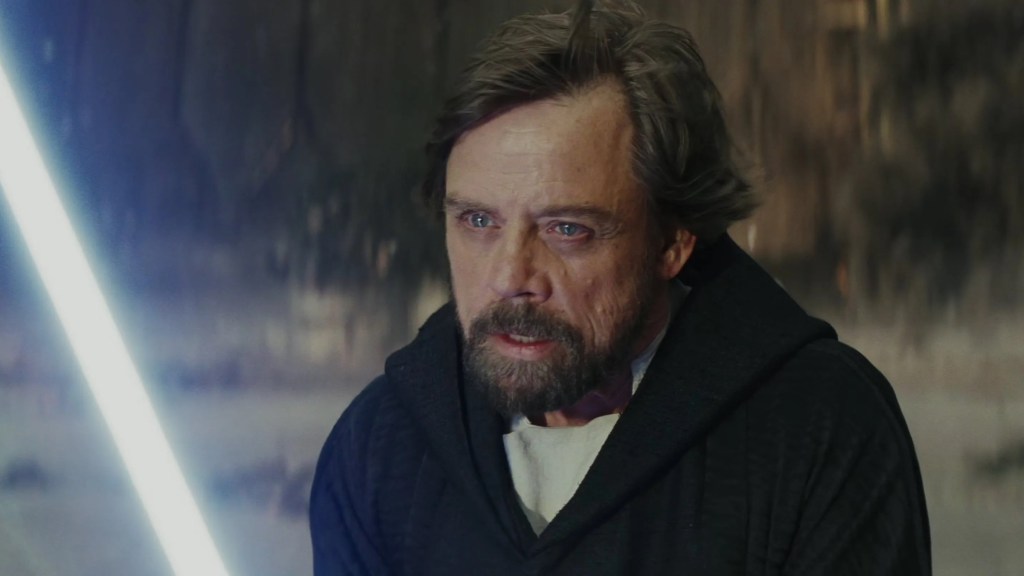
Specifically, although The Force Awakens had already established that Luke had exiled himself and effectively given up on the Jedi, the New Republic, and apparently the larger galaxy as well, which certainly limited what The Last Jedi could do in terms of the character, viewers were not pleased to see The Last Jedi’s representation of Luke as someone who had completely lost hope. This makes sense, considering that so much of his personality had been defined by a relentless hope and heroism in the original trilogy. It was therefore understandably difficult for audiences to accept this depiction. However, there were avenues through which this approach might have worked better, as one unused The Last Jedi poster proves. Unfortunately, it just didn’t come together.
The Last Jedi Wasn’t Clear About the Focus

One of the biggest complaints Star Wars fans have about The Last Jedi’s specific character choices (in addition to the aforementioned frustrations over how Luke is portrayed) is the focus on Rey over Luke. That complaint is certainly a complicated one, as there are several reasons, some more legitimate than others, regarding why audiences felt this way.
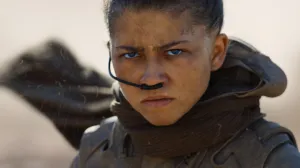
Yet, an unused poster for the movie reveals that this goes beyond just nostalgia or even a rejection of a heroine. Rather, the set up for The Last Jedi was downright confusing, because it wasn’t clear whether Rey was meant to be the focus. In the poster, for example, the image depicts Rey handing off the lightsaber to Luke, which heavily implies that the focus is on Luke—something that was also suggested at the end of The Force Awakens when Rey held the weapon up to Luke as well.
Yet, Luke being the recipient of the lightsaber and everything that image symbolizes, including when it was shown in The Force Awakens, wasn’t really front and center in The Last Jedi. Luke does have an iconic moment towards the end of the movie when he faces off against Kylo Ren, but even then, he’s not actually wielding his lightsaber in battle; this is just a Force projection. Outside of that sequence, Luke’s role in the movie is primarily as the person who is training Rey, which proved largely unpopular with audiences.
That is, in part, what makes this poster so notable. The passing off of the lightsaber to Luke is an intriguing concept, particularly because it positions Rey as the one passing the torch back to Luke—a reversal of the typical passing of the torch to the next generation. Unfortunately, while the movie did show Luke getting back in the game to a degree, it seemingly abandoned the focus on Luke depicted in this unused poster.
Star Wars’ Sequel Trilogy Had a Tug-of-War Problem
While there were, admittedly, many factors that contributed to the sequel trilogy being so negatively received, one of them was certainly the issue these movies had with a sense of tug-of-war—and I don’t just mean because J.J. Abrams and Rian Johnson clearly had very different visions for the trilogy. The sequels seemingly couldn’t decide whether they wanted to depict the passing of the torch to Rey, Finn, and Poe Dameron or if they were meant to be a valiant return of the original trio, full of nostalgia.
For example, the original trilogy informs every aspect of this story arc, from the fact that the characters are directly related to the villains and heroes of those movies down to the plot details including stormtroopers, a new take on the Death Star, the return of Palpatine, and more. Yet, at the same time, the movies seemed to push a new era centered on Rey, who, in The Rise of Skywalker, even adopts the Skywalker last name, and they skipped the opportunity to bring Han, Luke, and Leia together again on screen one last time.
Because of that inconsistency, audiences were frequently left frustrated, neither satisfied with the treatment of the original trilogy heroes nor given enough time to truly connect with the new characters and see them as the real focus of the movies. In the end, it’s difficult to say whether a different approach would have worked better, although the image depicted in this unused poster is a promising one—one that would have been absolutely fascinating to see.
More Movies
-

Official art by Bastien Lecouffe-Deharme


![Nicholas Galitzine Reveals the Big Change He Had to Make Filming The Mosquito Bowl After Masters of the Universe [EXCLUSIVE]](https://comicbook.com/wp-content/uploads/sites/4/2026/10/NG-Mosquito-bowl-excl.jpg?w=300)