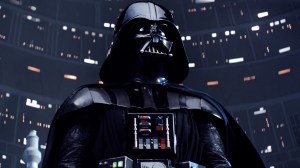
At first glance, Dune might seem like it’s all about sandworms, spice, and power struggles between noble Houses. But ever since Frank Herbert’s original novels, the franchise has used sci-fi as a way to explore power, politics, religion, and the traps of messianic thinking. And when the story was adapted by David Lynch, and especially by Denis Villeneuve, audiences were able to really connect with a universe where no one wins without consequences. To become such a rich, complex, and grounded story, countless characters carry part of that weight, whether they’re making tough decisions, surviving in the desert, or getting swallowed by prophecy. That’s what sets Dune apart from other sci-fi movies and franchises: here, even the heroes step into the story already knowing that leadership comes at a cost.
Videos by ComicBook.com
With that in mind, here are the 10 best characters in the Dune franchise, ranked from worst to best. It’s worth noting that many more characters appear throughout the broader story, but this list focuses only on those who have shown up in the movies so far.
10) Princess Irulan
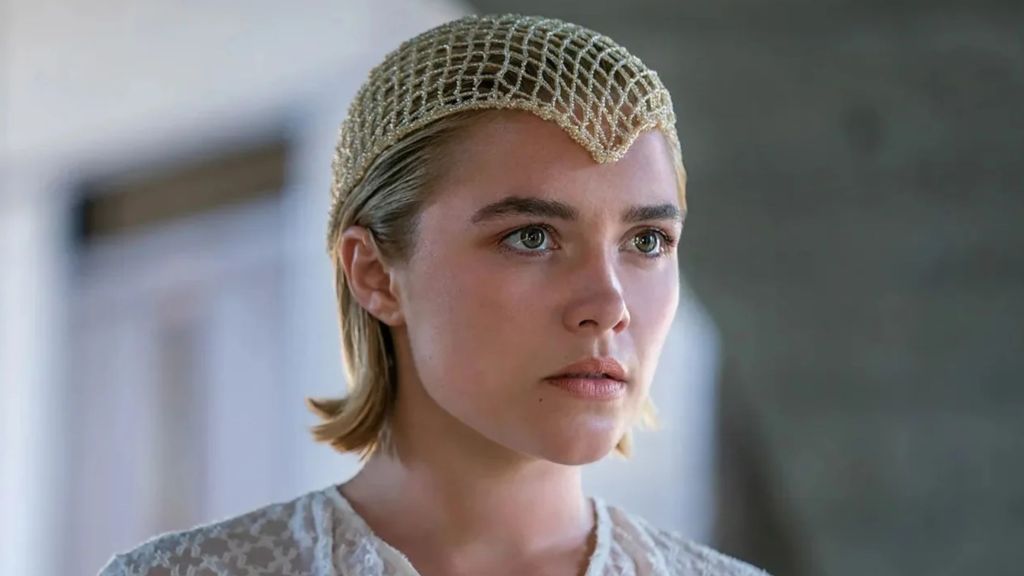
Princess Irulan first appears in Dune: Part Two, so at first, she might feel like a minor character. But her importance lies in how much she’s used politically, emotionally, and narratively. As the daughter of Emperor Shaddam IV, trained by the Bene Gesserit and forced into marriage with Paul purely out of convenience, Irulan becomes the perfect example of how the franchise treats alliances as cold transactions rather than emotional bonds.
And even though she doesn’t fight in battles or lead armies, she also helps legitimize the new regime and, more importantly, becomes the one who records history from the perspective of the winners. Irulan is a quiet, often frustrating presence, but an essential one, showing that power in Dune isn’t sustained by violence alone — it also depends on image, tradition, and narrative. Dune: Part Three is expected to explore this side of her even further.
9) Feyd-Rautha Harkonnen
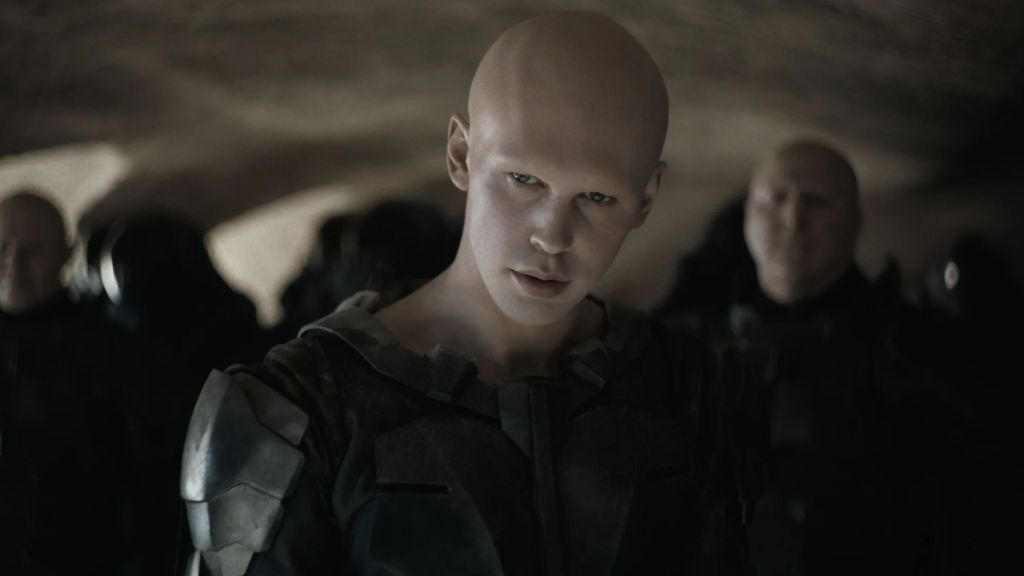
When you look at Feyd-Rautha, it’s clear that he’s basically what happens when you take Baron Vladimir’s cruelty and put it into a young, handsome, and lethal body. He exists to serve as Paul’s distorted mirror: both are heirs trained to lead, but while Paul carries moral weight and constant inner conflict, Feyd chooses to embrace violence as entertainment. He’s sadistic and prefers to solve every situation that way. In Dune: Part Two, every one of his scenes carries an immediate sense of danger, as if he could act impulsively at any second.
And yes, when you really break it down, Feyd doesn’t have much emotional complexity — he’s more limited within the story, which is why he lands at this spot in the ranking. But that doesn’t make him unimportant. Beyond being a real physical threat, Feyd ultimately represents the kind of leader the Empire keeps producing when no one steps in to break the cycle.

8) Baron Vladimir Harkonnen

In theory, Baron Vladimir functions as the story’s main enemy, since the rivalry between House Atreides and House Harkonnen runs deep. But within the franchise, he’s more than just the cruel villain. He’s patient, strategic, and understands how the Empire truly operates better than almost anyone — and that’s the real key. His destruction of House Atreides doesn’t come from impulse, but from long-term planning, using the political system itself to his advantage. He’s extremely intelligent.
At the same time, the Baron represents the ugliest side of Dune: blatant colonialism, the complete exploitation of Arrakis, and a total lack of empathy. He doesn’t just want to win; he also wants to humiliate, dominate, and make it clear who’s in control. He’s a classic antagonist, but with a brain, which obviously helps him stand out among many characters in the saga. Still, he ends up feeling more functional overall.
7) Gurney Halleck

Gurney is the kind of character who brings humanity into a universe overwhelmingly dominated by politics and prophecy. He’s a tough warrior (something we see early on when he trains Paul), but he’s also deeply shaped by trauma, especially because of the Harkonnens. But what makes him one of the most important characters is his unwavering loyalty to House Atreides, whether that’s while Duke Leto is still alive or later, when he reunites with Paul in Dune: Part Two.
His relationship with the protagonist goes far beyond mentorship: Gurney becomes a father figure, a battle companion, and a fellow survivor. And what makes him unique is that he doesn’t fight for destiny or visions of the future — he fights because he’s lost everything and still believes in staying loyal. In a story filled with characters driven by power, Gurney naturally stands apart for being driven by memory and for feeling like one of the closest things to a real person in the entire saga.
6) Duke Leto Atreides

Ask any Dune fan, and chances are Duke Leto ranks among their favorite characters in the saga. That’s because he represents a rare kind of leader; someone genuinely trying to do the right thing inside a system designed to crush people like him. He knows Arrakis is a trap, yet he still governs with dignity and fairness, seeking real alliances with the Fremen instead of treating them as disposable labor. That’s exactly why Paul always looks back to him when thinking about leadership.
However, Duke Leto dies in the very first film, and that moment becomes a major turning point for the story. But more than that, it’s when Dune makes one of its clearest statements: ethics, unfortunately, have an expiration date in this universe. Leto represents the last trace of human-centered leadership before the narrative fully plunges into fanaticism. His arc is only too short to place him any higher on the ranking.
5) Stilgar
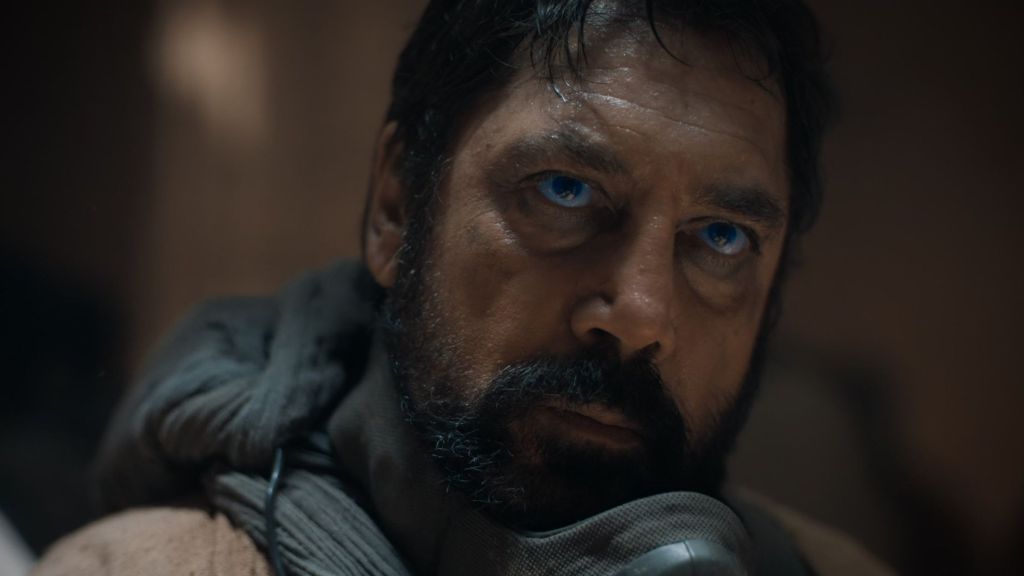
Stilgar first appears in Dune, but it’s in Dune: Part Two that audiences really begin to understand the scale of his importance within the story. He starts out as a firm, practical leader, but gradually becomes a deeply devoted follower of a messianic figure — and that arc is quietly brilliant. He’s strong, respected, and very much connected to Fremen traditions, yet eventually gets absorbed by Paul’s myth.
It happens so naturally that Stilgar becomes a perfect example of how even intelligent and especially experienced people can be swallowed by a larger narrative. He doesn’t turn into a believer out of naivety, but out of collective necessity. His journey shows that Paul’s rise isn’t just political, but cultural. Stilgar stands as one of the franchise’s clearest reflections of society itself. Still, while many fans would rank him higher, his trajectory is actually more reactive than protagonist-driven.
4) Chani
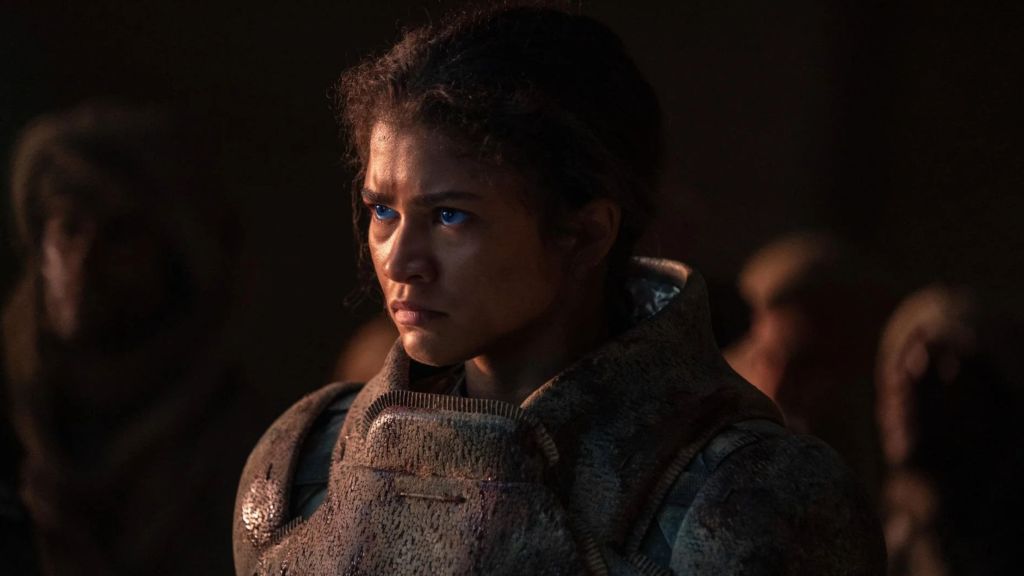
In the first movie, Chani barely appears (even though Paul’s visions make it clear she’s important), but in Dune: Part Two, she gets much more visibility, because that’s when her relationship with the protagonist begins, giving her more space. She’s the one who keeps Paul grounded while he turns into a walking symbol, and most importantly, she doesn’t treat Muad’Dib like a deity — she treats Paul like a person. That completely changes everything.
Chani represents the real Arrakis: daily survival, Fremen culture, and the consequences of political decisions. But unlike other characters who are human, her importance comes exactly from being Paul’s emotional anchor and preventing him from becoming a pure archetype. She reminds him of who he is. On the other hand, she rarely moves the story forward on her own, reacting to his choices more than creating new paths.
3) Lady Jessica

When it comes to the books, Lady Jessica probably wouldn’t rank this high, but focusing on the film franchise, she has far more screen time and narrative weight. She’s one of the true architects of the saga: her decision to have Paul already alters the entire course of events, and from there, she spends most of the story balancing motherhood, survival, and political manipulation.
She helps train Paul, helps build his messianic image among the Fremen, and quickly adapts to a brutal environment she was never prepared for. Jessica grows both externally and internally throughout the story, and many key moments happen because she’s been shaping things behind the scenes (not coincidentally tied to her Bene Gesserit training and later role as Reverend Mother). She’s always three steps ahead, understands the power game better than she lets on, and uses religion, tradition, and psychology as tools. Jessica is active on nearly every level of the narrative.
2) Duncan Idaho

It might seem contradictory to rank Duncan this high, considering the franchise hasn’t fully revealed his arc yet. But he’s far from a new character, and his position can be justified because, more than any other supporting character, he embodies the Atreides ideal of loyalty, courage, and sacrifice — values that directly shape Paul’s choices. On top of that, he’s charismatic, deadly, and fully dedicated to those he serves. His sacrifice to protect Paul and Jessica in Dune is one of the most impactful moments in the story, because it’s about choice, not prophecy.
And that’s exactly why he becomes one of the most important characters in the entire saga (a role that Dune: Part Three will explore even further). Without giving away too many spoilers, he essentially becomes a symbol of continuity while always maintaining the same core essence: straightforward courage. That consistency is one of the keys to the broader message Dune wants to convey.
1) Paul Atreides
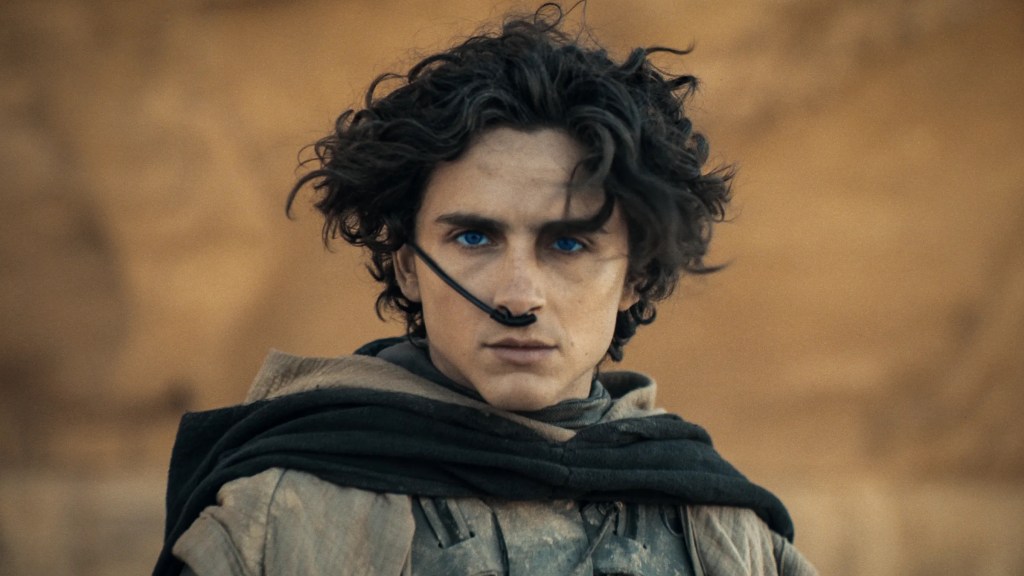
Undoubtedly, Paul tops the ranking because the entire franchise revolves around his transformation and the cost of that transformation. He starts out as a vulnerable heir and ends up as a big messianic figure capable of setting the galaxy on fire. Why he stands above the rest is that he knows exactly what he’s about to unleash — his prescience isn’t a blessing, it’s a prison. He sees the jihad before it happens, yet still moves toward it, understanding that every attempt to avoid it only pushes the future toward even worse outcomes.
Paul isn’t exactly a classic hero; he’s a tragic protagonist totally aware that his power comes with destruction on a colossal scale. He becomes a religious leader, a political symbol, and an ideological weapon all at once, while desperately trying to preserve some fragment of himself. Paul isn’t romanticized — far from it. He doesn’t celebrate his own greatness; he just bears it. And it’s this ambiguity that makes him the most fascinating character in Dune (and one of the most complex and compelling figures in all of sci-fi).
Which Dune character do you like the most? Leave a comment below and join the conversation now in the ComicBook Forum!
Most Viewed
-
Image Courtesy of Netflix -
Image Courtesy of WIT Studio