No matter what path adaptations choose, writers and directors will be asked about the original material and their film’s faithfulness. This emphasis on the original source material is so widespread, spurring the phrase “lost in adaptation” exists, describing works that stray so far from the original media that they’re hardly the same thing.
Videos by ComicBook.com
Baz Luhrmann’s 1996 Romeo and Juliet contemporized the Shakespeare play’s events yet managed to keep the film recognizable as an adaptation of the source material. The same cannot be said for Emerald Fennell’s last film, her adaptation of Emily Brontë’s classic novel Wuthering Heights. Fennell chose to market the film as the greatest love story ever told, focusing on Cathy and Heathcliff. Like previous adaptations of the novel, Fennell left out the frame narrative along with the second half of the book that follows Cathy’s death. She also made the decision to cast — racially ambiguous at best — Heathcliff as a white man.
With a recently released trailer for Wuthering Heights: House of the Damned, director Becca Hirani (the Elevator) posits a different spin on the story, one that is leaning into gothic horror in three key ways, setting it on track to embrace the spirit of the novel, rather than distort it.
3. Cathy’s Ghost Has Agency in This Version of Wuthering Heights
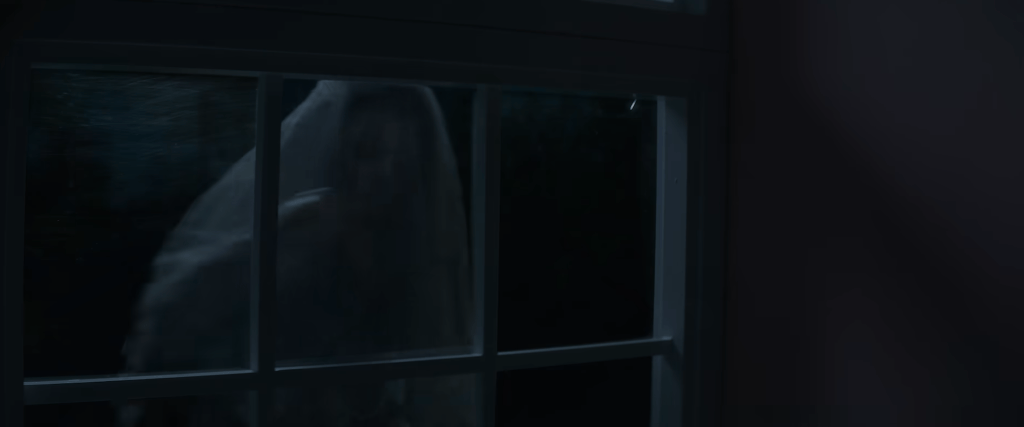
When Mr. Lockwood, a new tenant of Thrushcross Grange, arrives at Wuthering Heights, he soon finds etchings under a windowsill. The etchings spell out the name Catherine Earnshaw and then Catherine Linton. While investigating, Mr. Lockwood comes face to face with a ghost who breaks through the window pane, slamming him against the wall by gripping his throat.
The ghost of Cathy is absent from Fennell’s adaptation along with many that came before it, but is present in the trailer for Wuthering Heights: House of the Damned. The element is distinctively horror, especially in the way Hirani uses it. Here, the ghost is not passive or something belonging in the house, but rather a spirit acting against Mr. Lockwood.
It amps up the danger Mr. Lockwood is in, a danger that was previously relegated to the characters still alive. Audiences know to be wary of Mr. Heathcliff, but it is an adaptational twist to give Cathy back this capacity for violence from beyond the grave.
In the novel, Brontë leaves Cathy’s ghost ambiguous. The presence is felt through knocking and a repeated cry heard through the window, along with rumors spread about town, but it isn’t something that’s able to harm Mr. Lockwood in the way Hirani’s does.
2. Violence that Can’t be Romanticized in House of the Damned
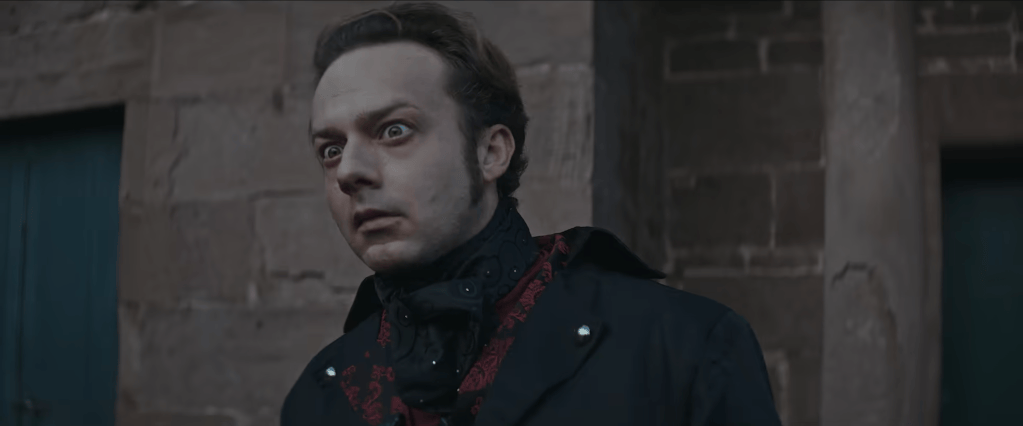
Hirani’s Wuthering Heights from the get go is off to a better start with the inclusion of Cathy’s brother Hindley. Fennell’s adaptation erased the character completely, choosing to give his abusive traits to Cathy’s father. But with Hindley in the narrative — as long as he isn’t suddenly the perfect brother — the violence in the film is no longer solely romantic. The visual symbols of violence in Hirani’s Wuthering Heights: House of the Damned are not a noose or handcuffs trying to erotic but rather smashed glass, a sharp knife, and bloody eyes.
The romance of Cathy and Heathcliff is present but it is framed completely differently. No longer the greatest love story ever told, it is now “the most harrowing romance of all time”. The film’s synopsis paints Heathcliff as obsessed in the wake of Cathy’s death and from her influence “turning murderous on all who dwell there.” It’s a shift from Heathcliff’s revenge plot in the book, inflicted there on the resulting children of the Earnshaw and Linton families. Instead, it is more immediate. Heathcliff, with the aid of Cathy’s ghost, is likely going after those who currently dwell in the house rather than a future generation.
1. Wuthering Heights as Haunted House Narrative
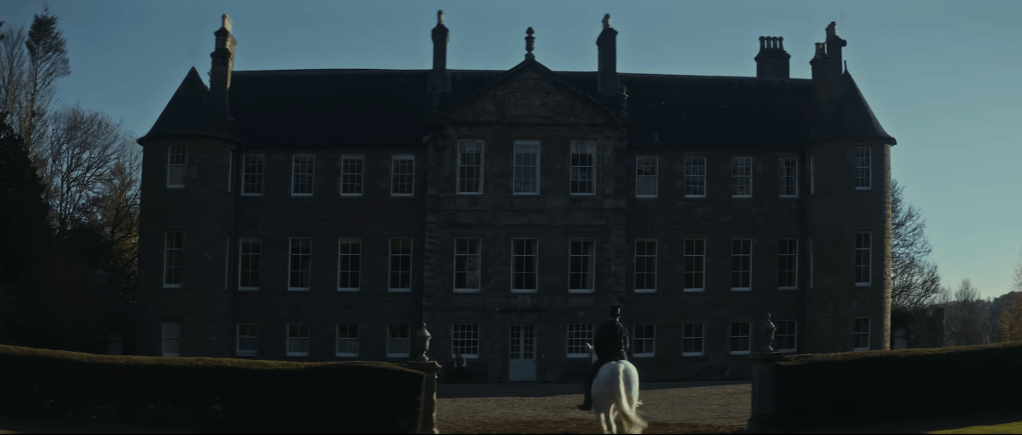
At its core, Wuthering Heights is a story of a haunted house, and Hirani’s visuals reflect this. The house looks unassuming from the outside, but inside, every room is cast in shadow. The characters have to resort to candlelight and even then, much is still obscured from view.
The frame narrator Mr. Lockwood isn’t supposed to be there. He’s renting out the sister property Thrushcross Grange, depicted as lighter and a pleasant place to live, but his own niceties have brought him to Wuthering Heights, wanting to know his neighbors. It is Mr. Lockwood then who should be most primed to escape. Yet, as the trailer shows him painfully looking in the mirror as his reflection is replaced with Cathy’s, not even him can do that. He is stuck at Wuthering Heights, much like the Earnshaws.
With the emphasis placed on Cathy’s ghost, it raises the question if Wuthering Heights will be depicted as haunted prior to Cathy’s death. As mentioned before, the exterior shot of the estate looks rather normal. There are no overgrown branches or broken windows, but rather it is the inside and Cathy’s influence there that places it as haunted. The violence may have existed before her death but the physical markers don’t appear until after it.
Wuthering Heights: House of the Damned is set to release to digital and on demand on October 16, 2026. Are you excited for an adaptation leaning more towards horror, or has this story been retold one too many times? Let us know in the comments!
More Movies
-
Photo by Archive Photos/Getty Images -

Image Courtesy of Universal Pictures -
Image Courtesy of Marvel