Science fiction broke onto the scene as a major film genre in the 1950s, as World War II gave way to the Cold War and prompted a wave of movies about alien invasions and atomic bombs. In the late ’70s and ’80s, sci-fi became Hollywood’s biggest moneymaker, with blockbusters like The Terminator, Blade Runner, and Back to the Future. Continuing into the ’90s, the genre remained at the top of its game, but the tone and themes shifted, pivoting to fears of an impending corporate dystopia, surveillance, simulated reality, and world-altering tech accelerationism.
Videos by ComicBook.com
With fresh fodder for existential dread, the sci-fi horror subgenre boomed with fan-favorites like Event Horizon. Yet beyond the obvious crossovers, a few hidden gems perfectly captured the apprehension, cynicism, and terror of the 1990s leading up to Y2K hysteria. While they weren’t fully appreciated in their time, debuting to mixed reviews or measly box office numbers, the following films deserve reevaluations, not only as cult classics, but as forgotten staples of sci-fi horror at large.
3) eXistenZ
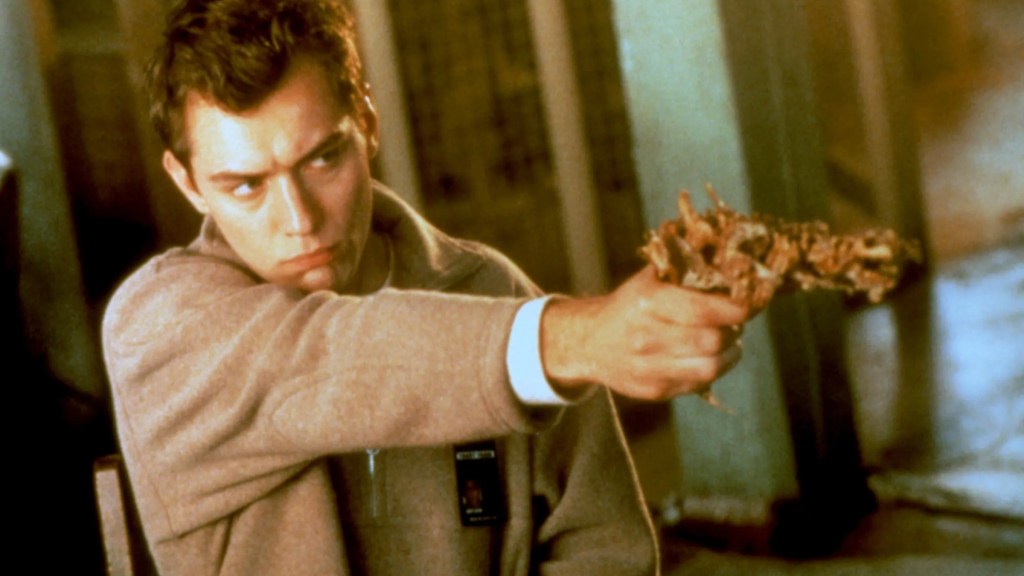
Legendary body-horror director David Cronenberg is best known for his ‘80s run, which included pioneering the cyberpunk genre with his proto-cyberpunk masterpiece Videodrome. Yet his 1999 biopunk horror film eXistenZ remains one of his most underrated. The plot follows Allegra (Jennifer Jason Leigh), who is the creator of a VR game called eXistenZ. After a crazed fan tries to kill her, she goes on the run with a young businessman, Ted (Jude Law). To save her game, she implants a game pod carrying a damaged copy of eXistenZ into Ted’s body, leading to experiences that blur the line between fantasy and reality.
Building on what he started with Videodrome, Cronenberg combines grotesque horrors of the flesh with fears about the future, particularly immersive gaming, which in 1999 was a wave yet to come. The film manages to masterfully mix the experiences of game, movie, and reality in a funny, slimy B-movie milieu. Unfortunately, eXistenZ struggled at the box office because it was overshadowed by The Matrix, which hit theaters just days before it and explored similar themes. It was also never really given a fair chance to become a cult hit, thanks to convoluted distribution rights that kept it off the home video market for long periods. Still, Cronenberg’s tactile horror about the loss of reality and bodily autonomy remains a brilliant dark comedy satire that is both nostalgic for the ’90s auteur game-creator era and predictive of the coming VR obsession.
2) Cube
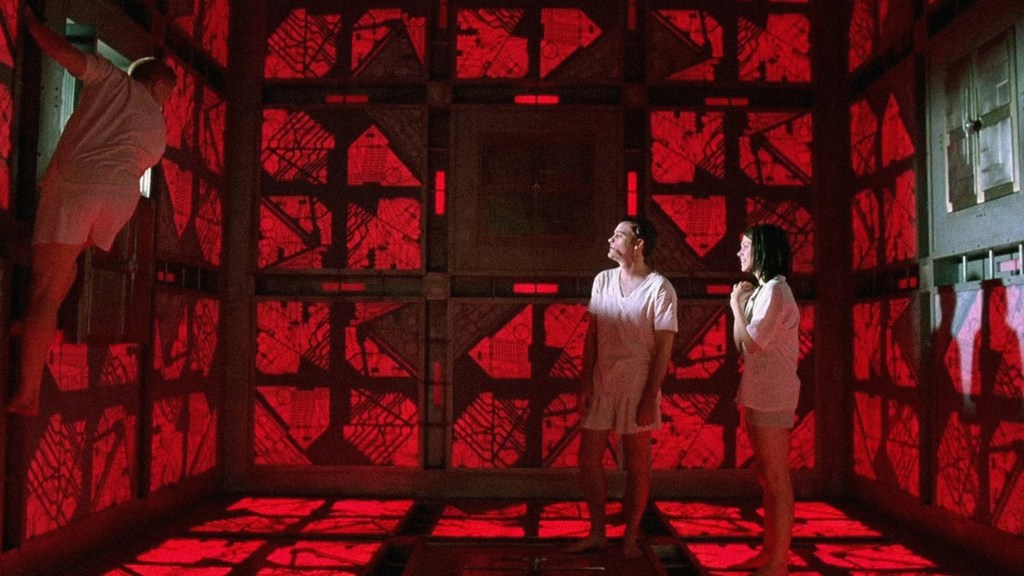
It’s hard to believe Vincenzo Natali’s 1997 Canadian indie Cube was made for only $350,000 and filmed over 20 days on a single-room set. The intriguing concept begins with several strangers waking up in a prison of booby-trapped cubic cells with no memory of how they got there. Among them are a cop, a math wiz, a scientist, a savant, and an architect who may know more about the maze than he lets on. The prisoners must then combine their skills to try and escape. Though it fell under the radar on release, Cube eventually found its audience after running a small festival circuit before going straight to video rentals. It became a home video hit in countries like France and Japan and an early predecessor to puzzle horror movies like Saw.
Cube is a case of extreme budgetary limits working in a film’s favor, creating claustrophobic suspense through high-concept minimalism. It’s a Kafkaesque existential horror, with its terror stemming from the absurd and incomprehensible rather than from a traditional monster or villain. Alongside the psychological breakdowns and general sense of doom, flashes of visceral body horror raise the unforgiving stakes. The perfect pick for modern escape room or puzzle-box fans, its glowing neon grids harken back to a late-’90s cyber-industrial aesthetic, making for a gripping, nostalgic pre-internet sci-fi horror mystery.
1) In the Mouth of Madness
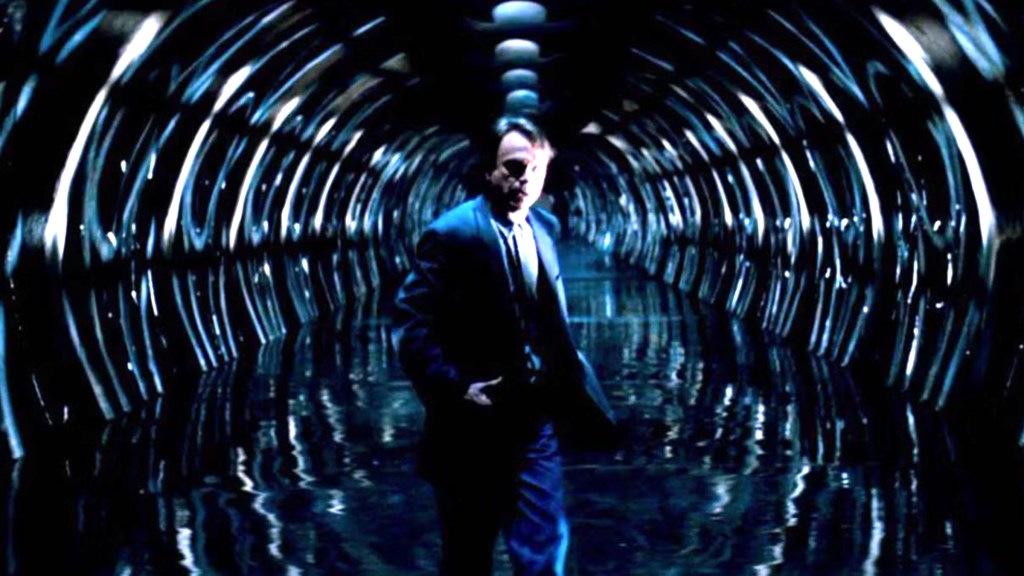
The final film in John Carpenter’s unofficial Apocalypse Trilogy, In the Mouth of Madness is a cosmic horror masterpiece, sadly overshadowed by its ’80s predecessors, Prince of Darkness and The Thing. It struggled at the box office and opened to unenthusiastic reviews that called the plot confusing, placing it squarely in the shadow of Carpenter’s hits. Over time, however, audiences have reevaluated the film, recognizing its self-aware meta-satire that predated 1996’s Scream, and celebrating both Sam Neill as John Trent and Carpenter’s heavy synth score. The story begins as nightmare-plagued insurance investigator Trent scrutinizes a claim made by a missing horror novelist’s publisher and sets out to retrieve an unreleased manuscript in hopes of finding the writer.
Drawing heavily on the cosmic horror tradition of H.P. Lovecraft and Stephen King, the film steers away from slasher tropes and opts instead for a layered meta-narrative inspired by Carpenter’s own creative life, treating infectious ideas as a reality-altering pathogen and ending with an iconic 18-foot “wall of monsters.” It melds reality and fiction, letting the stories within the story shape the story itself. Far from being a footnote for Carpenter completists, In the Mouth of Madness is not only an underrated masterpiece but an essential entry in the Apocalypse Trilogy, sticking the landing on the theme shared by all three films: vast cosmic indifference. By trapping its lead in a preordained narrative, it asks questions about free will, determinism, and whether our reality is an artificial construct, without Carpenter sacrificing any of his fun filmmaking panache.
What’s your favorite sci-fi horror movie from the ‘90s? Drop a comment below.
More Movies
-
Image Courtesy of WWE -

Image Courtesy of Focus Features