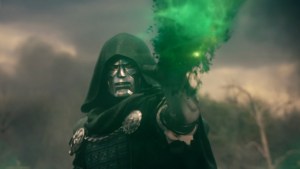
When the multiverse took center stage, the Marvel Cinematic Universe started to tiptoe around increasingly complex territory. Avengers: Endgame started with a simple and brief explanation of time travel and spun out into an entire network of multiverse branches, unsolvable journeys, alternate realities, and galactic predicaments. This made being a superhero an ordeal that comes with a whole new meaning for saving the day. No longer were heroes battling just the villain in front of them, but the destruction of a limitless number of realities.
Videos by ComicBook.com
However, the rules have continued to evolve in a mighty odd manner. The MCU has taken audiences on journeys through different movies and TV series that have only added more possibilities to what this multiverse can do. From the Time Variance Authority’s (TVA) restrictions on the Sacred Timeline to Loki’s not-so-little “let-me-multiply” schtick, there are some interesting insights into the multiverse’s interconnectedness. Now that the MCU has Avengers: Doomsday and upcoming events like Secret Wars setting the stage for a larger multiversal fracas, let’s take a look at what exactly has changed since the Avengers time-hopped on us the first time.
How Avengers: Endgame and Loki Created the Rules of the Multiverse in the MCU

At the end of it all, Avengers: Endgame established a different way to work with time travel. It became one that recognizes how the world we’re from might be quite different from the one we visit. This time-travel system turns the plan upside down by creating a branched universe in which the version of you in your original timeline can escape unscathed, but your own reality continues on with whatever changes happened as a result. This little rule turned out to be a critical element of the Avengers’ plan to recover the Infinity Stones. The Ancient One warns that stealing one could make everything else in the timeline vulnerable to chaos, leading to an agreement that Bruce Banner would return each Stone to the same point in time from which he had taken it. And interestingly enough, Marvel Studios has put together a little compilation about multiverse moments.
My own feeling is that the MCU has gone a bit overboard with the multiverse rules, the alternate worlds, the ongoing ties between the different film continuities, and other such increasingly complex concepts that they’ve introduced. It sometimes feels like you’re required to have a background in quantum physics just to make sense of the plot. Perhaps Marvel would do well to dial it back a bit and settle into more character-driven stories, leaving room for the heroes to grow and develop, instead of having to tackle every possible apocalypse that could end their universe, along with countless others. Not every film needs to end with a planet-eating solar flare or a new multiversal structure being erected in the sky.
Then came Loki, which used those same established concepts and explored them further through another lens of control. Season 1 introduced the Time Variance Authority, a group dedicated to protecting what it called the Sacred Timeline. Under the direction of the mysterious He Who Remains, the TVA kept a close eye on branching realities, pruning down any timelines that strayed from the particular order of events established by their not-so-alive leader. Interestingly, the Sacred Timeline wasn’t just one reality; it was a collection of timelines following the administrator’s policies. Things changed, however, when Loki discovered the true nature of the TVA and eventually faced off against He Who Remains. Season 2 saw the shattering of the Temporal Loom following He Who Remains’ death, unleashing the branching timelines across the multiverse. Loki, now fully embracing his new purpose, decided to preserve as many realities as possible, and the TVA went from a force of destruction to a protector of the multiverse.
The Multiverse Just Got Even More Confusing With Spider-Man, Doctor Strange, and Deadpool
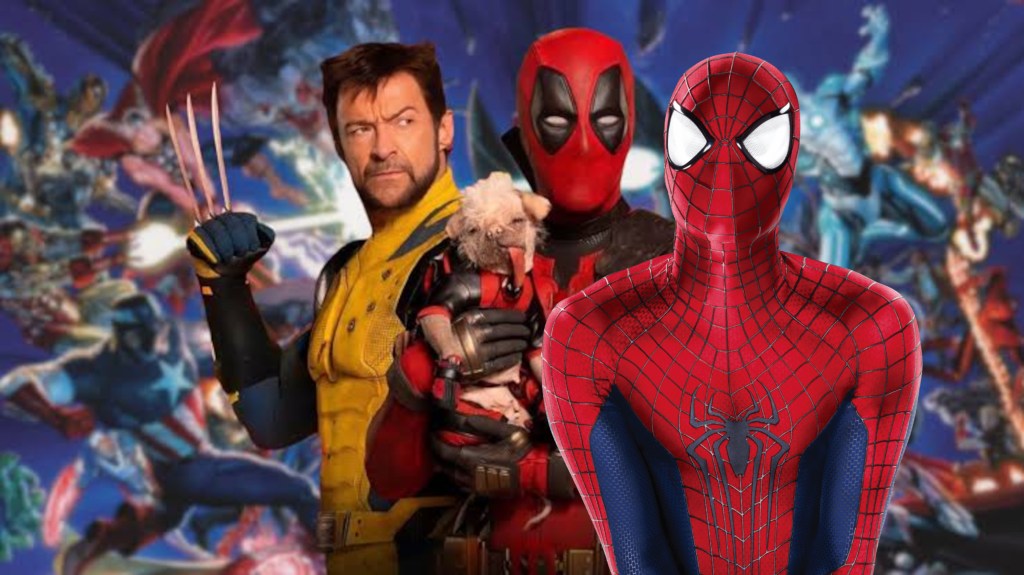
With the TVA no longer in control of branching timelines, we got to see a whole host of different ways the multiverse could go wrong. The spell from Spider-Man: No Way Home, in which Doctor Strange accidentally alters everyone’s memory, inadvertently created a serious problem, bringing supervillains and even different iterations of Spider-Man from alternate realities into the MCU’s main universe. Not only could time travel change history and produce a new timeline, but now characters from alternate realities could enter, too, and things got pretty chaotic—in an amazing way.
Doctor Strange in the Multiverse of Madness raised the stakes with the grisly notion of incursions. An incursion occurs when the barriers between two universes are compromised, setting the stage for a collision that destroys one or both realities. Tampering with a reality can cause this to happen, but traveling to or hanging around in another universe doesn’t automatically set one off. Then we got Deadpool & Wolverine and another intriguing wrinkle in Marvel’s multiversal law: Anchor Beings. Mr. Paradox explains that some beings are so central to their timelines that their deaths can lead to the slow dissolution of those realities. He specifically points to Wolverine’s death in Logan as the reason why Deadpool’s universe is unraveling, though the film does leave room for individual universes not to be subject to this rule.
In the meantime, Ant-Man and the Wasp: Quantumania introduced us to the Council of Kangs and, in doing so, explained the staggering number of variants of the same person that exist throughout the multiverse. The Marvels threw another curveball when Monica Rambeau was trapped in a different universe with a version of Beast from the X-Men universe. More recently, The Fantastic Four: First Steps revealed Earth-828—a different universe with its own version of the titular super-team—and set up Doctor Doom’s plans to seek out Franklin Richards. Now, with Avengers: Doomsday and Secret Wars about to bring these increasingly complex storylines—and the multiverse—together, the Marvel Cinematic Universe is on the cusp of its biggest multiversal event yet, and that’s not even getting into all of the branching timelines, collapsing universes, and alternate versions of familiar characters that might make Doctor Strange need a guide to this chaos.
More Movies
-
Image Courtesy of WWE -

Image Courtesy of Focus Features -
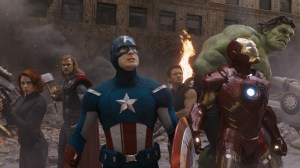
IMAGE COURTESY OF MARVEL STUDIOS